
It’s time for civic media
Fifteen years into the cratering of the local commercial newspaper business, a burgeoning noncommercial media movement is developing.
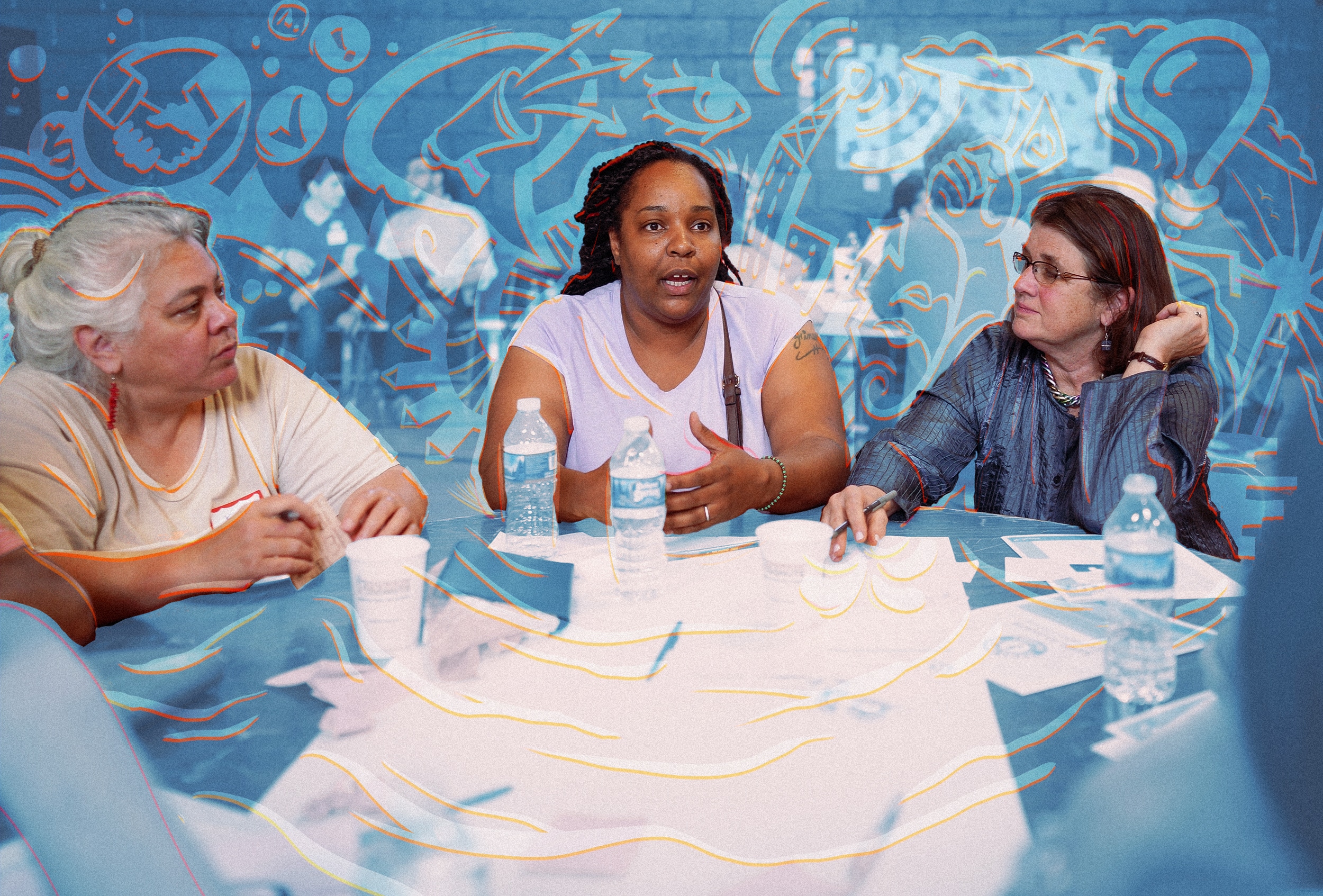
This is the introduction to the Civic Media Series: A project of The Objective and Free Press. Read more from the series here.
Dire warnings over the future of local news are being heard loud and clear across the country. Even as community-first local news models are increasingly being seen — and supported — as a critical foundation for a local news revival, more than 2,500 newspapers have folded since 2004.
One-fifth of Americans live in areas without a local newspaper, and countless more live in places where local news exists but it doesn’t meet their needs, represent them, or is unaffordable. The basic information communities need to be informed and engaged members of a healthy democracy is increasingly difficult to find in one place, and misinformation, along with the distrust it breeds, is taking hold.
But the issue isn’t as simple as new forms of funding for local news: It’s also about how boldly and imaginatively we think about — and act on supporting — some of our country’s most critical public institutions.
That’s because the “local news crisis” isn’t actually a journalism problem. It’s a civic health problem, and reliable, engaging civic information is critical to the way that communities are organized to define and address public problems.
Fifteen years into the cratering of the local commercial newspaper business, a burgeoning civic media movement is developing in pursuit of a society for all. Civic media is a field driven to use varying mediums and approaches to ensure equitable access to quality information, especially in communities that have seen historic underinvestment. Journalists, storytellers, librarians, policymakers, philanthropists, and everyday people are collaborating to keep their communities informed, connect people to vital services and equip them with the skills to make media.
Over the next few weeks, The Objective, in partnership with Free Press and members of the Future of Local News Collective, will publish personal essays from local news leaders across an emerging field. They’re part of a growing cohort. And their work is being done across the country, from the South, the Northeast, the Pacific Northwest, and Midwest — areas too often ignored by commercial media’s focus on major markets. These media makers are building on a history of American media movements to create new equitable and community-rooted models.
This growing media movement isn’t homogenous and, just as important, it’s distinct from — and reimagines — traditional journalism in many ways. It trusts the insights of community members, from acting on what they share in WhatsApp groups and text chats to enlisting them to document what’s happening in their city council meetings.
This field is reimagining news as civic infrastructure intended to ensure equitable access to quality information. And its growth is needed to confront the interrelated challenges of mass disinformation and disenfranchisement, the continued threat of white supremacist violence, decreased civic participation, the growing power of technological monopolies, and the collapse of local commercial media. All against the backdrop of an ongoing global pandemic and international struggles and violence that touch diaspora communities in the United States.
The recent announcement of a new $500 million collaborative fund, Press Forward, signals a broader trend of recognizing journalism as a public good. And if we plan to call journalism a public good, then we ought to start investing in it like one.
Press Forward — a philanthropy-led initiative spearheaded by 22 foundations addressing a diverse array of civic issues— is an important step. But transforming local news also necessitates a community-first policy agenda focused on expanding production and access to civic information in traditionally under-resourced areas. Success, in which such information is abundant in every community, depends on reframing and reforming away from old, unsustainable models of “local journalism.” Instead, we must look toward meeting people’s information needs in the cities, suburbs, and rural communities where they live, however they get information.
This also requires us to acknowledge the role legacy media, public policy, and philanthropy play and have played in perpetuating harm in communities, while simultaneously building with allies in these institutions who believe in driving change and supporting people creating something new.
In light of changes happening in philanthropy and government, we’ve passed the microphone to civic mediamakers, who can speak to what they’re experiencing and the support they need. They’re the ones on the ground working toward a future of local news that’s service-oriented, networked, civic-minded and participatory. We hope this is the start of a critical and diverse conversation as we, collectively, acknowledge the media industry’s history of inequity and oppression, and demand that we build information systems that are liberatory and responsive to the most acute community needs. A new cohort of local news leaders are building bridges to what works and demonstrating a new path forward — one worth investing in.
We’ll publish the pieces from local news leaders over the next few weeks, skipping over the holiday week.
And we want to hear from you, especially if you’re working from a civic media perspective in local news: Tell us more about your work on the ground and what you’d like more folks to know about what’s needed in this moment for the field and your community. You can send letters to the editor with a 300 word cap to submissions@objectivejournalism.org. We’ll also publish them here as part of this series.
Members of the Future of Local News (FLN) collective contributed to this project. FLN is a group of newsroom leaders operating proven models for civic media; community organizers galvanizing a racially equitable future for local news; and media researchers studying information ecosystems and the people who shape them.
We depend on your donation. Yes, you...
With your small-dollar donation, we pay our writers, our fact checkers, our insurance broker, our web host, and a ton of other services we need to keep the lights on.
But we need your help. We can’t pay our writers what we believe their stories should be worth and we can’t afford to pay ourselves a full-time salary. Not because we don’t want to, but because we still need a lot more support to turn The Objective into a sustainable newsroom.
We don’t want to rely on advertising to make our stories happen — we want our work to be driven by readers like you validating the stories we publish are worth the effort we spend on them.
Consider supporting our work with a tax-deductable donation.

James Salanga,
Editorial Director
Related Articles

The local news contract is broken. Civic media can fix it
Darryl Holliday on how City Bureau’s Documenters’ program models the new social contract needed for local news and the civic media system emerging today.

Media policy: Local news for the people
Five key policy-making principles and concrete proposals to support civic information needs.
To save the free press, newsgathering must be reclaimed as a public trust
Michael Swerdlow on the necessity of publicly funding the news media.