
Martin Luther King Jr. and the well-adjusted journalism industry
For MLK Day, a look at how the industry is adjusted to three of the “evils” the Baptist preacher and civil rights advocate cautioned against.
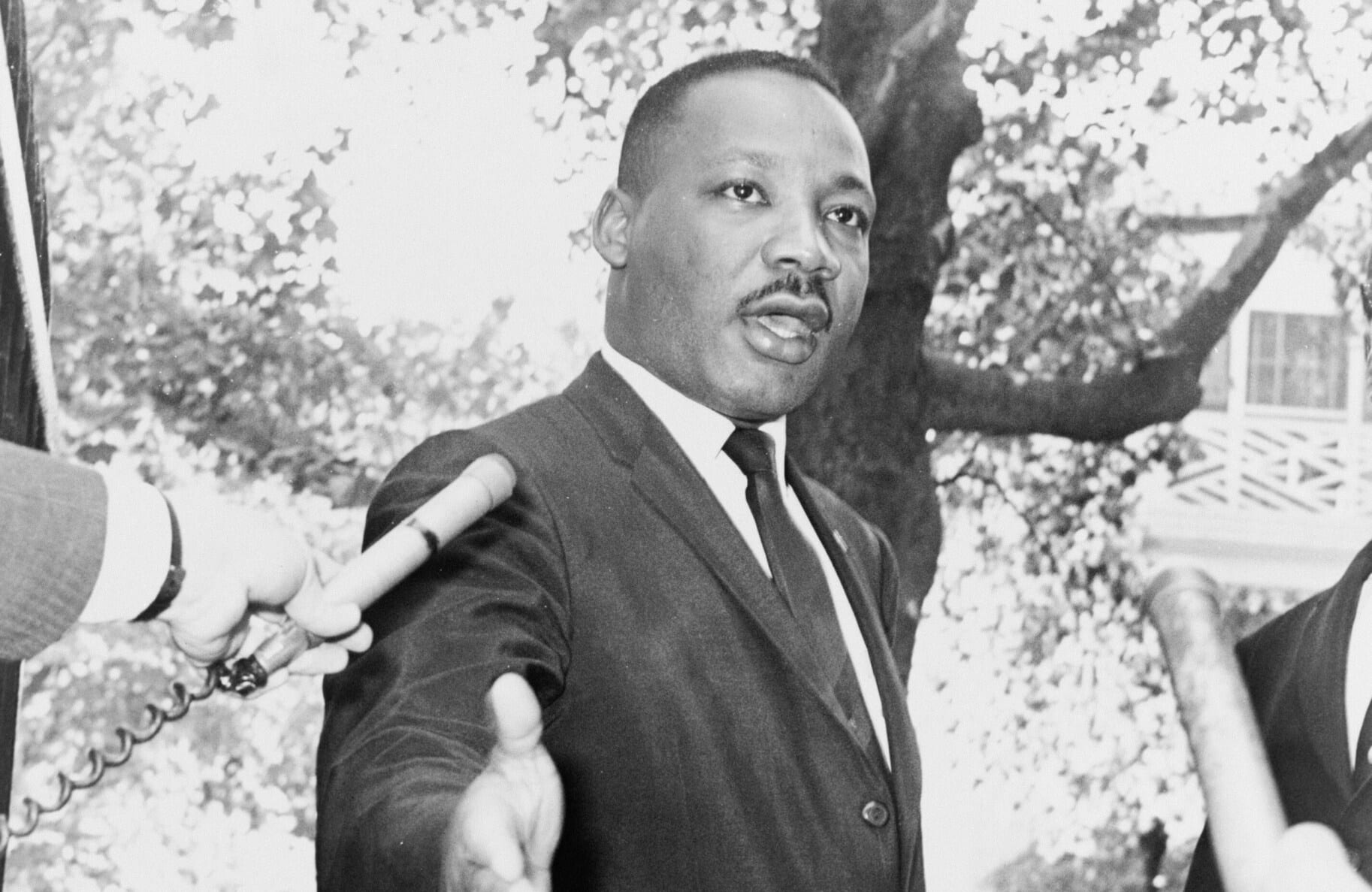
People in the United States love Martin Luther King Jr. If the country was surveyed, he’d probably tie with the Pope for most beloved person, right under Jesus Christ. Teachers, preachers, and politicians recite his speeches like clockwork.
And every January, corporations avow their commitment to multiculturalism while news organizations share stories of his life in his honor.
Before ritualistically bashing corporations for misusing his legacy, a spotlight must be turned on the storytellers, the news industry. Many in the business think of themselves as righteous information distributors. But it’s become obvious the industry as a whole is well-adjusted to the evils King urged the nation to dismantle.
“There are some things in our society, some things in our world, to which we should never be adjusted,” said the Baptist minister and civil rights leader over 65 years ago, at the American Psychological Association’s annual convention in Washington D.C.
At the time, youth rioted against white violences that created neighborhoods where over 40% of Black youth struggled to find employment and encouraged the U.S. to wage war on Vietnam. King Jr. coined the term “creative maladjustment” to say people in the country should do everything in their capacity and imagination to rebel against these evils — popularly known as militarism, racism, and poverty.
“We must never adjust ourselves to racial discrimination and racial segregation,” said King. “We must never adjust ourselves to economic conditions that take necessities from the many to give luxuries to the few. We must never adjust ourselves to the madness of militarism, and the self-defeating effects of physical violence.”
To more accurately commemorate the reverend’s life, it’s worth exploring how major players in today’s journalism industry are well-adjusted to those three evils.
Militarism
This MLK day marks 101 days into the most deadly aggression of the U.S.-funded Israeli government since the Nakba in 1948, during which Zionist militias expelled 750,000 Palestinians from their homes.
Palestinians have referred to the ongoing Israeli military devastation and expulsion — the largest displacement of Palestinian people since 1948 — as the “second Nakba.” Israeli security cabinet member Avi Dichter explicitly said in November that the government is “rolling out Nakba 2023.”
Close to 24,000 Palestinians, around one out of every 100 Palestinians on the Gaza Strip, have been reported as killed or trapped under rubble since Oct. 7, 2023. And Israel’s government haphazardly cuts off Gaza’s water supply and electricity, and is limiting aid into the region as it attacks supposed safe areas — hospitals, mosques, churches, and even evacuation routes.
The international community has been sounding the alarm about ethnic cleansing and genocide of Palestinians for months.
Related: Q&A: Yousef Munayyer on Western media’s complicity in Israel’s occupation of Palestine
And unlike the Vietnam War, information about this Israeli aggression is well-recorded, and on more than TV and laptop screens — people can bear witness just by scrolling through the accounts from Palestinians posted on Twitter, TikTok, Instagram, and even the Snap Map.
Public support of Palestinians in the U.S. has only grown. In November, over 60% of U.S. voters across the political spectrum said they supported a permanent cease-fire in a poll by Data for Progress. Thousands marched on D.C. on Jan. 13 to protest the assault on Gaza.
But coverage from news outlets hasn’t reflected that support or a desire to provide communities with coverage of Palestinian responses to Israeli military bombardment.
Reporters at The Intercept did a quantitative analysis of over 1,000 articles from the New York Times, the Washington Post, and the Los Angeles Times, which revealed the prestigious news outlets showed a consistent bias against Palestinians during the first six weeks of Israel’s assault on Gaza.
“Major U.S. newspapers disproportionately emphasized Israeli deaths in the conflict; used emotive language to describe the killings of Israelis, but not Palestinians; and offered lopsided coverage of antisemitic acts in the U.S., while largely ignoring anti-Muslim racism in the wake of October 7,” wrote Adam Johnson and Othman Ali.
“Pro-Palestinian activists have accused major publications of pro-Israel bias, with the New York Times seeing protests at its headquarters in Manhattan for its coverage of Gaza — an accusation supported by our analysis.”
Related: Israel’s bombing campaign on Gaza is a test for journalism. Mainstream U.S. outlets are failing.
Mainstream news organizations similarly played a major role in drumming up public support for the country’s war effort in Vietnam. Jeff Cohen, founder of Fairness & Accuracy in Reporting, reflected on this dynamic over twenty years ago in his piece “The Myth of the Media’s Role in Vietnam.”
“In February 1968, the Boston Globe surveyed the editorial positions of 39 leading U.S. dailies with a combined circulation of 22 million and found that not one advocated withdrawal from Vietnam,” said Cohen.
Walter Conkrite and other network anchors regularly repeated inflated body counts on air. And few major media outlets covered the national Winter Soldier hearings of 1971, which featured Vietnam vets communicating the horrors of the war.
Although King Jr. was assassinated two months after the Boston Globe survey and three years before the Winter Soldier hearings, he held no punches when scolding the U.S. for its war in Vietnam.
“[The war] has frustrated our development at home by telling our underprivileged citizens that we place insatiable military demands above their most critical needs,” he said.
Journalism, especially local journalism, is best positioned to communicate the domestic stakes of supporting Israel’s murderous expedition in Gaza.
Related: U.S. reporting on Palestine fails to live up to basic journalism standards — again
But it often fails to: Take the city of Houston, which like many municipalities, currently invests in the Israeli military through up to $10,000,000 of bonds that “provide [Israel] with the financial liquidity needed” to continue its assault on Palestinians, according to recent city investment reports. And although Houston organizers have mentioned this at three consecutive public city meetings, no local news organizations — print, digital, or broadcast — have reported on the matter.
After I wrote about this online, the Houston Landing penned a piece featuring a local Palestinian young woman and a former Israeli Defense Force soldier. The Landing faced significant online backlash as a result of playing to “both sides” of Israel’s aggression.
”This is such an affront to journalism of integrity,” commented Houston-based South Asian Jewish organizer Anna Rajagopal.
Racism
The industry’s commitment to devaluing Palestinian lives by favoring official Israeli narratives — even when its leaders have referred to Palestians as “human animals” and despite the government’s upholding of apartheid — is a reflection of the broader U.S.’s continued lack of attention paid to racism leveled against Arabs, and those perceived as such.
Unfortunately, the industry’s sins neither start, nor end, with its flawed coverage of Palestine.
Nearly 53 years after King’s remarks to the APA, the Philadelphia Inquirer ran a front page cover story entitled “Buildings Matter, Too.” This was the Inquirer’s way of entertaining — and in some ways, endorsing — a racist notion that the preservation of buildings is as important as the aims of uprisings supporting Black lives.
Reflecting on the Inquirer piece, Ernest Owens, the president of the Philadelphia Association of Black Journalists, called it “tasteless, degrading, and just downright reckless and irresponsible.”
While massive social unrest has been costly — when adjusted to 2020 dollars, the costs associated with property damage from the 1967 Detroit Riots are estimated at $322 million, paling in comparison to the $1-2 billion of property damages dealt during the nationwide George Floyd uprisings in 2020 — King Jr. sympathized with the average rioter.
“A riot is the language of the unheard,” he said.
And although he disagreed with this method of protest, he understood its aims: “Alienated from society and knowing that this society cherishes property above people, he [the rioter] is shocking it by abusing property rights,” he said.
After several failed attempts at discussion, negotiation, and even compromise, an uprising is often the last resort for oppressed peoples.
Despite the Inquirer piece’s lack of empathy and context, Owens and over 50 prominent individuals and organizations considered the piece just another regular move for a news organization with a record of mistreatment of its Black and Brown employees and inequitable coverage of Philadelphia neighborhoods.
In 2020, the coalition penned a letter of demand to Inquirer CEO Lisa Hughes and Lenfest Institute CEO Jim Friedlich.
“To have a sustainable future, [the Inquirer] must nurture deep relationships with the community and develop a community-first, anti-racist newsroom philosophy,” they wrote.
Owen hasn’t seen any significant progress over three years later.
“We’ve tried everything,” he said. “We’ve tried conversations, mediations, open letters, petitions that were signed with elected officials and various leaders in the community… It has not led to incremental change.”
Philadelphians advocating for a better Inquirer are the unheard King Jr. mentioned. Instead of engaging in righteous violence, Owens is still committed to the practice of nonviolence King Jr. is well known for.
“There has to be a divestment of some sort — culturally, financially, socially,” he said. “I’m not encouraging people to work there. I’m not encouraging people to intern there. I don’t think it’s a safe space for Black Journalists and journalists of color to work there.”
Decades after the 1968 Kerner Commission report argued newsrooms “report and write from the standpoint of a white man’s world” and the industry was “shockingly backward” in seeking out the hiring of specifically Black news personnel, and despite the 2020 “reckoning” in news media, the Inquirer isn’t alone in its subpar treatment of historically marginalized staff and communities.
Related: After pledging “accountability”, Reveal laid off all Black unionized staff
Media 2070’s award-winning documentary Black in the Newsroom explored how commonplace anti-Black racism continues to be in the industry.
“To address deep-rooted systemic harm, media organizations must engage in a thoughtful and community-engaged process of media reparations,” director Collette Watson told The Black Wall Street Times.
Poverty
King Jr.’s legacy has largely been Disneyfied, sanitized for a broader white audience that wants to ignore their role in perpetuating oppression. A kumbaya King Jr., who sat by a campfire singing church songs, is false and enables practices of inequality to persist uncriticized.
King Jr. would likely be skeptical of the Press Forward Initiative, a coalition of donors looking to “revitalize local news.”
The group includes donors of news organizations that don’t seriously care for equity. For example, the Lenfest Institute for Journalism has been a major supporter of the Philadelphia Inquirer while it ignores Owens.
“I spent many years trying to find who in leadership can hold the Inquirer accountable,” he said. “I’ve tried talking to board members of the Inquirer. I’ve tried talking to leadership and staff at the Lenfest Institute. And there’s always a blank stare, that it seems as if no one knows who can actually hold them accountable.”
In his APA speech, King Jr. said, “The policymakers of the white society have caused the darkness; they create discrimination; they structured slums; and they perpetuate unemployment, ignorance and poverty.”
Because we’ve never seen the journalism industry unified in an attempt to both acknowledge and atone for decades of systematic racism, the Press Forward Initiative must be met with skepticism.
Previously, I’ve reported for The Objective that a large percentage of non-white-led newsrooms are suffering, abandoned by the philanthropic sector that swore its allegiance to equity in 2020.
Related: After 2020, Black-led newsrooms ask: Where is the long-term support?
To its credit, Press Forward says it will “close longstanding inequities in media ownership, philanthropy, and journalism, so the future of local news in America is more relevant and better serves all communities, especially those that have been historically marginalized in media and democracy.”
“That money has the potential to really level the playing field,” said Lisa Snowden, editor-in-chief of the Baltimore Beat. “I still have to work way harder to make sure that my bills are paid than white-led nonprofit news outlets.”
Snowden is like the many Black women media entrepreneurs who are waiting, unsure if Press Forward will live up to its promises.
“There’s a lot of work that needs to be done,” she said. “There needs to be an accounting of those inequities. We have to have an open conversation about that. And it’s hard for people to do it. It’s hard for people that have money to do it, because they got power. So …I’m waiting and singing and hoping and praying.”
Redemption
Dr. Martin Luther King Jr. believed that America could be redeemed. The Southern Baptist faith central to his preaching expressed itself through his activism.
But the question of redemption for America’s journalism industry is a difficult one.
Why seek to redeem an industry that favors maintaining the status quo over truth and justice? Who are news organizations to ignore the needs and demands of oppressed peoples and then ask for end-of-year donations?
For Snowden, redemption is located in the work of newsrooms and organizations divesting from replicating the industry’s traditional goals and processes, adapting to their local communities’ needs.
“I do the [Baltimore Beat], because I’m inspired by the work of The TRiiBE in Chicago, MLK 150, and Scalawag,” she said. “That’s where the redemption is — in people that are ignored that are saying ‘No, I’m removing myself from this kind of mainstream journalism track, and I’m doing something else in my community that works for us.’”
Baltimore Beat is one of the few media organizations in the country that held a vigil for journalists killed in Gaza. Snowden organized it to honor and respect the work of her colleagues abroad, who, in some ways, she relates to.
Related: Why journalists must speak out about Gaza
“I’ve tweeted a bunch of times about like, so much of what I’m seeing about these folks being ignored by mainstream press, and kind of betrayed by mainstream press, is something similar to what I’ve experienced as a Black journalist,” she said.
Snowden, Owens, and many others are maladjusted to the journalism industry. Their efforts run against the grain of paralyzing despair or fulfillment of tradition remaining all too common in newsrooms.
And they’re not alone in speaking out, with several organizations and reporters coming together to leverage the industry for oppressed peoples — whether through equitable treatment, hiring, and payment of staffers and more thoughtful and accurate coverage of marginalized communities, including Palestinians facing ethnic cleansing.
And for these folks, King left a prophecy: “Through such creative maladjustment, we may be able to emerge from the bleak and desolate midnight of man’s inhumanity to man, into the bright and glittering daybreak of freedom and justice.”
Uyiosa Elegon is a co-founder of Shift Press, a media organization that helps young people move power through story sharing and journalism education.
This story was edited by James Salanga. Copy edits by Gabe Schneider.
We depend on your donation. Yes, you...
With your small-dollar donation, we pay our writers, our fact checkers, our insurance broker, our web host, and a ton of other services we need to keep the lights on.
But we need your help. We can’t pay our writers what we believe their stories should be worth and we can’t afford to pay ourselves a full-time salary. Not because we don’t want to, but because we still need a lot more support to turn The Objective into a sustainable newsroom.
We don’t want to rely on advertising to make our stories happen — we want our work to be driven by readers like you validating the stories we publish are worth the effort we spend on them.
Consider supporting our work with a tax-deductable donation.

James Salanga,
Editorial Director
Related Articles
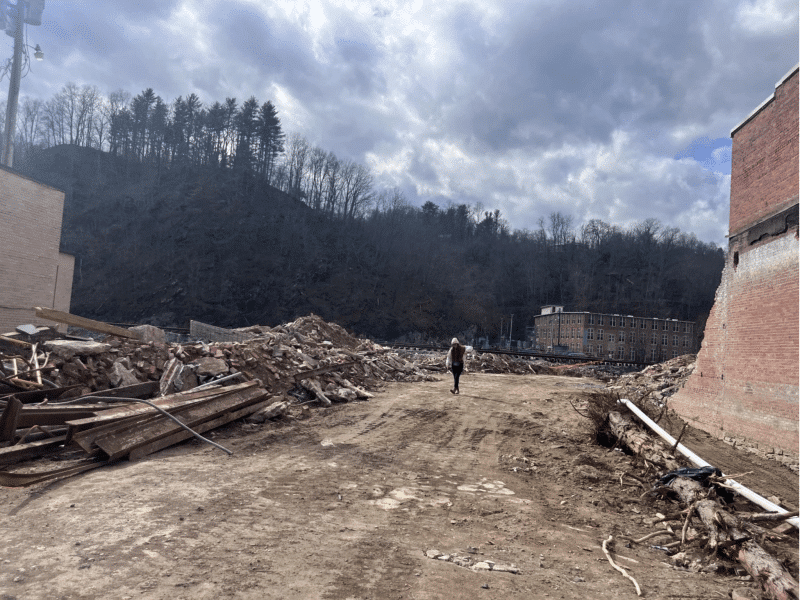
How disaster reporting hit home for two Appalachian journalists after Helene
Disaster journalism is vital, but can be traumatizing for both journalists and sources. We can make it better by treating disaster survivors — and ourselves — with more humanity.
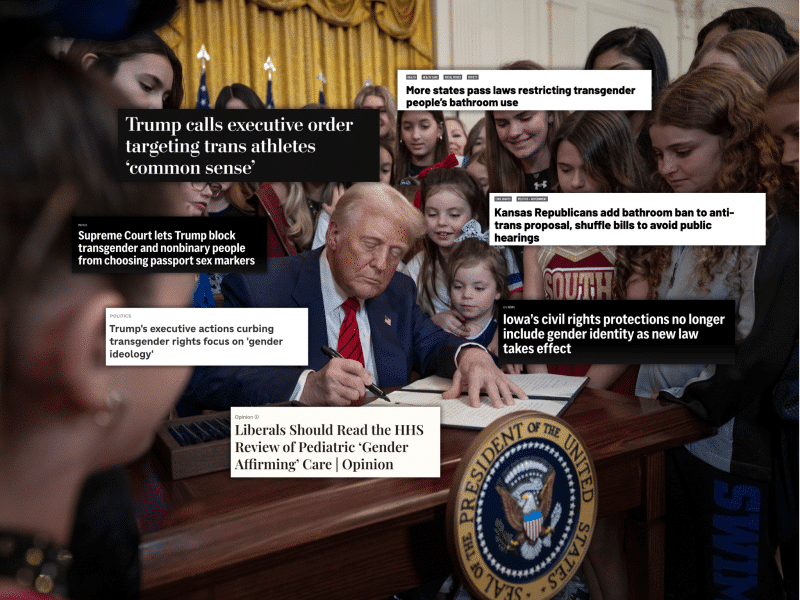
‘Almost media silence’: National, local news ignores trans Americans amid 2025’s anti-trans attacks
The failures of newsrooms to substantively cover anti-trans legislation in 2023 and 2024 have compounded over the first year of Trump’s second term in office.
The Objective’s favorite media reporting and criticism of 2025
A non-comprehensive list of The Objective’s co-directors and readers’ picks for media coverage and commentary this year.