
Catalyzing civic media movement is our way out of the ‘local news crisis’
Let’s treat the current state of the industry like the civic health crisis it is.
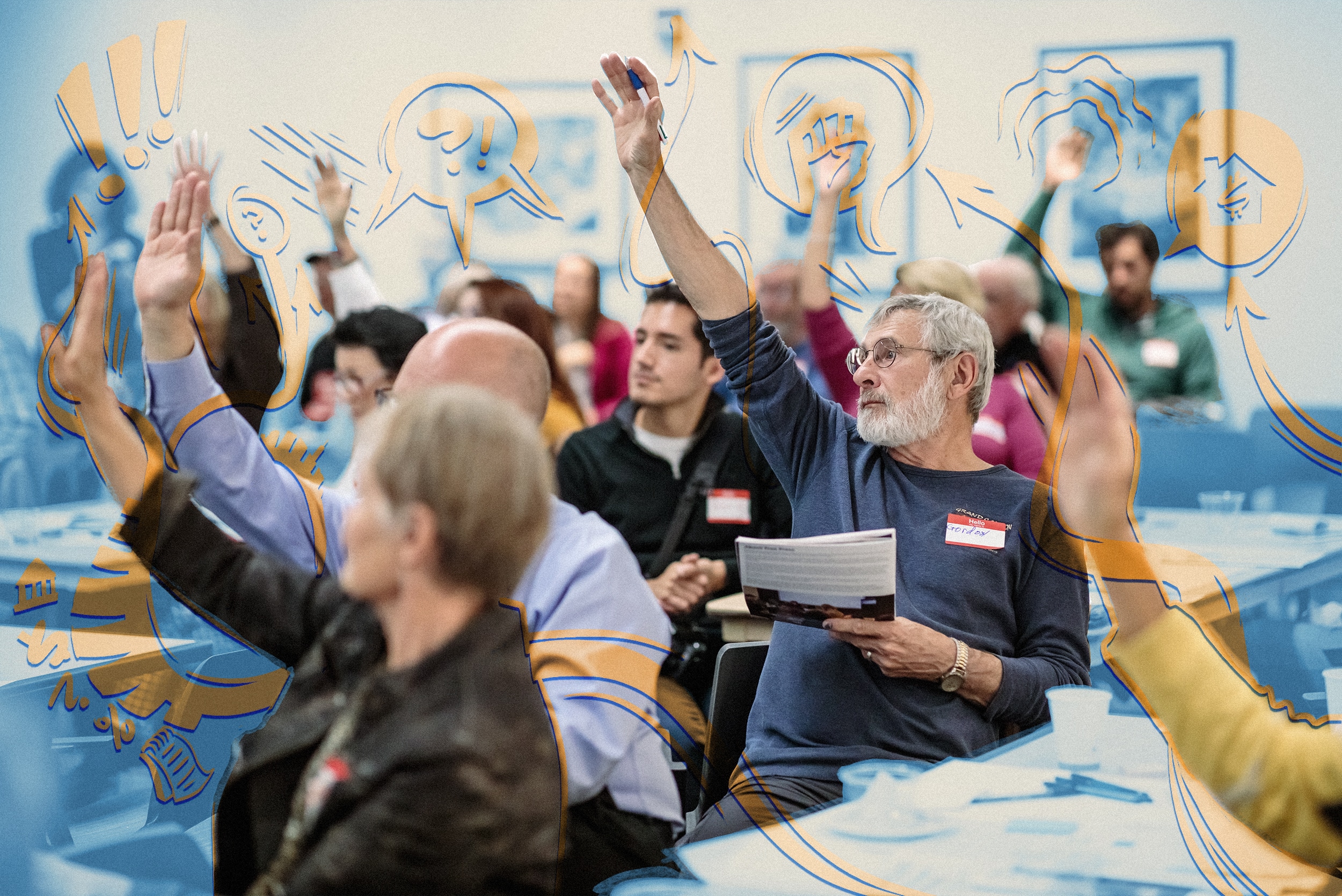
We are at a pivotal moment. A shift in the tone and tenor of the conversation around the “local news crisis” has been happening for years, due much in part to the continued growth of the civic media space and the perpetual decline of the commercial newspaper business.
And it’s easy to feel bleak about the news industry: In the first three months of the year, there have already been several layoffs across different newsrooms, including the LA Times, TechCrunch, Pitchfork, and several public media stations.
But new investments in journalism and different models of working with communities to deliver news can provide some hope. The recently-announced Press Forward, a $500 million collaborative fund led by 22 different foundations, signals philanthropists see the need for action and the strength in innovative ways of informing communities. They’re not the only ones. Public investment in journalism is growing — state and federal policymakers have been creating public grantmaking programs and fellowships to direct taxpayer money toward informing communities historically and presently left undercovered by local commercial media. But with no end in sight to journalist layoffs, newsroom closures, and rising extremist-fueled disinformation, the conversation about “saving local news” needs to expand outward, toward re-envisioning the purpose and practice of local news.
That’s why we turned to civic media practitioners for this series. They’re a broad array of individuals and outlets — for-profit, non-profit, public, legacy, startup, professional journalists, storytellers, and caring community members with no formal media training — who recognize reaching people isn’t a one-size-fits-all pursuit.
And they’re forming new media relationships to help people find the information they need — from legacy newspapers working with public radio and low power FM stations to news startups working with libraries and church groups. They include a nonprofit news startup by and for indigenous people living in Indian Country; a network of people trained to document their own communities’ public meetings; and a WhatsApp group for New York City immigrants curated by journalists that just chronicled $52 million in wage theft, thanks to firsthand accounts from members.
We call this civic media because it’s a field that expands beyond professionalized journalism, instead driven to use varying mediums and approaches to ensure equitable access to quality information — especially in communities that have seen historic underinvestment.
Civic media makers are about what you do, not what you call yourself. They’re the ones meeting community information needs right now by enhancing local coordination, problem-solving, systems of public accountability, and connectedness. They’ve done the work on the ground in communities devastated by lacking media coverage and little access to trusted information, and are working with those communities to figure out how local news can best work for them.
Looking forward doesn’t mean going back
As we set our eyes on the future, we don’t need to start from scratch. We can look to the past for inspiration for how grassroots, widespread action has transformed America’s information systems.
The country’s more than 17,000 public libraries were virtually nonexistent before the late 1800s. Advocates convinced Ford Foundation to start funding educational TV in the early 1950s. The Carnegie Corporation formed a commission in 1965, which laid the foundation for new policy supporting public media and Congress creating the Corporation for Public Broadcasting in 1967. More recently, a grassroots movement in the Garden State led to its lawmakers creating the New Jersey Civic Information Consortium, a first-of-its-kind independent nonprofit investing public and private dollars into local news across the state.
A new media movement in the United States is overdue; and we need to build one that is collaborative, equitable, and premised on the belief of treating journalism as the public good it is. One that focuses not on saving what we’ve lost, but building something we’ve never had. That requires imagination, experimentation and looking back to our history: new approaches to how journalism is practiced, how it is funded, whose voices are heard, and rethinking how public policy must ensure we have a thriving, public interest media system in support of a healthy, multiracial democracy.
Through Press Forward — and hopefully, other future initiatives — philanthropy has the opportunity to throw its support behind this already growing movement. Innovative for-profit publishers are attracting philanthropic dollars to complement commercial revenue. Nonprofit news has grown to several hundred digital-first outlets. Public media reaches millions despite chronic underfunding.
We hope it doesn’t end there. We need to commit to public funding at the local, state, and national levels, designed to preserve news organizations’ editorial independence, including their essential role as watchdogs of government. New coalitions are focusing on the role of public policy, and winning across the country.
Time is of the essence and the stakes are high.
What happens in the next five years — which projects succeed, who gets funding, and which policies get passed — will shape our media system for at least a generation. It will influence which local communities have access to reliable information to make informed decisions about policies, programs, and events, and who gets to more fully participate in democracy. Civic media, which has accomplished so much with fewer resources than its mainstream peers, now sits before an opportunity to finally get what it needs.
It matters who gets backing. It matters where the bets are placed. And, as numerous journalism affinity organizations representing marginalized communities have highlighted, it matters that this under-resourced field can finally operate from an abundant mindset where the needs of the diverse public are put before the profit needs of our profession.
Organization is necessary: It gives groups involved in building a new civic information infrastructure more power to drive widespread change. Now is the time for us to build a coalition of media practitioners, pro-democracy advocates, funders, and government leaders to ensure that civic media, and the information it aims to share, is ubiquitous in every community in the United States.
There is a lot to be skeptical about — we’re journalists, after all. But the only way to see if we can shift the status quo is by getting organized, flexing our collective power, and securing the resources needed for our field and communities to grow and thrive.
From philanthropy to traditional local news, we hope that our peers will join in this collective effort. There is no other way forward but together.
Members of the News Futures collective contributed to this project. News Futures is a group of newsroom leaders operating proven models for civic media; community organizers galvanizing a racially equitable future for local news; and media researchers studying information ecosystems and the people who shape them.
We depend on your donation. Yes, you...
With your small-dollar donation, we pay our writers, our fact checkers, our insurance broker, our web host, and a ton of other services we need to keep the lights on.
But we need your help. We can’t pay our writers what we believe their stories should be worth and we can’t afford to pay ourselves a full-time salary. Not because we don’t want to, but because we still need a lot more support to turn The Objective into a sustainable newsroom.
We don’t want to rely on advertising to make our stories happen — we want our work to be driven by readers like you validating the stories we publish are worth the effort we spend on them.
Consider supporting our work with a tax-deductable donation.

James Salanga,
Editorial Director
Related Articles

The local news contract is broken. Civic media can fix it
Darryl Holliday on how City Bureau’s Documenters’ program models the new social contract needed for local news and the civic media system emerging today.

Media policy: Local news for the people
Five key policy-making principles and concrete proposals to support civic information needs.
To save the free press, newsgathering must be reclaimed as a public trust
Michael Swerdlow on the necessity of publicly funding the news media.