
NABJ’s Trump panel left many Black journalists asking: Why?
Despite live fact-checking, the panel saw former president Donald Trump rehashing racist stereotypes and disrespecting panelists. Members critiqued the opaque invitation process, saying the panel turned the convention into a headline, instead of a safe community space.

On July 28, members of the National Association of Black Journalists were preparing to head to their annual conference just three days away.
On July 29, just after 9 p.m. Central time, members learned the first day of their conference would be headlined by former President Donald Trump.
NABJ president Ken Lemon promised that inviting Trump to a moderated panel during the organization’s yearly convention would provide “truthful answers” for Black Americans.
But on Wednesday, the president’s responses were full of lies. And the event not only upended programming for the first day of the conference, disrupting panelists’ work and preparation, but caused community rifts: members articulated concerns about safety given Trump’s history of anti-Blackness and racism, their disappointment about the opaque invitation process, and frustration that NABJ’s annual convention had been twisted from a community and networking event into an attempt to make headlines — for a less-than-an-hour panel.
Trump was ushered away after 37 minutes — instead of the hour-long discussion promised — and called ABC News reporter Rachel Scott “rude” and “nasty,” an echo of his previous attacks on Black female journalists. He invalidated Vice President Kamala Harris’s Blackness, called himself “the best president for Black Americans since Abraham Lincoln,” and repeated several xenophobic claims about immigrants.
Related: The Kamala Harris conversations show we still don’t know how to talk about race
Of the 21 claims fact-checked by Politifact during and after the panel, the vast majority were debunked. However, the fact-checking was not broadcast on screens during the panel or provided by moderators.
NABJ’s decision to host Trump for a panel, announced less than two days before the National Association of Black Journalists’ 2024 convention, received swift criticism from many Black journalists, given his track record of insulting Black journalists, increasing anti-journalistic sentiment, and working toward codifying his numerous racist comments into policy.
On top of creating organizational rifts among rank-and-file members, task force members at NABJ said they were cut out of the decision-making process, undercutting the organization’s mission to strengthen ties among Black journalists, student journalists, journalism educators and media professionals.
Washington Post columnist Karen Attiah, one of this year’s three convention co-chairs, said on X that she was “not involved or consulted with in any way with the decision to platform Trump in such a format.” She stepped down from her position the day before convention and called the panel “a colossal mistake.”
And Femi Redwood, the chair of the NABJ’s LGBTQ+ Task Force, said on X that the task force’s leadership wasn’t invited into conversations about hosting Trump.
“I’m disappointed that in a space where so many queer and trans members still feel vulnerable will now feel even more unsafe due to Trump being invited and the possibility of his most vicious followers coming to the hotel to support him,” she said on July 30.
Trump’s appearance also overlapped with a panel including NABJ’s 2024 Emerging Journalist of the Year Corey Antonio Rose, vice president of the LGBTQ+ Task Force.
In The Guardian, culture writer Shamira Ibrahim highlighted the invite’s impact on convention’s role as a community and professional space.
“Inviting someone who, one, has made targeted attacks on Black journalists, two, has actively been responsible in defunding programs that help build Black journalists, and three, has publicly attacked the Black press flies in the face of any sort of fidelity convention,” Ibrahim said.
Lemon said in a statement on July 31 that the panel had been in the works since January, when the organization had been in talks with both the Democratic and Republican parties. Per a post-panel update, NABJ is now planning to schedule either an in-person or virtual Q&A in September.
“While we acknowledge the concerns expressed by our members, we believe it is important for us to provide our members with the opportunity to hear directly from candidates and hold them accountable,” he wrote.
That announcement came after TheGrio reported that NABJ leadership had denied a request from the vice president’s team for her to appear via a virtual fireside chat or schedule a later in-person conversation.
Trump is the first Republican candidate to accept an invite to such a conference since George W. Bush in 2004, though former NABJ board member Roland Martin said that former president Trump has declined invitations to the conference for several years. NABJ leadership did not respond to that claim, reported Journal-isms columnist Richard Prince.
Several participants in this year’s NABJ have already dropped out of their programming. Earl Graves, CEO of Black Enterprise, announced the cancellation of his panel “Black Leadership and Today’s Media Landscape,” citing his disappointment that no Black media organizations had been offered the opportunity to interview any candidate.
“It is indicative of the treatment Black media organizations face in today’s landscape and particularly disheartening that our own NABJ organization would make the decision to exclude Black media organizations from this important discussion,” he said in a July 31 statement. “I am withdrawing from this session to take a stand. We must be ready and willing to walk in in harm’s way in order to move Black people—and our nation —forward.”
And trans journalist Raquel Willis, scheduled to discuss her memoir in an Author Stage event whose time overlapped with the panel, canceled the event altogether and is boycotting NABJ “until there is true accountability from NABJ executive leadership on this decision.”
“We have to wonder if NABJ’s leadership has learned nothing from the last eight years of Trump media coverage,” she wrote in a July 31 statement. “Without moral clarity, all journalists fail. ‘This is just my job’ is an insufficient response to the growing threat of fascism and existing systems of oppression.”
This story was edited by Gabe Schneider.
James Salanga is the co-director of The Objective and the podcast producer at The Sick Times.
We depend on your donation. Yes, you...
With your small-dollar donation, we pay our writers, our fact checkers, our insurance broker, our web host, and a ton of other services we need to keep the lights on.
But we need your help. We can’t pay our writers what we believe their stories should be worth and we can’t afford to pay ourselves a full-time salary. Not because we don’t want to, but because we still need a lot more support to turn The Objective into a sustainable newsroom.
We don’t want to rely on advertising to make our stories happen — we want our work to be driven by readers like you validating the stories we publish are worth the effort we spend on them.
Consider supporting our work with a tax-deductable donation.

James Salanga,
Editorial Director
Related Articles
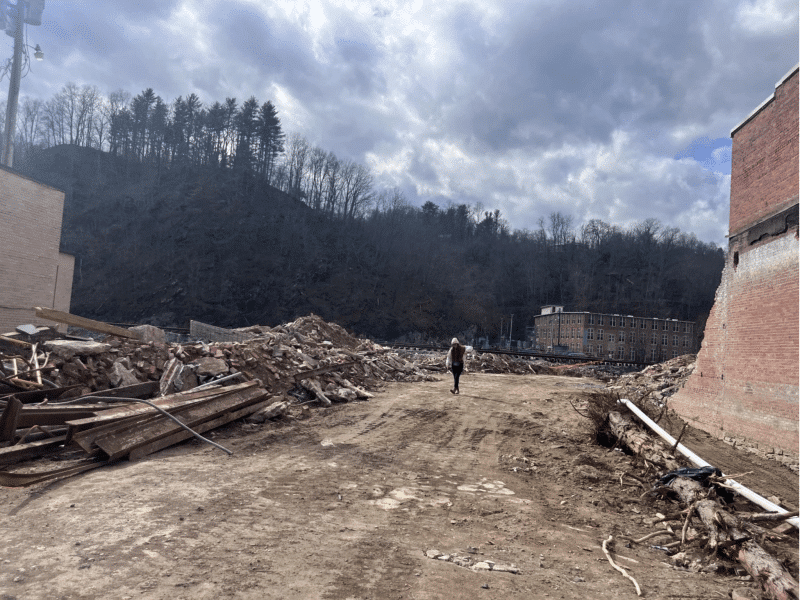
How disaster reporting hit home for two Appalachian journalists after Helene
Disaster journalism is vital, but can be traumatizing for both journalists and sources. We can make it better by treating disaster survivors — and ourselves — with more humanity.
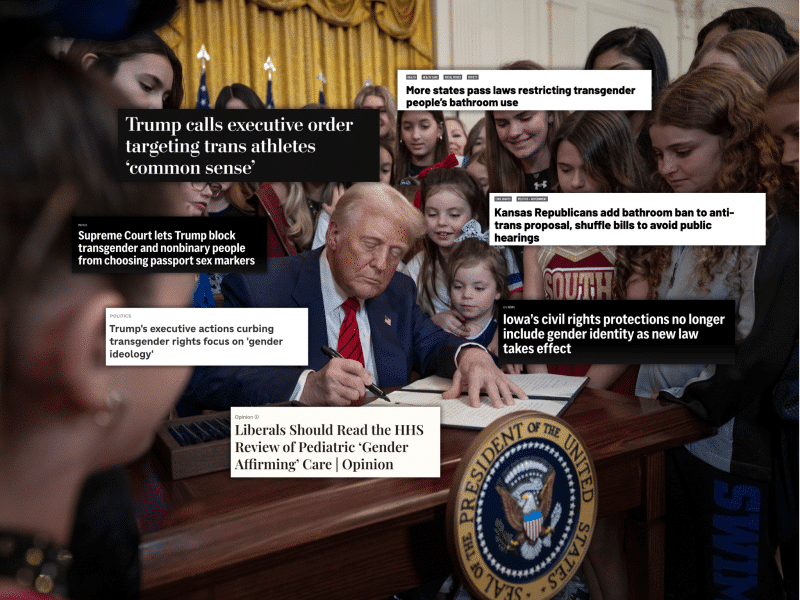
‘Almost media silence’: National, local news ignores trans Americans amid 2025’s anti-trans attacks
The failures of newsrooms to substantively cover anti-trans legislation in 2023 and 2024 have compounded over the first year of Trump’s second term in office.
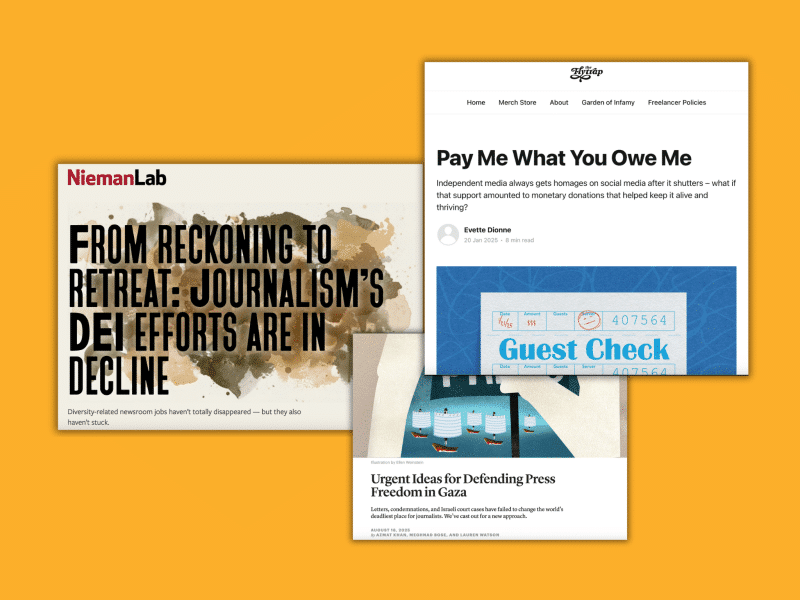
The Objective’s favorite media reporting and criticism of 2025
A non-comprehensive list of The Objective’s co-directors and readers’ picks for media coverage and commentary this year.