
Better immigration reporting starts by questioning assumptions about migration
Reporters should cover migrants as people, not as partisan props. During the Biden administration, reporters’ assumptions about immigrants impeded nuanced coverage about migrant and border policy.
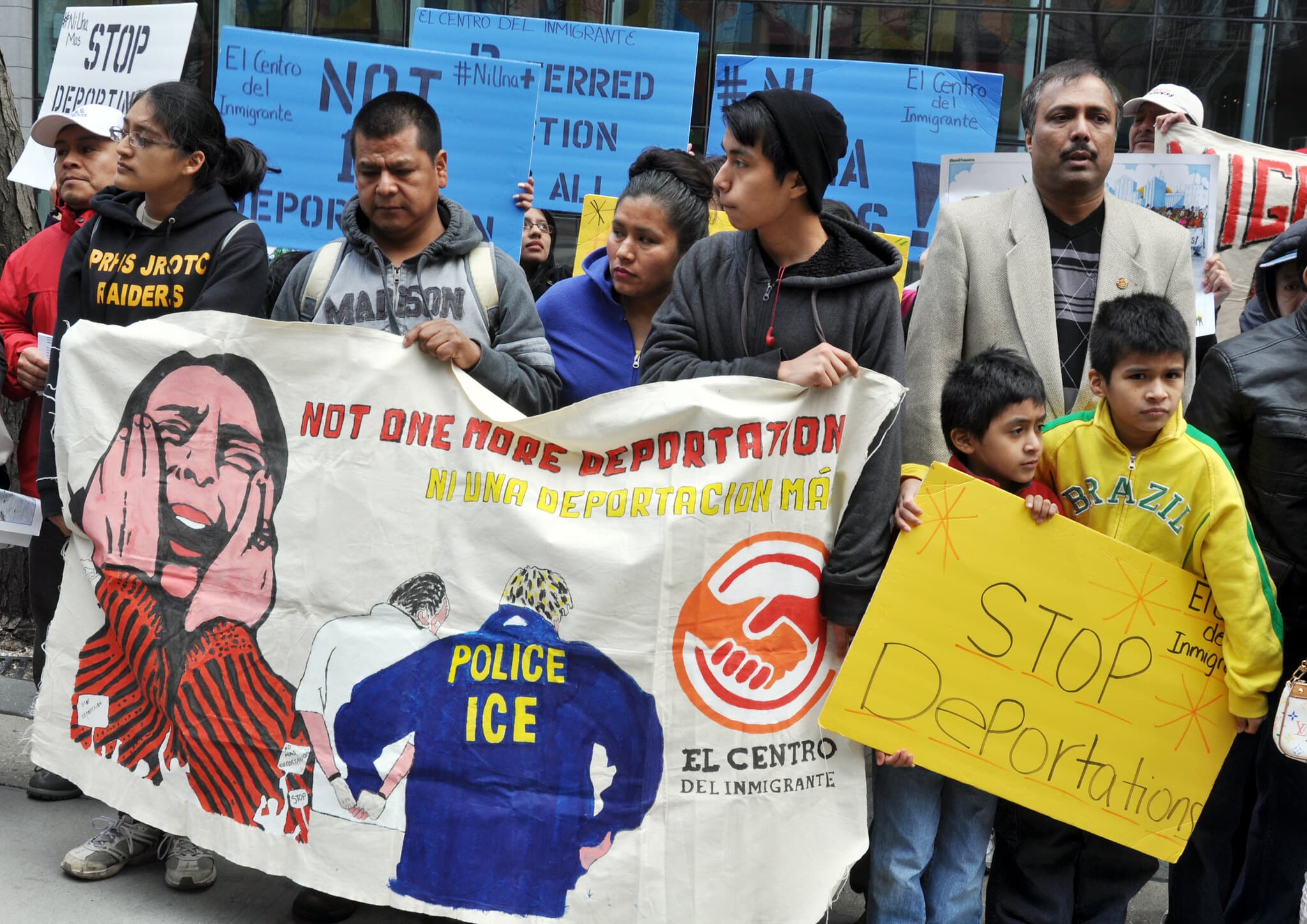
Less than two months into the Biden administration, a White House Press Corps reporter asked if the president’s team would reconsider its decision to process migrant children who arrived alone at the U.S.-Mexico border into the country.
Then-Press Secretary Jen Psaki’s first answer: “No.”
The reporter, who is unnamed in the official transcript from March 5, 2021, leaned into the question.
“Is the plan then to take in and safely and humanely find a home for an unlimited number of unaccompanied children?” the reporter asked.
The reporter’s questions include an assumption many people in the United States have long made: The act of people, largely non-white, attempting to cross the border is bad and must be stopped.
At Biden’s first formal news conference after becoming president, reporters asked more questions on the topic of immigration than any other — many concerned with how the administration would stop people from arriving.
Investigative reporter Aura Bogado, who specializes in immigration topics, says that mentality has led to many journalists covering immigrants and migrants as objects rather than as people — regardless of the administration in power.
Bogado recalls migrant objectification under the Trump administration as sensationalizing photos of a drowned father and daughter in the Rio Grande. Under Biden, she said, it meant hand-wringing headlines about the numbers of arrivals and asking, over and over again, what the president was doing to stop them.
In the sum of its history, the United States has generally sought to keep certain people out. Exclusionary immigration laws barred Chinese people and other Asian nationalities from coming to the United States from the late 1800s well into the 1900s. The federal government conducted large-scale deportations of Mexican and Mexican American people in the ‘30s and ‘50s. During the Holocaust, Jewish migrants were turned away.
In the 1990s under former President Bill Clinton, “prevention through deterrence” was formalized as U.S. immigration policy. Officials reasoned people would stop coming to the United States if they made the process painful and difficult enough. Notably, decades later, people are still arriving and being harmed by the policies, from injury and kidnapping to death.
Though the Trump administration pushed deterrence policies to an extreme, presidents on both sides of the aisle have increased deterrence tactics. Former President Barack Obama made some efforts to protect from deportation undocumented people who came to the United States as children, but he also oversaw the most deportations of any recent presidential term. When significant numbers of Haitians began arriving at the U.S.-Mexico border in 2016, he restarted deportations to the country, even though it was not considered stable enough due to natural disasters.
Biden campaigned on moving toward a more humane system, but his administration made moves prolonging and even enhancing many of the Trump-era policies that left migrants stranded and vulnerable. That included flying migrant families with young children from Texas to California to expel them since Mexico refused to receive them in Tamaulipas because of the level of violence in the state.
While Biden’s policies shifted away from his promises, reporters’ questions did not change. Few asked what had happened to his original plans, and many instead redirected scrutiny to the moments when the administration tried to make more humane decisions.

During the March 5 press briefing, Psaki referenced her experiences as a mother in her second response to the reporter. She called for empathy for migrant children, who were often fleeing persecution or other violence in their home countries and would be particularly vulnerable if expelled back to the streets of northern Mexico border towns by themselves.
When the pandemic started, border officials had immediately expelled most migrants to Mexico without giving them the option to request asylum, a policy known as Title 42. Since a November 2020 court order blocked Title 42 from applying to unaccompanied children, the number of kids arriving at the border alone increased. When an appellate court stayed that decision in late January 2021, the Biden administration chose to continue receiving unaccompanied children at the border.
The reporter again questioned Psaki.
“I’m a mom too, so I certainly feel for all of these children that are fleeing very difficult situations in their homes to come here. But, you know, the fact remains you have [the Department of Homeland Security] projecting 117,000 unaccompanied minors by May,” the reporter said.
At the end of the exchange, they asked again: Would the president “acknowledge” what was happening at the border was a “crisis”?
Define American, an organization working to promote inclusive and nuanced storytelling of immigrant narratives, published a study of media coverage during the first 100 days of the Biden administration. It found national outlets tended to use negative words like “crisis” or “surge” when describing the situation at the border more frequently than outlets actually located at the border. It also found these negative words were three times more common than neutral words in headlines on the topic.
Dara Lind, a former immigration beat reporter now working at American Immigration Council, said many outlets focus on immigration through a political lens rather than a human one or a policy one, and journalists without the deep expertise of covering immigration are often the ones asking questions of White House officials or making decisions about headlines.
“The people who actually get access to decision-makers are not immigration reporters, not border reporters,” Lind said. “They’re not rooted in communities or constituencies who have any knowledge or experience of this.”
Independent writer and investigative reporter Tanvi Misra said assumptions about immigration have prevented journalists from questioning the premise of deterrence behind much of the United States’ migration and border policy.
Misra added that when a Democrat is in office, reporters will often cover the issue from the Republican viewpoint and vice versa.
“Our job is to dig under all of those ideological stances and to be able to figure out what is actually the truth, and I don’t think we did that [during the Biden administration],” she said.
Misra said reporters can start doing better by covering migration as a human phenomenon rather than a partisan issue.
“Migration has always been a thing, and it is a very human fact, and I feel like we should cover it as such,” Misra said. “Put in the resources and train journalists and reporters to cover it with empathy and a wider lens than what those in power are approaching it with.”
Misra sits on The Objective’s advisory board. She did not review this story prior to publication.
Kate Morrissey has been a journalist covering immigration issues at the San Diego-Tijuana border since 2016, and she writes a newsletter called Beyond the Border.
This piece was edited by James Salanga. Copy edits by Jen Ramos Eisen.
We depend on your donation. Yes, you...
With your small-dollar donation, we pay our writers, our fact checkers, our insurance broker, our web host, and a ton of other services we need to keep the lights on.
But we need your help. We can’t pay our writers what we believe their stories should be worth and we can’t afford to pay ourselves a full-time salary. Not because we don’t want to, but because we still need a lot more support to turn The Objective into a sustainable newsroom.
We don’t want to rely on advertising to make our stories happen — we want our work to be driven by readers like you validating the stories we publish are worth the effort we spend on them.
Consider supporting our work with a tax-deductable donation.

James Salanga,
Editorial Director
Related Articles
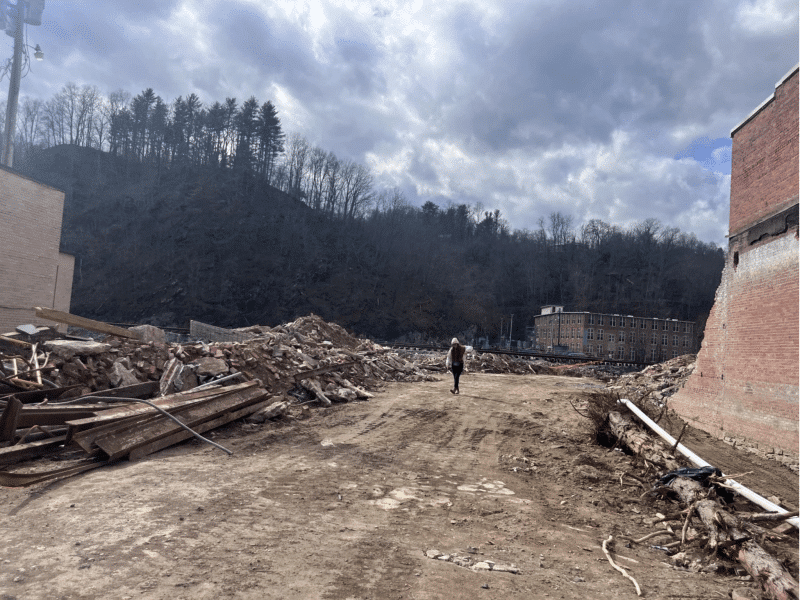
How disaster reporting hit home for two Appalachian journalists after Helene
Disaster journalism is vital, but can be traumatizing for both journalists and sources. We can make it better by treating disaster survivors — and ourselves — with more humanity.
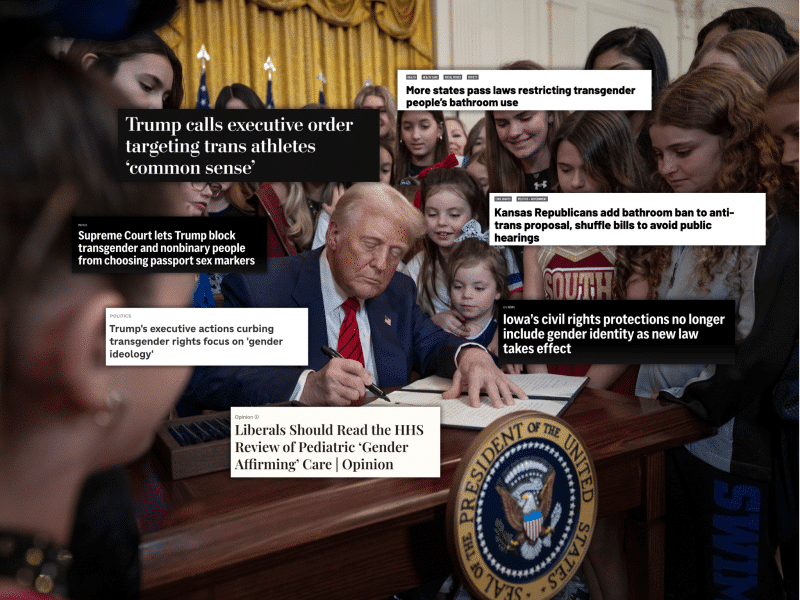
‘Almost media silence’: National, local news ignores trans Americans amid 2025’s anti-trans attacks
The failures of newsrooms to substantively cover anti-trans legislation in 2023 and 2024 have compounded over the first year of Trump’s second term in office.

The Objective’s favorite media reporting and criticism of 2025
A non-comprehensive list of The Objective’s co-directors and readers’ picks for media coverage and commentary this year.