
Democracy can die in broad daylight, too
Jeff Bezos’ suppression of The Post’s opinion section marks a significant blow to a declining mainstream press.
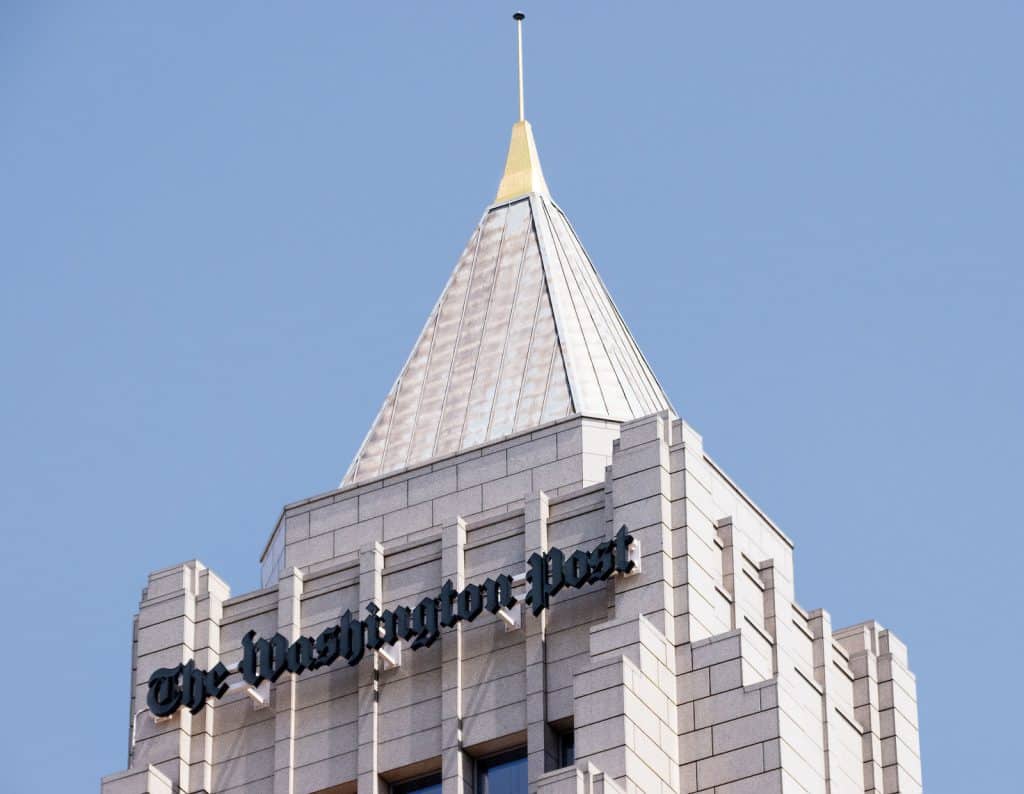
And just like that, there was no more old textile museum in Northwest DC. Instead, in 2020, there was Jeff Bezos’ 25-bathroom-strong house.
Now, in 2025, there is no Washington Post opinion section anymore. Instead, there is Jeff Bezos.
Earlier this week, The Post’s opinion editor David Shipley resigned after Bezos declared the opinion section would now be solely dedicated to covering “personal liberties” and “free markets.”
Bezos, who bought The Post in 2013, deserves credit: Transparency about what the opinion section will stand for is ostensibly a good thing. Newspapers should strive to be transparent about what values drive their opinion and news coverage — when they don’t, it’s a way for owners to mask their political opinions.
However, Bezos’ ownership of The Post and the direction he continues to take it is grim. The ideas he argues for have consequences, and he is still not direct about what these changes will mean. The direction The Post is taking should give all journalists who care about the power of information pause – we must now choose either the slow decline of journalism or to take our journalism and labor elsewhere.
The idea that Bezos believes in a free market and personal liberties is laughable. If he did, Amazon delivery drivers wouldn’t have been forced to pee in plastic bottles to relieve themselves. If he did, he wouldn’t have created a platform that exploited the (publicly owned) US Postal Service to deliver goods and then established itself as a necessary middle-man for selling goods to the vast majority of Americans.
As former Greek Finance Minister Yanis Varoufakis put it in “Technofeudalism” (his book on the erosion of capitalism): “Enter Amazon.com and you have exited capitalism. Despite all the buying and selling that goes on there, you have entered a realm which can’t be thought of as a market.”
Billionaires don’t usually mean “free markets” when they say “free markets.” They usually mean less regulation so they can exploit the market and shape it to give themselves more resources (often at the expense of workers). But Bezos also says he wants to change the opinion section because there is another place than The Post for the free discussion of ideas: “The internet does that job.”
The idea that there’s a vibrant and accessible public square on the internet is also laughable. Some of the largest so-called “public squares” on the internet are owned or run by billionaires like Elon Musk (Twitter) and Mark Zuckerberg (Facebook) – who both attended President Donald Trump’s inauguration.
When Bezos blocked The Post editorial board’s endorsement of Kamala Harris and cost the paper 250,000 subscribers, it exemplified something important: Readers don’t care to distinguish the editorial board or opinion section from the reporting team. A newspaper is a newspaper – opinion, news, and all. And when one patch of the fruit is rotten, readers often don’t want to bite around the rest.
This is both a curse and a blessing. It is incredibly difficult to build new journalism institutions with clear values. But if readers recognize the floor slipping out from under them, then we can at least try to go to them directly with our labor, rather than giving it to places like The Post.
There isn’t a perfect allegory in history for this moment, but we can look to the labor newspapers of the past as a model. Even mainstream papers give us crumbs of possibility: Under owner Adoph Ochs, The New York Times described itself as “independently democratic” until the 1930s when he passed. I believe the only way forward is to forcefully understand, and institutionally communicate, the values that drive our journalism like Ochs did.
Bezos is, of course, not unique. Elon Musk, who whispers into the president’s ear, bought one of the world’s largest megaphones: Twitter. And another billionaire, Patrick Soon Shiong, has blocked critical opinion coverage at The Los Angeles Times as well. Or as Margaret Sullivan, the former media columnist for The Post, writes: “Bezos no longer wants to own an independent news organization. He wants a megaphone and a political tool that will benefit his own commercial interests.”
Billionaires continue to treat newspapers like sports teams – shuffling “players,” buying property, and tarnishing brands. But the real-world consequence is more than just hometown pride – it’s the wholesale destruction of democratic institutions and norms.
Cameron Barr, former senior managing editor of The Post, is also resigning from his role as an editor. In a note, he said The Post used to be an institution that “strengthens American democracy.” Now, Barr said: “I have sadly concluded that The Post is retreating from this mission.”
I’m not sure I believe The Post has always been completely honest about its pursuit of democracy. It certainly hasn’t been clear about what kind of democracy it wants to see. Dedicated to voting rights? Post Employees there aren’t allowed to advocate for DC statehood so they can have representation in the Senate. Multiracial? As the Black members of the newspaper’s union put it in 2022: “We were asked to tell the stories of Black people at an institution that had never fully invested in us.”
But Barr is correct that there’s certainly no way The Post is getting any closer to its stated mission. For a time, newspapers owned by billionaires presented as wolves in sheep’s clothing – the kind and friendly face of newsprint covering a darker incentive. Bezos makes it starkly clear that they’re just wolves who intend on publicly devouring what’s left of the American political system in favor of whatever benefits them and their bizarre world views.
But Bezos has at least helped clarify the stakes – are we writing for everyday people or the family who lives in the 25-bathroom-strong compound?
Journalists must now, by any means available, choose class consciousness – stronger unions, explicit support for Democracy, building worker-owned outlets, defending our communities, and others, too (here and abroad).
There is no room for outlets, and newspaper owners, that undermine the basic democratic principles we all need to live with dignity. Pithy slogans don’t sustain democracy — journalists need the space to do their jobs with intention. The Washington Post isn’t the place for that.
We depend on your donation. Yes, you...
With your small-dollar donation, we pay our writers, our fact checkers, our insurance broker, our web host, and a ton of other services we need to keep the lights on.
But we need your help. We can’t pay our writers what we believe their stories should be worth and we can’t afford to pay ourselves a full-time salary. Not because we don’t want to, but because we still need a lot more support to turn The Objective into a sustainable newsroom.
We don’t want to rely on advertising to make our stories happen — we want our work to be driven by readers like you validating the stories we publish are worth the effort we spend on them.
Consider supporting our work with a tax-deductable donation.

James Salanga,
Editorial Director
Related Articles
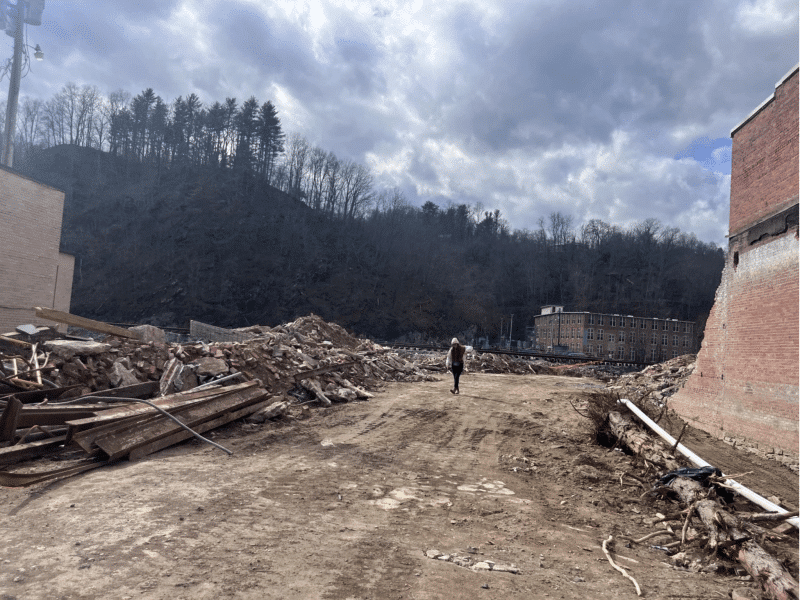
How disaster reporting hit home for two Appalachian journalists after Helene
Disaster journalism is vital, but can be traumatizing for both journalists and sources. We can make it better by treating disaster survivors — and ourselves — with more humanity.
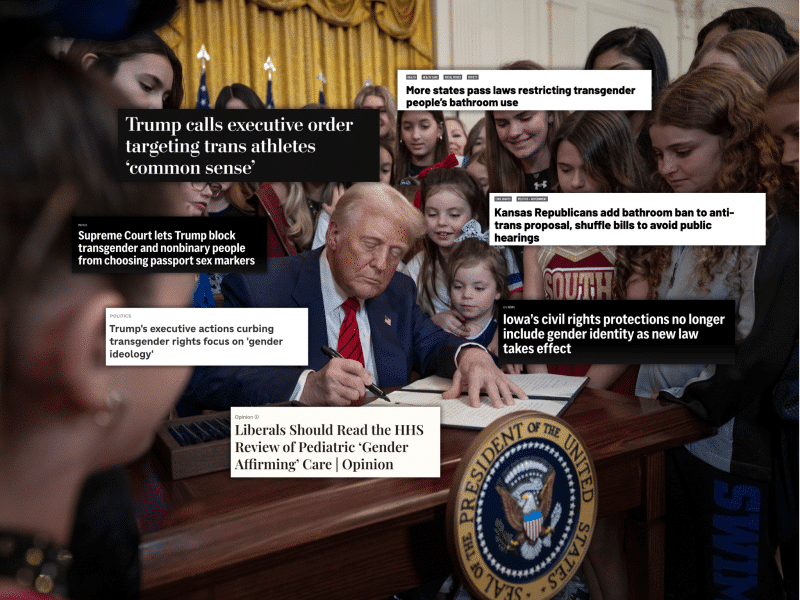
‘Almost media silence’: National, local news ignores trans Americans amid 2025’s anti-trans attacks
The failures of newsrooms to substantively cover anti-trans legislation in 2023 and 2024 have compounded over the first year of Trump’s second term in office.
The Objective’s favorite media reporting and criticism of 2025
A non-comprehensive list of The Objective’s co-directors and readers’ picks for media coverage and commentary this year.