
You don’t mean DEI
The president and the people working for him aren’t discussing a pithy acronym, but the unmaking of integration.

If you ask President Donald Trump, it’s possibly the reason for the first air collision on American soil in 16 years — specifically, the hiring of air traffic controllers with disabilities.
An acronym is easy to write. DEI, taken at its most literal, is “diversity, equity, and inclusion.” But it would be much more useful for journalists to spell out what the administration is doing: resegregation.
The New York Times has published several news stories on DEI in the last few weeks: Some Schools Act After Trump’s D.E.I. Orders. Others Say They’ll Resist, Hegseth Targets D.E.I. in Early Directive at the Pentagon, Trump Fired E.E.O.C. Commissioners in Late-Night Purge.
While some stories (like this explainer) try to clearly explain and contextualize what’s happening with clarity, the Times’ doesn’t offer much to readers to understand the gravity of the situation.
Our responsibility as journalists is to explain the world — just like the New York Times publishers have described the paper in years past — “without fear or favor.” But it’s hard not to believe that outlets like the Times and Axios, constrained by a desire not to upset Republican readers too much, are confusing brevity and cowardice with fairness. In missing the forest for the trees, they are failing to say the obvious: This administration is blatantly blaming desegregation and scapegoating diversity for America’s problems.
Some mainstream journalism institutions would treat the idea that the president aims to resegregate the government as opinion. It’s not. It’s a clear reading of the facts.
The president and the people working for him aren’t discussing a pithy acronym, but the unmaking of integration. Journalists are ultimately writing about who this country gets to be for: White or multiracial. Able-bodied or disabled. All of us or some of us. The journalists who default to his language and explanation are failing their readers.
You might expect mainstream news to care more about contextualizing Trump’s words in his second presidency. (Trump’s ableist behavior — from blaming disabled air traffic controllers to mocking a disabled reporter — is not new.) But many mainstream media stories still present the administration’s claims and words as if the existence and rights of millions of Americans are up for debate.
DEI, like “The 1619 Project,” are chameleons in the modern Republican party lexicon. They’ve meant everything and nothing all at once — as long as they can be used as a scapegoat to justify grievance. Just as Trump and conservatives have used the 1619 Project to justify a book-banning movement across libraries and schools centered on black writers, the president isn’t just blaming DEI for his grievances — he’s angling for the resegregation of government.
Beyond the crash, the presidential administration has sought to remove references to diversity and equity in a workforce and country that is still dealing with the repercussions of segregation. At least one federal agency has suspended observance of Holocaust Remembrance Day, Martin Luther King Jr. Day, and Women’s Equality Day (along with awareness and heritage months).
It’s more than just language and ceremony. While the Centers for Disease Control, Health and Human Services, and Food & Drug Administration have been ordered to restore removed data to its pre-inauguration state, the end of January saw those agencies rush to comply with a Trump executive order seeking to wipe out references to trans and gender-diverse people.
You cannot look at these changes and conclude that the administration is simply making surface-level tweaks — the ramifications of those choices are well-documented.
When references to disability, gender, or race are removed from government documents and buildings, when the president implies disabled people caused a plane crash without evidence, we end up with a country that’s only built for a certain kind of person.
The president’s executive order on DEI from late January reads: “The American people have witnessed first-hand the disastrous consequences of illegal, pernicious discrimination that has prioritized how people were born instead of what they were capable of doing.”
However, DEI emerged from the administration of John F. Kennedy attempting to take affirmative action to ensure employees were not discriminated against. Specifically: Kennedy’s own executive order. Trump and other Republicans have pinned the revocations of these actions and further established laws on merit.
DEI itself has been co-opted into a corporatized, toothless industry that often concerns itself primarily with representation, rather than tangible gains, but the focus from the Trump administration is much more insidious.
As Jamelle Bouie writes in the Times’ opinion section: “What does D.E.I. mean to the president and his administration? It’s the presence — in a skilled or high-status role — of anyone who isn’t white, male, and able-bodied, regardless of qualifications or abilities.“
Trump’s cabinet only has three people of color. If you take Trump’s executive order at face value, you can conclude he believes only a disproportionate number of white men are “capable” of accomplishing his goals (or that a large enough number of people of color are simply unwilling to work for him at these levels — a statement in and of itself).
This is part of a much bigger picture. Despite claims of a great realignment, Republicans are still primarily a party for white men. Their electorate highlights that: According to Pew research from 2024, only 12% of black Americans lean Republican, same with 35% percent of Asian Americans and 35% percent Latinos.
Meanwhile, elected Democratic Party officials represent large pluralities of people, including white men, from all walks of life. Democrats in Congress retain the majority of women, Latinos, black Americans, LGBTQIA+ folks, and immigrants. While white men represent a significantly disproportionate share of the U.S. Congress, that number is quantifiably and massively more disproportionate if you remove Democrats from the equation.
All Republicans are not white, but those who aren’t are significantly rarer than in the Democratic party. Mainstream political journalism still often presents this reality as coincidental (or ignores it together), rather than contextualizing it as manufactured.
None of this is to say journalists should paint the Democratic party as saviors of underrepresented people. Party politics for most voters are a calculus, not a sport — and with Americans locked into a two-party system where both parties in power don’t seek to make room for new ones, there are limited electoral options for those who aren’t represented by Republicans or who feel tokenized by Democrats.
But there is only one party disproportionately prioritizing the dismantling of protections for Americans who don’t look like 44 of our last 45 presidents. Political reporting that ignores this obvious reality and parrots this administration’s fascist talking points isn’t journalism and at worst, it isn’t even stenography: It’s carrying water to reinstate segregation and dismantle critical protections for all Americans.
Gabe Schneider is the co-director of The Objective and a growth strategist for Los Angeles Public Press.
This story was edited by James Salanga.
We depend on your donation. Yes, you...
With your small-dollar donation, we pay our writers, our fact checkers, our insurance broker, our web host, and a ton of other services we need to keep the lights on.
But we need your help. We can’t pay our writers what we believe their stories should be worth and we can’t afford to pay ourselves a full-time salary. Not because we don’t want to, but because we still need a lot more support to turn The Objective into a sustainable newsroom.
We don’t want to rely on advertising to make our stories happen — we want our work to be driven by readers like you validating the stories we publish are worth the effort we spend on them.
Consider supporting our work with a tax-deductable donation.

James Salanga,
Editorial Director
Related Articles
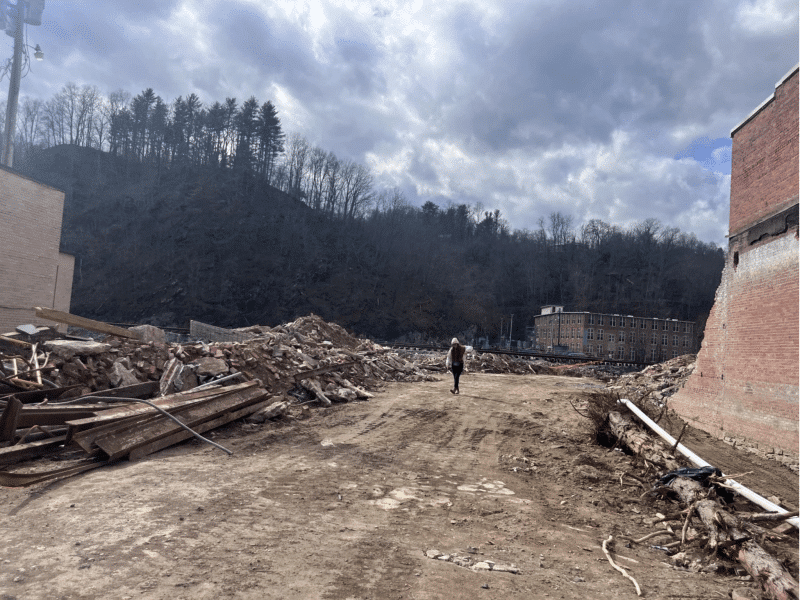
How disaster reporting hit home for two Appalachian journalists after Helene
Disaster journalism is vital, but can be traumatizing for both journalists and sources. We can make it better by treating disaster survivors — and ourselves — with more humanity.
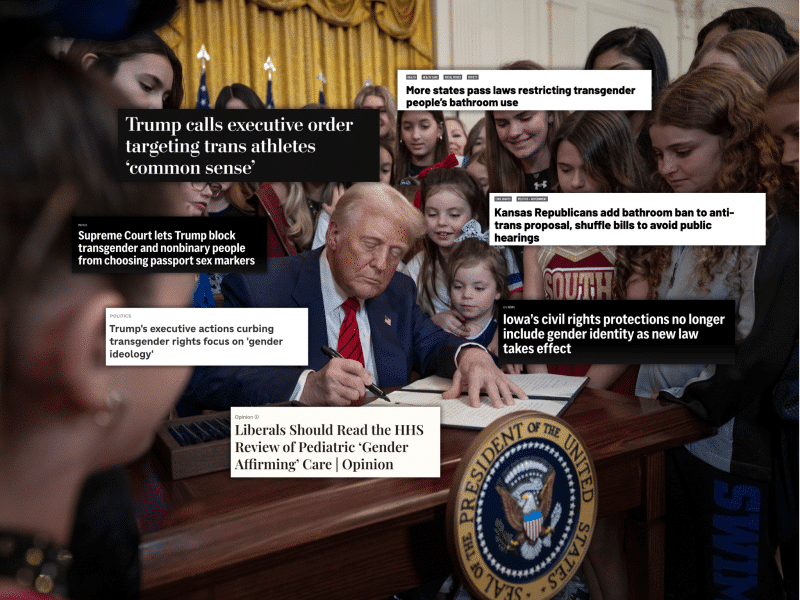
‘Almost media silence’: National, local news ignores trans Americans amid 2025’s anti-trans attacks
The failures of newsrooms to substantively cover anti-trans legislation in 2023 and 2024 have compounded over the first year of Trump’s second term in office.

The Objective’s favorite media reporting and criticism of 2025
A non-comprehensive list of The Objective’s co-directors and readers’ picks for media coverage and commentary this year.