
Don’t conflate journalistic caution, care with advance compliance
As Trump’s attacks on press continue, the media ecosystem needs to reckon with oppression and censorship by reorienting itself toward real community protection, rather than complying in advance.

Less than two months into the second Trump administration, the president has made good on prioritizing attacks on the press.
The new Federal Communications Chair Brendan Carr launched investigations into NPR and PBS while reestablishing complaints against ABC, NBC, and CBS. Comcast, the parent company of NBC News and MSNBC, is being investigated for its diversity, equity, and inclusion programs. Several “general news” sites are blocked for a subset of federal employees. Plus, the White House revoked access to the Oval Office for the Associated Press after it refused to revamp its stylebook to unilaterally adopt the Gulf of Mexico as the Trump-executive-ordered “Gulf of America.” Newsprint materials from Mexico and Canada could be subject to Trump’s 25% tariffs on those imports starting next month, potentially jacking up prices of magazines and print news products that are already struggling to retain audiences.
What the bulk of mainstream newsrooms seem to be missing is that there’s a difference between complying in advance — like implying DEI programs, flawed as they are, and the people they’re intended to serve are expendable insofar as they inhibit a company from continuing to make money — and proceeding thoughtfully so the most targeted journalists have the community, financial, and legal insurance needed to do their jobs.
In the face of pushback, PBS, Disney, and other major media companies have preemptively shuttered their DEI departments. Newsrooms kept going to the Oval Office instead of boycotting or making another substantial stand in support of their shut-out AP colleagues.
As censorship has gotten more blatant and the government’s fist has squeezed more tightly around First Amendment rights, the famous last line of Martin Niemöller’s “First They Came” is making rounds as a warning bell: ”Then they came for me—and there was no one left to speak for me.”
But there are limits on empathy-dependent, “this could be you” solidarity — further exacerbated by industry norms, as chronicled by Steven Thrasher for LitHub.
A thirst for access and need for the “scoop” supersedes any appeal to broader coalition-building and strengthened press protections premised on the idea that one’s newsroom, too, could face repression. It’s not just the AP saga that highlights this phenomenon. It’s also the failure of journalists to support their Palestinian counterparts as they report on Israeli apartheid and bombardment, facing the deadliest violence since the Committee to Protect Journalists began recording journalist killings. It’s looking agog, outraged, and critically at police violence against journalists but stenographing police when the same violence happens to those not protected by their job.
For an industry meant to hold power to account, there’s a whole lot of capitulating to that power.
Related: You don’t mean DEI
After the arrest and threatened deportation of Columbia University student and Palestinian Mahmoud Khalil, Columbia Journalism School dean Jelani Cobb made comments interpreted in the New York Times as telling student journalists to “obey in advance,” which he quickly rebutted them on Bluesky: Cobb urged caution in tandem with courage, not complete silence.
“To be able to practice journalism, journalists do need to fight for specific things they need — things like livable wages; access to safe housing, food, air and water; and a freedom from discrimination and oppression not just for themselves, but for their family, friends, colleagues and fellow humans,” Thrasher wrote in LitHub. “Journalists can only function freely in a society where Mahmoud Khalil can also do his work freely. These are not luxuries; these are necessary for the practice of journalism to even happen.”
Due to finances, not every newsroom can mount a legal challenge to establish new precedents, as the AP has against Trump, backed by several other outlets’ legal filings. But journalists don’t need to wait for the law to catch up.
Truthout’s masthead has called for news organizations to continue to tell the contextualized truth of Trump policies, recommit to making their reporting accessible outside of a paywall, support independent outlets not regurgitating anti-trans narratives, and articulate potential threats to journalism without caving in advance to equip people with the full spread of information they need to act on. El Tímpano’s recently revamped interview guidelines, meant to protect their sources, are one example of solidarity premised on recognizing the precarity of a particular position — immigrants, particularly those who lack documentation, under an anti-immigrant, xenophobic administration.
Reporting, now more than ever, needs to be grounded in a deep care of each other, our rights, and the spectrum of access we have to them because of the specificity of our identities and experiences. Yes, these things could happen to any of us, to any of our newsrooms. But some of us are more vulnerable than others under the system we live in. As Trump’s attacks on press continue, the media ecosystem needs to reckon with oppression and censorship by reorienting itself toward real community protection, rather than complying in advance.
James Salanga is the co-director of The Objective and the podcast producer for The Sick Times.
This piece was edited by Holly Rosewood. Copy edits by Gabe Schneider.
We depend on your donation. Yes, you...
With your small-dollar donation, we pay our writers, our fact checkers, our insurance broker, our web host, and a ton of other services we need to keep the lights on.
But we need your help. We can’t pay our writers what we believe their stories should be worth and we can’t afford to pay ourselves a full-time salary. Not because we don’t want to, but because we still need a lot more support to turn The Objective into a sustainable newsroom.
We don’t want to rely on advertising to make our stories happen — we want our work to be driven by readers like you validating the stories we publish are worth the effort we spend on them.
Consider supporting our work with a tax-deductable donation.

James Salanga,
Editorial Director
Related Articles
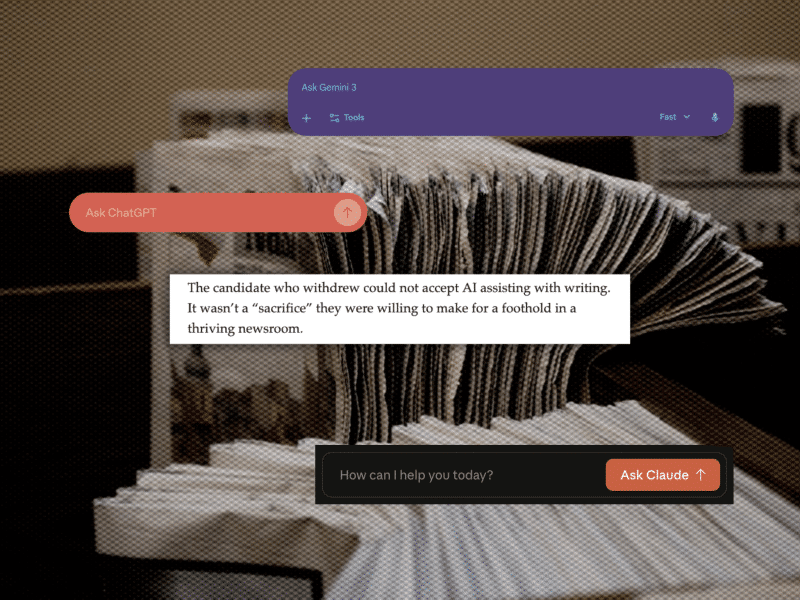
It’s healthy for student journalists to raise concerns about AI
Generative AI isn’t a real solution to the issues facing newsrooms. Students are right to point that out.
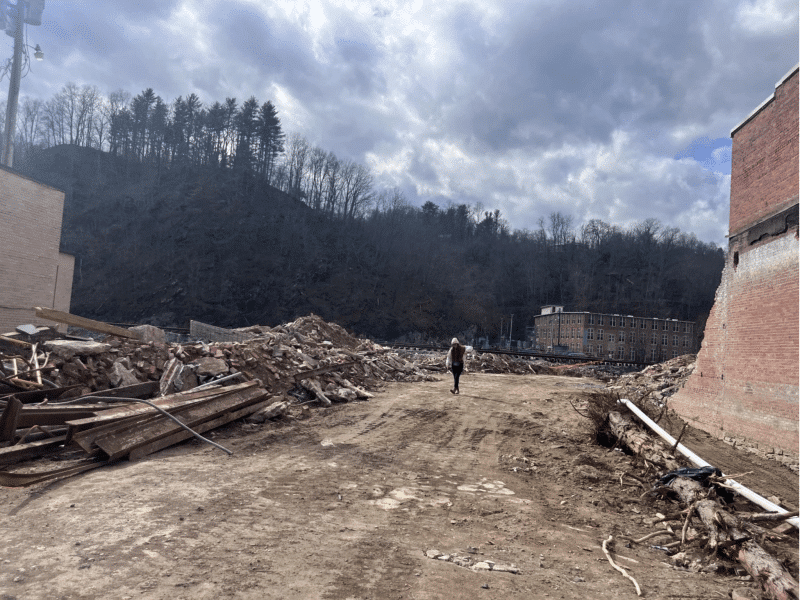
How disaster reporting hit home for two Appalachian journalists after Helene
Disaster journalism is vital, but can be traumatizing for both journalists and sources. We can make it better by treating disaster survivors — and ourselves — with more humanity.
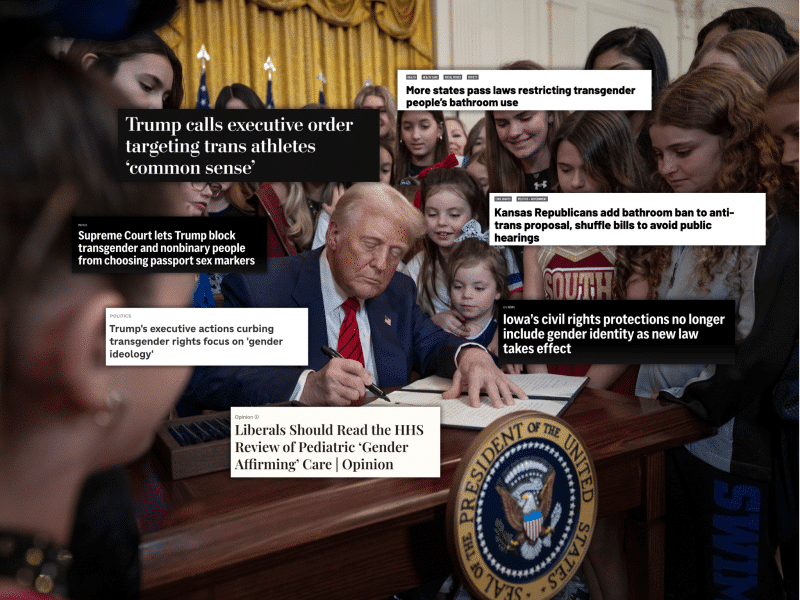
‘Almost media silence’: National, local news ignores trans Americans amid 2025’s anti-trans attacks
The failures of newsrooms to substantively cover anti-trans legislation in 2023 and 2024 have compounded over the first year of Trump’s second term in office.