
U.S. journalists face retaliation, censorship for supporting Palestinian human rights
A growing list of journalists have been silenced for criticizing Israel’s military campaign and highlighting its deadly impact on Palestinians.

For the past six months, Jane* has maintained a regular freelance reporting relationship with Newsday, the Pulitzer Prize-winning daily news publication primarily serving readers in Long Island, producing close to 20 articles appearing online and in print. But about two weeks ago, she woke up to an email from her editor letting her know three stories she’d already filed had been “killed,” journalistic jargon for rejected. No explanation was given.
After pushing back requesting the reasoning, Jane’s editor called.
“She basically said that it was due to [me] violating the outlet’s social media guidelines,” Jane, who asked to use a pseudonym to discuss the situation so as not to face further professional repercussions, told The Objective. “I asked what specific posts, and the editor said they couldn’t comment further… She just basically said that she wasn’t at liberty to say anything else.”
Jane believes she was silenced for speaking out about the Israeli military’s attacks on Gaza, where, according to Gaza’s Ministry of Health, over 9,000 Palestinians have been killed, predominantly by Israeli bombings, after an early October attack led by Palestinian militant group Hamas killed over 1,400 Israeli civilians and kidnapped about 200, according to the Israeli government.
“Everyone’s talking about it, so I was, you know, being a part of that conversation and advocating for both people on both sides, civilian life,” Jane said. “A lot of my posts were critical about one, the way the media was covering this, and two, debunking myths and disinformation.”
During the time she’d been working with Newsday, Jane said she had been vocal online about a range of other topics — expressing support for the Black Lives Matter movement and “pro-choice” causes — but never once heard any similar concerns from editors. Moreover, she added, she was never informed that as a freelancer she was required to abide by the company’s social media policy, and had never even seen a copy of it before her reprimand.
Representatives for Newsday did not immediately respond to questions about this specific situation, or their social media policies for freelancers more broadly.
“I wouldn’t have been so frustrated if it didn’t really feel super-targeted and, you know, pulling out the rug from under me just about Palestine stuff,” Jane added. “It’s just really frustrating not to, as a writer and a journalist, be able to give voice to the issues that are the most important, and be able to share our own perspectives.”
Jane is not alone in her frustration. Since the Hamas attack on Israel and Israel’s subsequent airstrikes on Gaza began, American journalists across media platforms have faced retaliation for speaking out about mass civilian deaths and electricity and water blockades in Palestine, or otherwise criticizing Israel. The situation has escalated such that many reporters are opting to stay silent about the crisis altogether, for fear of facing professional repercussions.
Objective suffering, subjective discipline
Conversations about whether and how journalists speak out on social justice and humanitarian causes are nothing new, nor are specific concerns about reporters commenting on Israel and Palestine. In 2021, for example, then–22-year-old journalist Emily Wilder was fired after just two weeks on the job at the Associated Press, following a conservative media-led crusade which highlighted her past social media posts sympathetic to Palestinian liberation.
But anecdotal evidence suggests the latest escalation of violence has catalyzed the issue, even in the face of human rights organizations and the United Nations’ condemnation of the Israeli government’s human rights violations.
In just October, at least four media professionals have lost their jobs over pro-Palestinian content or commentary they shared: PhillyVoice basketball writer Jackson Frank for posting about his “Solidarity with Palestine,” Artforum editor-in-chief David Velasco for publishing and signing an open letter from artists calling for a ceasefire in Gaza, political cartoonist Steve Bell for sharing a drawing of Israeli President Benjamin Netanyahu some deemed antisemetic and prominent eLife journal editor Michael Eisen for sharing the Onion headline, “Dying Gazans Criticized For Not Using Last Words To Condemn Hamas.”
Others still have faced other forms of discipline. Harper’s Bazaar editor Samira Nasr was forced to apologize for publicly criticizing Israel’s blockade of electricity and water in Gaza as “inhuman”; the leftist podcast “By Any Means Necessary” was taken off the air after its hosts argued for the “just cause of the Palestinian people to oppose apartheid and colonialism”; Palestine Legal attorney Dylan Saba had an opinion article about censorship of Palestinian voices pulled from The Guardian. The list goes on.
In mid-October, after hearing from members with concerns about a growing retaliation against pro-Palestinian journalists, the National Writers Union (NWU) and affiliated Freelance Solidarity Project began circulating a survey asking its members about their experiences.
Group leaders declined to share specific figures about the number of entries the survey has received, but said in a statement to The Objective that the responses “show that media workers are facing threats to their livelihoods in response to social media posts stating support for Palestinians or for sharing information critical of the state of Israel.”
Some experts have likened this moment to a new McCarthyism, in which any dissenting voices are silenced.
“It’s just one of those issues that is very divisive, produces a lot of strong emotion. And when you have an issue like that, it’s not surprising to find a lot of censorship in its wake,” said Aaron Terr, director of public advocacy at the Foundation for Individual Rights and Expression, known as FIRE. “It’s so emotionally charged that there’s an impulse to simply shut down the speech of people who don’t agree with you on that issue.”
“It’s not new,” Terr continued, “but, I think that there’s a concern that there has been an escalation of the worst excesses of ‘cancel culture’ in the last couple of years.”
For Palestinian journalists living in the U.S., meanwhile, accusations of bias are all but normalized. Abdallah Fayyad, a former Boston Globe editorial writer soon joining Vox, said his expertise on the conflict is routinely overshadowed by his personal connection to Gaza — and he too had a freelanced piece about the situation pulled by higher-ups in recent days.
Related: Q&A: Sana Saeed and Abdallah Fayyad on U.S. media coverage of Palestine
“We understand this issue by being Palestinian more than anybody, but we’re just viewed as inherently biased journalists when it comes to this,” Fayyad recently told “Re:Orient,” a podcast published by the Arab and Middle Eastern Journalists Association (AMEJA). The organization recently published a guide in service of accurate coverage of Palestine and Israel.
“Time and again, we are trying to prove that we can be objective even if we are feeling this personally because we know people who are suffering, because we ourselves are suffering,” he added. “Regardless of that, we have an objective understanding of the occupation of where the violence comes from. Our side of the story matters.”
The double standard of free expression
Beyond the journalists who have been reprimanded are many more who stay silent to avoid discipline. Many signatories of open letters expressing support for Palestinians sign only with their first name, or sans attribution — a reflection of this phenomenon.
And those journalists who are impacted directly likely have little legal recourse; private companies are by and large free to discipline employees for political speech, so long as they’re not running afoul of anti-discrimination laws or Weingarten rights.
“The more [companies] police their employees’ or customers’ speech or political views, the more people are going to self-censor,” Terr said. “We don’t we don’t want a society where people increasingly feel like they can’t speak their minds without losing their livelihoods.”
NWU officials said they’ve been steering impacted journalists towards Palestine Legal, a civil rights organization advocating for individuals and communities in support of Palestine. In a statement last month, the organization said it’d responded to nearly 200 incidents of “suppression of Palestinian rights advocacy” in just the first 11 days following the latest stretch of violence in Israel and Palestine.
“We’ve seen an exponential increase in requests for legal help,” Palestine Legal director Dima Khalidi told Al Jazeera. “The attack is widespread and is far-reaching.”
Earlier this week, the Council on American-Islamic Relations also put together a guide for employees who may be approached by human resources for posts supporting Palestine.
For impacted journalists and their allies, the solution to such attacks is straightforward: no double standard for free speech across the spectrum, especially when it comes to government enforcement and material repercussions.
“Even if you’re sympathetic to the punishments that are being doled out now … it’s really in your interest to be against it on principle,” Terr said. “Because you don’t know when the cultural and political tide is going to turn back against you.”
“Any real defender of the First Amendment and any real journalist worth their salt would call that out for what it is, you know, and that’s censorship,” Fayyad echoed.
Related: Objectivity and Palestine
Jane, for her part, said she’s “struggling” with how to move forward. She deactivated her account on X (formerly known as Twitter), noting she “still want[s] to raise awareness about what’s going on” but is worried about how it might impact her job search moving forward.
She said she hopes if anything good can come from her story, it’s more conversation about journalism and “objectivity.”
“I would kind of hope that we have, in the future, more conversations about journalism and free speech in general,” she said. “Just because someone’s not Tweeting or Instagramming about their biases doesn’t mean they’re not still there.”
Jacob Gardenswartz is a reporter based in Washington, D.C. who covers the federal government’s impact on Americans throughout the country.
This piece was edited by James Salanga. Copy edits by Omar Rashad.
We depend on your donation. Yes, you...
With your small-dollar donation, we pay our writers, our fact checkers, our insurance broker, our web host, and a ton of other services we need to keep the lights on.
But we need your help. We can’t pay our writers what we believe their stories should be worth and we can’t afford to pay ourselves a full-time salary. Not because we don’t want to, but because we still need a lot more support to turn The Objective into a sustainable newsroom.
We don’t want to rely on advertising to make our stories happen — we want our work to be driven by readers like you validating the stories we publish are worth the effort we spend on them.
Consider supporting our work with a tax-deductable donation.

James Salanga,
Editorial Director
Related Articles
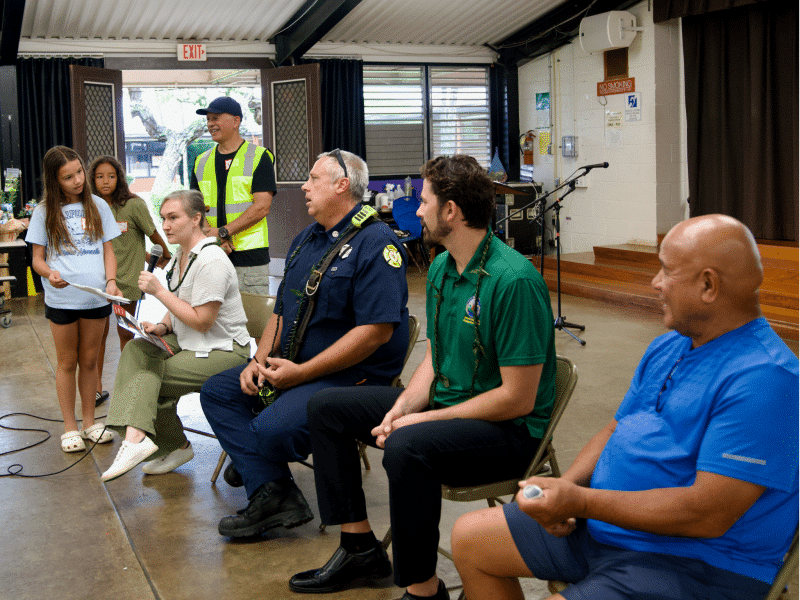
Native Hawaiians, new newsrooms work to shift journalism norms in Hawai’i after legacy media exclusion
As the Hawaiian Islands grapple with rising natural disaster and a news desert prognosis, a wave of community-stewarded projects centering Native Hawaiians and their values is trying to shift the culture of journalism on the islands.
Fort Worth Report becomes Texas’s sixth unionized newsroom
The Fort Worth Reporters Guild voted 11-1 to unionize, and will begin working with management on collective bargaining for a contract.
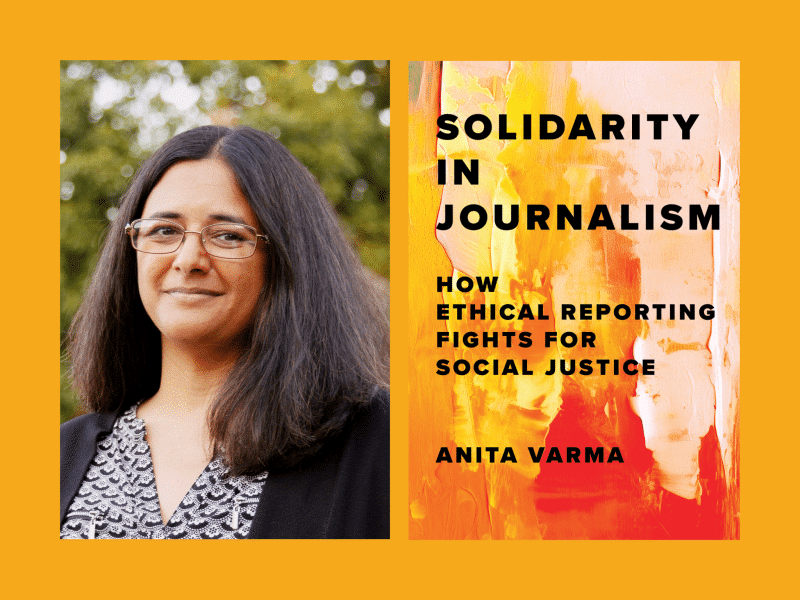
Q&A: ‘All journalism advocates’: Anita Varma on solidarity journalism
Journalism professor Anita Varma on her forthcoming book, Solidarity in Journalism: How Ethical Reporting Fights for Social Justice, the limits of the advocacy vs. journalism conversation, and more.