
New Borealis report: Prioritize funding BIPOC media, not AI

An abridged version of this story first appeared in our newsletter, The Front Page, which examines systems of power and inequity in media. Subscribe here.
Mainstream media has harmed Black people for generations in the United States – from publishing slave catching advertisements to using passive voice when it comes to police shootings.
How can the harm be repaired? According to Borealis Philanthropy’s new Thriving BIPOC Journalism Report, released July 23, part of the road to media reparations must include philanthropic prioritization of financial investment in Black, Indigenous, Asian and Latine journalism over flashpoint technologies like generative artificial intelligence. Over $21.6 billion in investments went to generative artificial intelligence startups in 2023 through Sept. 30 alone.
Editorial pages have been sites where newsrooms argued for segregation. “The news media have failed to analyze and report adequately on racial problems in the United States and, as a related matter, to meet the Negro’s legitimate expectations in journalism,” the Kerner commission wrote in 1968. “The media report and write from the standpoint of a white man’s world.” Social media policies of newsrooms most often impact marginalized journalists — from reporters facing retribution for voicing support for Black Lives Matter in 2020 to expressing solidarity with Palestinian human rights in the past eight months.
Related: U.S. journalists face retaliation, censorship for supporting Palestinian human rights
Given that reality, Media 2070, started by the Black Caucus of nonprofit organization Free Press, takes its name from its goal: media reparations and transformation by the year 2070.
“Media reparations is as much about the process that we take to get to repair as much as it is about the destination we’re talking about in 2070,” Diamond Hardiman, the reparative journalism manager at Free Press, told HuffPost.
“For centuries, this [BIPOC] reporting has stood in resistance and opposition to mainstream media, which has long muted, distorted, and ignored the narratives and information needs of BIPOC communities,” the report’s authors write. “Who will we position to save our already fragile democracy: ChatGPT and other generative AI products … or local BIPOC journalists and news organizations?”
Through financial modeling, partnership with researcher Dr. Wilneida Negrón and small-group interviews with 11 Black, Indigenous, Asian, and Latine journalists and media-makers across the U.S., the report developed indicators for thriving BIPOC media organizations and ecosystems and articulates four different scenarios for the latter. (Uyiosa Elegon, one of the interviewees for the report, was a former Democracy Correspondent for The Objective.)
The most favored by interviewees — ”Abundance, Repair, Reimagine” — is estimated to cost $71.6 billion and envisions local Black, Indigenous, Asian, and Latine journalism “resourced in abundance.”
“We mean not only in fiscal abundance, but also in the number of personnel and the possibilities of stories they can cover,” the report’s authors write.
There are a growing number of philanthropic efforts dedicated to increasing diversity in media and supporting the U.S. BIPOC media ecosystem, including Pivot Fund and the Racial Equity in Journalism Fund. And Press Forward, a multi-foundation initiative dedicating $500 million to local journalism, centered its first open call for funding around outlets serving underserved communities.
Still, the Borealis report’s authors argue that the current efforts — while helpful — are more closely related to their “Hubs Ecosystem-Building Scenario,” which estimates news hubs in the top 26 most multi-ethnic cities in the United States. They project the funding to accomplish that outcome is $360 million.
Interviewees for the report named it as their least favorite scenario, with many seeing it as “simply a maintenance of the status quo.”
The current philanthropic landscape for BIPOC journalism remains far from the “Abundance, Repair, Reimagine” possibility.
A 2023 report from the Pivot Fund authored by the fund’s founder, Tracie M. Powell, and Meredith D. Clark, who led the News Leaders Association’s diversity survey for several years before resigning in 2022, characterized BIPOC journalism leaders as “architects of necessity” due to the constraints around securing funding, such as colorblind committees, lack of revenue-focused staff, and burdensome program participation requirements.
BIPOC leaders say another hurdle to funding is having to argue their work’s value.
“Occasionally the reason from white program officers [that we weren’t funded] has been that they don’t think our reporting will have an impact if it is only reaching low-income communities of color,” one leader interviewed for the report said. “Other times, it is because journalism funders are focused on sustainability, and they cannot see how a newsroom focused on a low-income audience will be sustainable.”
Related: After 2020, Black-led newsrooms ask: Where is the long-term support?
And funding for Black-led newsrooms continues to be scarce or flagging.
“[Funders] need to stop looking for racial and ethnic media projects that are ‘sexy,’” Dana Amihere, co-founder of AfroLA, told The Objective last year. “That fit their agenda of respectability politics, in terms of what ethnic media should look like: the right type of Latine, the right type of person writing from X community.”
Beyond reckoning with how investments are distributed throughout the journalism field, the Borealis report’s authors argue that the next step toward a “more reparative, equitable and representative media landscape” is a more extensive mapping and community assessment of the existing BIPOC media landscape in the U.S.
Ultimately, the report is a call to action, its authors write:
“If we do not regard—and thus invest in—BIPOC media makers as the bearers of cultural capital and nationwide transformational change that they are, we risk carrying forward our country’s long and troubled legacy and worsening inequality concerning which people, communities, and frameworks we invest in, and thus who has the power to shape the future.”
Borealis’s Racial Equity in Journalism Fund is a funder of The Objective. No one from our funder reviewed this content before publication and this is not sponsored content.
James Salanga is the co-director of The Objective and an audio producer for The Sick Times.
We depend on your donation. Yes, you...
With your small-dollar donation, we pay our writers, our fact checkers, our insurance broker, our web host, and a ton of other services we need to keep the lights on.
But we need your help. We can’t pay our writers what we believe their stories should be worth and we can’t afford to pay ourselves a full-time salary. Not because we don’t want to, but because we still need a lot more support to turn The Objective into a sustainable newsroom.
We don’t want to rely on advertising to make our stories happen — we want our work to be driven by readers like you validating the stories we publish are worth the effort we spend on them.
Consider supporting our work with a tax-deductable donation.

James Salanga,
Editorial Director
Related Articles
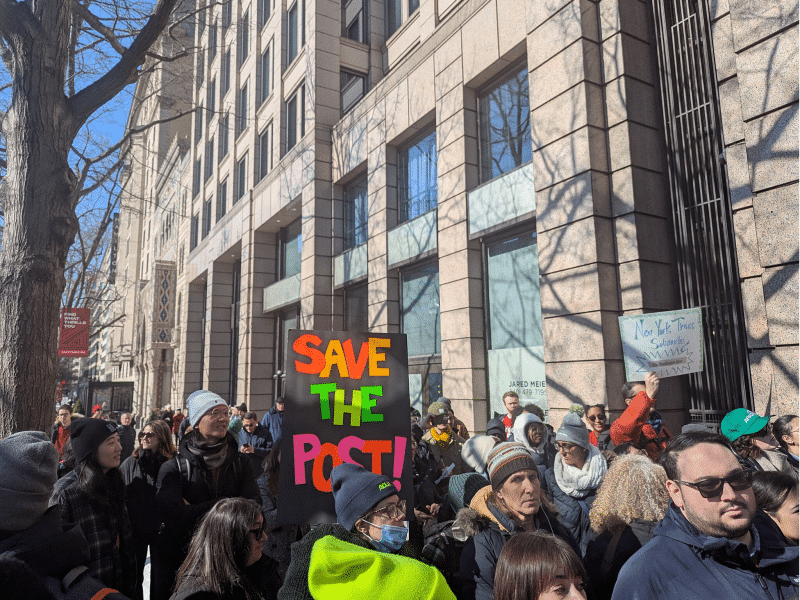
Washington Post lays off race and ethnicity reporters
After cutting around one-third of staff, the Washington Post says it will concentrate on “areas that demonstrate authority” — with a national reporting desk that is now overwhelmingly white.

In the wake of defunding public media, rural radio holds steadfast
With the dissolution of the Corporation of Public Broadcasting — a 60-year support system — tribal-serving radio stations face a steep climb towards community self-sufficiency head-on.
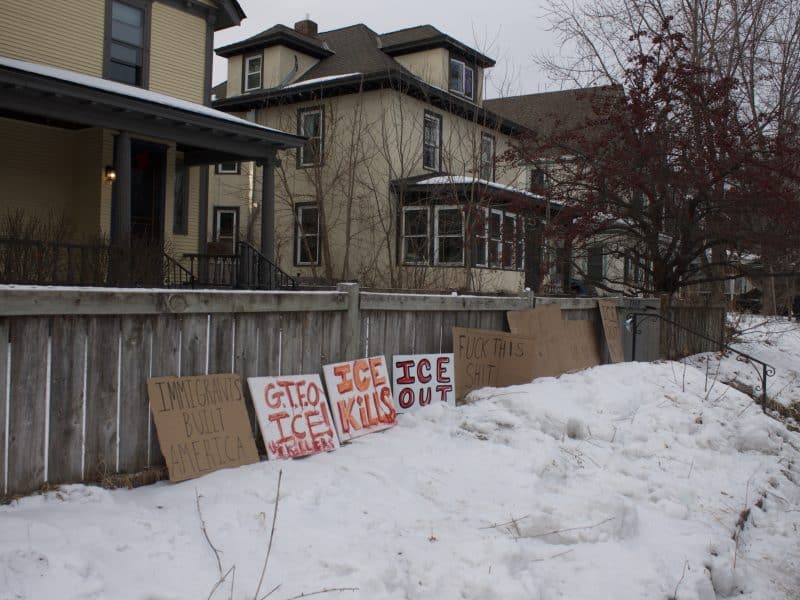
As ICE agents flood Minnesota, local reporters say national news misses the mark
Recent New York Times reporting on a Minnesota scandal may have cast unwelcome attention to the state’s Somali community, but it isn’t the first time national journalists haven’t captured the full scope of Minnesota’s local stories.