
CapRadio’s missing $760,000 shows how public media leaders fail the public
When leaders sacrifice staff instead of their own salaries, or even worse, let hundreds of thousands of dollars go missing, they don’t fulfill the promise of a public media.
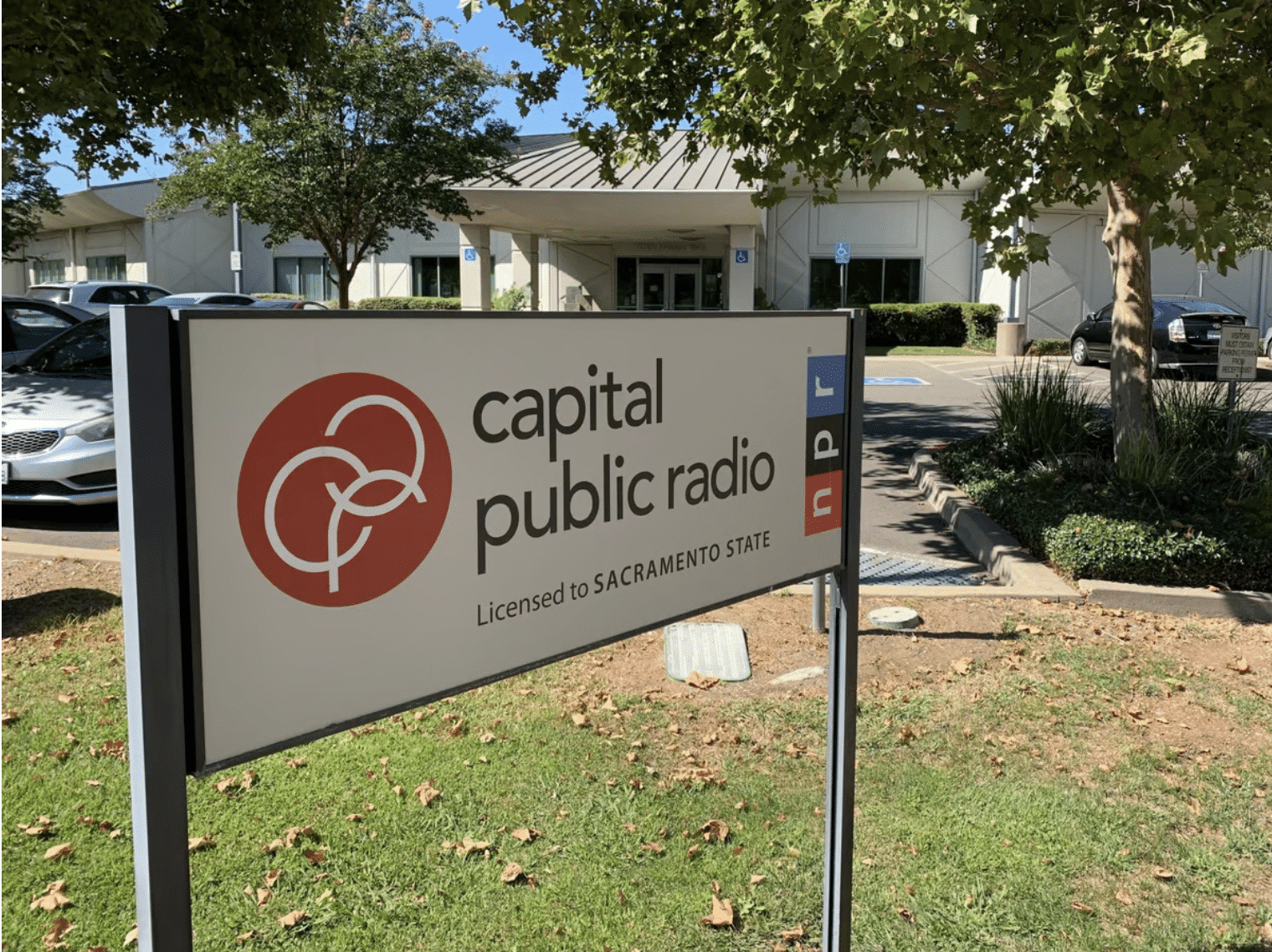
Reporters at Sacramento’s NPR affiliate, CapRadio, unveiled this week that its former general manager was the suspected recipient of over half of $760,000 in “mysterious” payments that couldn’t be backed up with receipts.
The former GM, Jun Reina, was the primary subject in a forensic analysis of the station’s finances conducted by the station’s new leadership (the station is also party to a Sheriff’s Department investigation).
I was still a reporter at CapRadio in 2022, when conversations about potential financial woes began, but I was surprised to read my former coworkers’ investigation into the station. I knew cost-cutting was cited as the main reason behind the station’s layoffs last year — which were brutally carried out as staff were escorted out mid-shift — but our staff and board meetings painted an incomplete picture.
The transactions orchestrated by former CapRadio leadership are negligent at a level uncommon in public radio, but its budget shortfall highlights broader problems across NPR member stations (and even in many non-public radio nonprofit newsrooms).
While rank-and-file employees are the ones responsible for engaging with audiences, producing radio programming, and reporting, they’re largely the ones on the chopping block when cuts come to a media organization.
Across these newsrooms, workers aren’t hearing about their station’s finances from leadership until it’s too late, and even with unions representing them, have little recourse to push back against opacity or mismanagement.
Laura Tsutsui, who worked in public media for over 6 years, was laid off from Pittsburgh’s NPR affiliate, WESA, in July 2023.
Workers at WESA and independent music station WYEP, both owned by Pittsburgh Community Broadcasting Corporation, voted to unionize in November 2022. By the time the station eliminated the show Tsutsui worked on, workers didn’t have a contract in place to dictate terms of severance.
“Negotiations switched from ‘the contract for union members’ to ‘the terms of my severance,’” she wrote in a message to The Objective. “And I was on the bargaining committee, so I was literally in meetings talking about what the terms of my separation would be.”
While Tsutsui said management was transparent that finances weren’t looking great, she also said they gave “mixed messages.”
Similarly, a former newsroom employee at WNYC, who shared their experiences on the condition of anonymity due to potential retaliation, said workers experienced “whiplash” year-to-year.
“The board authorized a round of bonuses to the newsroom employees for one year, and that was unexpected and wonderful,” the employee said. “And then the following year, the entire studio podcast division [WNYC Studios], almost all of them were laid off. You never feel like you can predict what’s going to happen the following year.”
WNYC’s vice president of communications, Jennifer Houlihan Roussel, pointed to the station’s continued production of four podcasts in an email sent Aug. 20.
“We made a strategic decision not to move forward with new seasons of seasonal podcasts (unless they have significant funding from a partner or funder) to focus on shows that served both radio and on-demand audiences,” she wrote. “We also made a good on a promise to find a new partner or home for Death, Sex & Money when we sold the show to Slate in January 2024.”
The cuts were part of a broader WNYC shift to “broadcast to podcast” shows.
In the past year, WESA, WNYC, LAist, CapRadio, WBUR, KQED, WBEZ, WAMU, Colorado Public Radio — all stations in sizable metro areas, nearly all with a union — have all laid off staff due to revenue struggles. WNYC is facing its second round of layoffs in less than a year.
The employee said their experience at WNYC showed a “misalignment between what they say their values are and … daily treatment of people who work there.”
“[There was] the inability to script for a future that was not just reliant on doing more for incredibly low pay,” the employee said.
The gap in pay between station executives and workers can be cavernous.
Interim CEO Cynthia King, who took up the mantle for around a year, was paid a salary of around $525,000 according to WNYC’s latest tax filing. Meanwhile, the salary range for an assistant producer posting on the WNYC site is from upwards of $65,000 to $68,000 — just above the living wage for a single person in New York City.
Houlihan, the WNYC vice president of communications, clarified that the bonuses the WNYC newsroom employee referred to were given to “almost the entire organization with the exception of senior executives.”
“These bonuses preceded the rapid decline in advertising revenue that hit all media organizations hard in the fall of 2022,” she said.
WNYC eliminated bonuses for senior leadership in fiscal year 2023, but bonuses are a drop in the bucket when those leadership salaries are already hundreds of thousands of dollars.
Yet executive salaries are rarely the first place stations look to ensure they can recoup advertising losses.
Tsutsui, the former WESA producer, recalled that leadership “never seemed keen to cut their own salaries even when we outright asked if that was on the table before layoffs.”
Per LAist’s most recent tax filing, its CEO’s total compensation package was over $600,000 with bonuses — only a $35,000 pay cut from fiscal year 2022. During the station’s layoffs, leadership said they pursued, without elaborating, “other cost-cutting measures [that] included reducing compensation for senior leaders, renegotiating several contracts to reduce expenses, and cutting third-party costs.”
Tax filings released after former LAist CEO Bill Davis was paid $177,665 in fiscal year 2023 and $583,346 in fiscal year 2022. It’s unclear why Davis was paid after leaving the organization, but according to LAist reporting, had “no hours of work performed each week on average.”
WBEZ’s 2023 tax filing showed its former CEO earning nearly 19% more in his $633,310 compensation package than the year prior.
LAist, WBEZ, CapRadio, and WGBH are among the several stations that signed the Public Media for All pledge in 2020. Among the action items: “Acknowledge it is imperative to the survival of the organization and the success of its service to rapidly diversify our programming, audiences, donors, staff and leadership.”
Station leadership taking meager cuts to their salaries — or accepting raises — while offering buyouts and cutting departments is not emblematic of a public media for all.
Related: Q&A: When will public media be public media for all?
Reina, the former CapRadio general manager, is still a CEO of a Bay Area nonprofit.
“The leadership that keeps messing up, they keep staying on in these high-paid roles, and even if they leave, they just get hired as another, you know, chief whatever at some other place, and it feels like they just fail upwards,” the former WNYC employee observed of public media as a whole.
There are bare minimum actions stations can take toward showing they value their workers, instead of offering lip service.
Redistribution of executive salaries to workers doesn’t just avert layoffs, but ensures employees can keep up with rising costs of living.
Treating union demands with the same urgency as pledge drives, instead of delaying conversations, recognizes workers deserve to be compensated fairly for their labor — labor that keeps a station connected with its community.
Providing clear, constant communication about station finances and potential layoffs should be the norm: workers deserve to know how the broader context of their workplace could impact their jobs ahead of time, not as they’re receiving pink slips.
Public media that seeks to live up to its name should nourish and support all the public — including the reporters, producers, editors, engineers, membership engagement coordinators, and the audience team that make public media possible. Importantly, it should be accountable to the community it serves. When leaders sacrifice staff instead of their own salaries, or even worse, let hundreds of thousands of dollars go missing, they don’t fulfill the promise of a public media.
Update (Aug. 20): This story has been updated to add clarification about the WNYC podcast cuts and bonuses, along with statements from WNYC vice president of communications Jennifer Roussel Houlihan.
James Salanga is the co-executive director of The Objective and the podcast producer for The Sick Times.
We depend on your donation. Yes, you...
With your small-dollar donation, we pay our writers, our fact checkers, our insurance broker, our web host, and a ton of other services we need to keep the lights on.
But we need your help. We can’t pay our writers what we believe their stories should be worth and we can’t afford to pay ourselves a full-time salary. Not because we don’t want to, but because we still need a lot more support to turn The Objective into a sustainable newsroom.
We don’t want to rely on advertising to make our stories happen — we want our work to be driven by readers like you validating the stories we publish are worth the effort we spend on them.
Consider supporting our work with a tax-deductable donation.

James Salanga,
Editorial Director
Related Articles

Making the environment beat general assignment reporting hurts those most at-risk from climate change
Global climate change reporting has fallen by nearly 40% since 2021. Legacy and major newsrooms contributing to that decline are stunting their capacity to hold governments accountable for their promises as extreme weather events and emissions rise.
McClatchy layoffs cause ‘end of an era’ for some Spanish-language papers
The latest round of layoffs from McClatchy eliminated editorial staff at two Spanish-language papers, Vida en el Valle and El Nuevo Herald, along with the Spanish-speaking reporter at Tri-City Herald.

Trans News Network calls New York Times boycott for accurate trans coverage, following boycott from WAWOG
For years, reporters, media workers, and media accountability organizations have said the New York Times’ reporting and commentary is spreading harmful misinformation about trans people.