
Court revives lawsuit alleging Washington Post discriminated against Felicia Sonmez
Sonmez, a former Post reporter, claims the paper illegally discriminated against her due to her status as a sexual assault survivor.
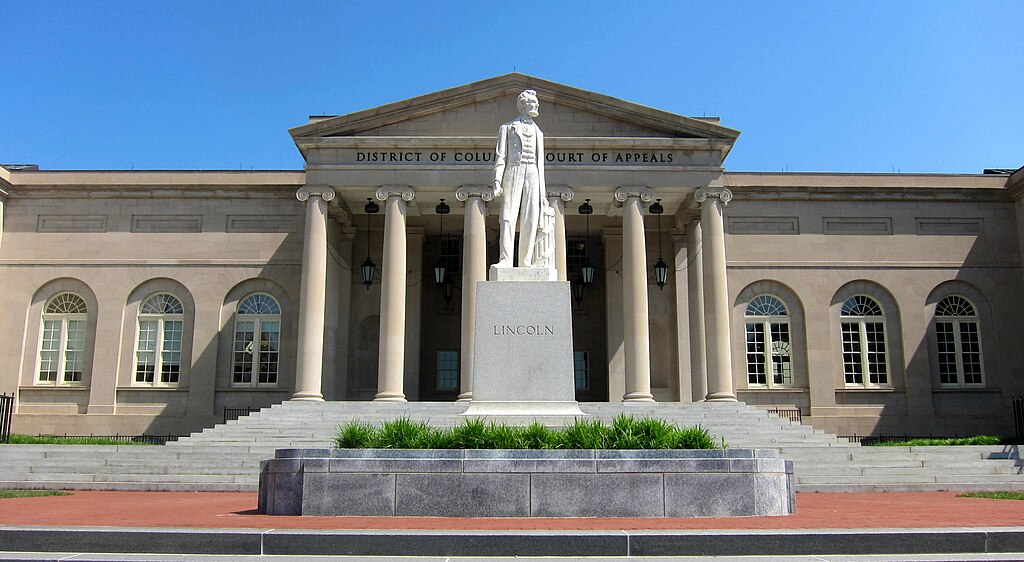
In late January, the Washington D.C. Court of Appeals moved to reinstate Felicia Sonmez’s lawsuit against the Washington Post, finding some merit to Sonmez’s claims that the paper illegally discriminated against her when prohibiting her from covering stories about sexual violence due to her own identity as an assault survivor.
In a lengthy 2–1 ruling, the judges overturned a lower court’s dismissal of the case, questioning the Post’s defense that coverage assignments are purely editorial decisions and therefore immune from discrimination complaints.
“While the First Amendment secures the right to speak and write in favor of even the most odious and unlawful discrimination, it does not secure a right to practice such discrimination in employment, even under the guise of exercising editorial judgment that indirectly affects the content of what is published,” the majority wrote. “[W]hile the exercise of editorial judgment in putting out a newspaper is indeed protected to a considerable extent under the First Amendment, it is not protected to the same extent as the newspaper’s speech itself.”
At issue in the case are broad questions about the nature of journalistic objectivity, the First Amendment, and how far newsrooms can go to protect the appearance of neutrality. According to one lawyer involved, the ruling could have lasting implications for journalists and journalism more broadly.
In 2021, Sonmez, then a breaking news politics reporter at the Post, sued the paper and several of its top editors, claiming they illegally fostered a hostile workplace and discriminated and retaliated against her by prohibiting her from covering issues of sexual misconduct and gender due to her history as a sexual assault survivor. D.C. outlawed workplace discrimination against survivors in 2019.
The following year, Judge Anthony Epstein of the Superior Court of D.C. granted the Post’s motion to dismiss Sonmez’s suit, finding that “a news publication has a constitutionally protected right to adopt and enforce policies intended to protect public trust in its impartiality and objectivity.”
As The Objective previously reported, the D.C. Court of Appeals heard arguments about whether to revive Sonmez’s case in late 2023. Their January ruling wasn’t a total victory for Sonmez; they agreed with the lower court that several counts from her complaint — that the Post illegally retaliated against her, fostered a hostile work environment, and subjected her to emotional distress — should be dismissed.
Related: D.C. Appeals Court ponders how far newsrooms can go to promote image of “objectivity”
But the judge’s decision to reinstate the discrimination claims is significant, according to Maddie Meth, the lawyer who argued Sonmez’ appeal. This case is one of the first to test the limits of the D.C. law barring discrimination based on individuals’ history with sexual violence, and the court’s ruling could have implications even beyond D.C.
“This is the first case that interprets that part of the law, because that part of the law is so new,” Meth told The Objective. “It’s really critical that the Court also held that the coverage ban and some of the other harmful employment actions that Felicia faced were also sex discrimination, because it means that the case may have some broader reach.”
The ruling also comes amid the Trump administration’s racist and ableist crackdown on diversity, equity, and inclusion programs, which could trickle down to news organizations. Already, the administration has rescinded a longstanding executive order prohibiting government contractors from engaging in discriminatory employment practices.
“Certainly, in this kind of anti-DEI atmosphere, whatever that means, newspapers and other media organizations do seem poised to be dealing with questions that are at the heart of Felicia’s case,” Meth added.
Still, the matter is far from over. If the case is indeed remanded back to lower court, Sonmez must convince a jury that the Post’s conduct fell outside the scope of its First Amendment rights — something the appellate judges said was still up for debate.
“[I]t is premature to decide whether the Post’s stated reasons are supported by evidence and whether the defendants are entitled to invoke the First Amendment to justify their decisions,” the judge wrote. “We leave that issue open at this time.”
It’s possible the case might not even make it that far. The Post now has until mid-February to petition to have the case reheard en banc, or by all the judges on the Court of Appeals. Should the Court grant such a petition, they’ll get to reconsider the legal questions yet again.
And they might be inclined to do so, given that the appeals court ruling was not unanimous. Judge Joshua Deahl penned a scathing dissent, taking issue with the majority’s conclusion that the Post’s assignment decisions could amount to illegal discrimination.
“Race, gender, and political affiliations can obviously play a role in the calculus of who is best to deliver a particular message, or defend a particular cause, and the First Amendment protects those considerations,” Deahl wrote. “The press does not need to satisfy the government that its editorial judgments are valid or non-discriminatory, so long as they are indeed editorial judgments.”
Representatives for the Post did not respond to an inquiry about the Court’s ruling. Asked whether he’d petition for an en banc review, a representative for Jones Day, the law firm representing the Post in this case, declined to comment.
Jacob Gardenswartz is a reporter based in Washington, D.C covering how politics and policy impact people.
This piece was edited by James Salanga. Copy edits by Gabe Schneider.
We depend on your donation. Yes, you...
With your small-dollar donation, we pay our writers, our fact checkers, our insurance broker, our web host, and a ton of other services we need to keep the lights on.
But we need your help. We can’t pay our writers what we believe their stories should be worth and we can’t afford to pay ourselves a full-time salary. Not because we don’t want to, but because we still need a lot more support to turn The Objective into a sustainable newsroom.
We don’t want to rely on advertising to make our stories happen — we want our work to be driven by readers like you validating the stories we publish are worth the effort we spend on them.
Consider supporting our work with a tax-deductable donation.

James Salanga,
Editorial Director
Related Articles

Fort Worth Report becomes Texas’s sixth unionized newsroom
The Fort Worth Reporters Guild voted 11-1 to unionize, and will begin working with management on collective bargaining for a contract.
Q&A: ‘All journalism advocates’: Anita Varma on solidarity journalism
Journalism professor Anita Varma on her forthcoming book, Solidarity in Journalism: How Ethical Reporting Fights for Social Justice, the limits of the advocacy vs. journalism conversation, and more.
When The Baltimore Sun can’t get journalists to lower their standards, it turns to generative AI
The Baltimore Sun ”once again disparaged … human reporters and their work” by publishing two AI-generated political analyses, the newspaper’s union said.