
Why Purdue’s student newspaper erased protesters’ names
Balancing credibility and harm: ‘You have to ask yourself,’ expert says.

When the Trump administration moved to scrutinize student activists advocating for human rights in Gaza, student journalists at Purdue University erased something else: The digital traces that could put their classmates at risk.
“Pro-Palestinian students are under attack, so we’re removing their names,” The Purdue Exponent’s editorial board declared.
The decision drew national attention, placing the newspaper at the center of a broader conversation about journalistic ethics, safety, and press freedom. The editor received more than 7,000 emails, including death threats, in just 24 hours.
“It wasn’t a really long-out discussion; it kind of came up organically,” said Seth Nelson, editor-in-chief. “We have a responsibility to minimize harm. It’s one of the SPJ’s (Society of Professional Journalists) Code of Ethics, so it was an obvious choice at that point.”
The Exponent has since removed names, images, and likenesses of every student protestor advocating for Palestinian human rights published since Oct. 7, 2023, from its website.
It also pledged to omit such identifying details in future coverage until President Donald Trump’s executive order is overturned.
That order calls for colleges and universities to “monitor for and report” antisemitic activities by international students and staff, with Trump pledging visa revocation and deportation for “pro-jihadist” students and “Hamas sympathizers on college campuses.”
“When letters of visa revocation arrive in these students’ mailboxes and federal agents come to Purdue’s campus, no distinction will be made between ‘pro-jihadist’ and pro-Palestinian,” the editorial board stated. “Pro-ceasefire will continue to be conflated with ‘antisemitic.’ Anti-war can only now mean ‘pro-Hamas.’”
Calling the order a “blatant violation of the First Amendment rights of potentially hundreds of Purdue students,” the newspaper saw itself as an outlet that could take action by avoiding being associated with this.
A policy rooted in precedent
The decision wasn’t made in isolation.
Nelson said The Exponent had received name removal requests since last year’s encampment and protests.
He explained the newspaper has long maintained a policy of removing names and images when a student’s safety is at risk, making this move consistent with its pre-existing standards.
Nelson emphasized the decision wasn’t about taking sides in the larger conflict but about “objectively standing” for the First Amendment.
“We’re not making a statement about the protest themselves, not making a statement about Palestine itself,” Nelson said. “All The Exponent is saying is we just don’t want to be part of this and we’re not going to aid and abet this.”
Only eight editors signed the editorial, despite The Exponent’s website listing 13 editors. Nelson acknowledged the discomfort within the newsroom, noting some senior staff members — including noncitizens — didn’t want their names attached.
“But there was enough of the editorial staff that did, and that’s enough to say that The Exponent, as an organization, kind of agrees with this,” he said.
Even though Trump’s order targets international students, Nelson said the paper removed all names because it’s hard to know someone’s immigration status.
Nelson handled the removal process himself, staying up late to make the changes. He then asked readers to reach out if anything was missed.
Nelson believes other student newspapers should consider similar actions.
“If you are a student journalist in this country,” he said, “you have that obligation too.”
Ethical considerations
Covering protests requires journalists to balance transparency with potential harm.
At a recent New York University panel, journalism professors and students weighed the ethics of publishing protesters’ names and faces, balancing journalistic integrity, public interests, and the risks to individuals.
Stephen Adler, director of NYU’s Ethics & Journalism Initiative, said ethical considerations go beyond legality — they require weighing the value of an action.
While including photos and names enhances credibility, Adler noted the negatives such as the increasing legal risks, particularly regarding immigration status.
“You have to ask yourself how do you balance those interests,” said Adler, former editor-in-chief of Reuters.
Adler said he personally leans toward an “old-school” approach — if a story is newsworthy and people are in a public space, he would show their faces.
“The story is yours, it’s not theirs,” he said, describing his mindset.
He acknowledged younger journalists tend to see things differently but urged them to consider whether their ethical choices would remain consistent across different scenarios.
“Would you not include the name of the neo-Nazi?” he asked. “Would you not include the name of a racist speaker?”
Journalists, he said, must ask themselves what they are trying to accomplish. While those who speak publicly assume some level of risk, there’s a difference between exposing someone to consequences and putting them in actual danger.
He noted that vulnerability should factor into the decision, particularly regarding immigration. Still, he cautioned against a blanket rule.
Sheila Coronel, director of Stabile Center for Investigative Journalism at Columbia University, said she would frame camera angles to avoid direct faces, but given today’s surveillance state, she questioned the effectiveness of such measures.
Yezen Saadah, editor-in-chief of Washington Square News, said student newspapers exist to serve their campus communities.
His newsroom typically includes names and faces, but with protesters advocating for Palestinian human rights, the risks felt “unprecedented.”
“There are instances where the content of the protest is more important than who it is, who is doing actual protesting,” Saadah said.
Ultimately, Saadah said his newsroom always returns to its core mission: “We are students. We are covering our campus. What’s going to be the most … journalistically efficient way of doing so in a way that gets this point of what journalism is all about.”
“We are serving our community,” he added.
Chatwan Mongkol is the founder of The Nutgraf, a weekly newsletter about student journalism, where this piece was originally published. You can subscribe to get a new story in your inbox every Monday.
We depend on your donation. Yes, you...
With your small-dollar donation, we pay our writers, our fact checkers, our insurance broker, our web host, and a ton of other services we need to keep the lights on.
But we need your help. We can’t pay our writers what we believe their stories should be worth and we can’t afford to pay ourselves a full-time salary. Not because we don’t want to, but because we still need a lot more support to turn The Objective into a sustainable newsroom.
We don’t want to rely on advertising to make our stories happen — we want our work to be driven by readers like you validating the stories we publish are worth the effort we spend on them.
Consider supporting our work with a tax-deductable donation.

James Salanga,
Editorial Director
Related Articles
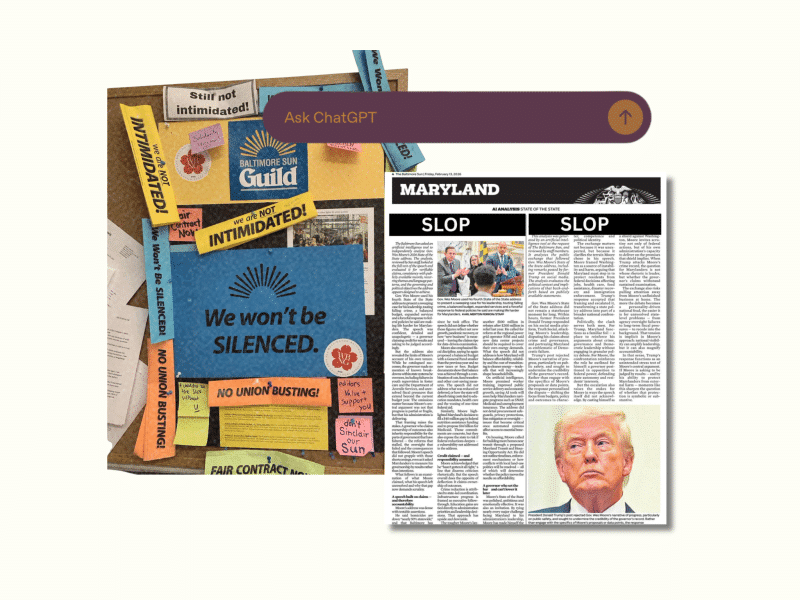
When The Baltimore Sun can’t get journalists to lower their standards, it turns to generative AI
The Baltimore Sun ”once again disparaged … human reporters and their work” by publishing two AI-generated political analyses, the newspaper’s union said.
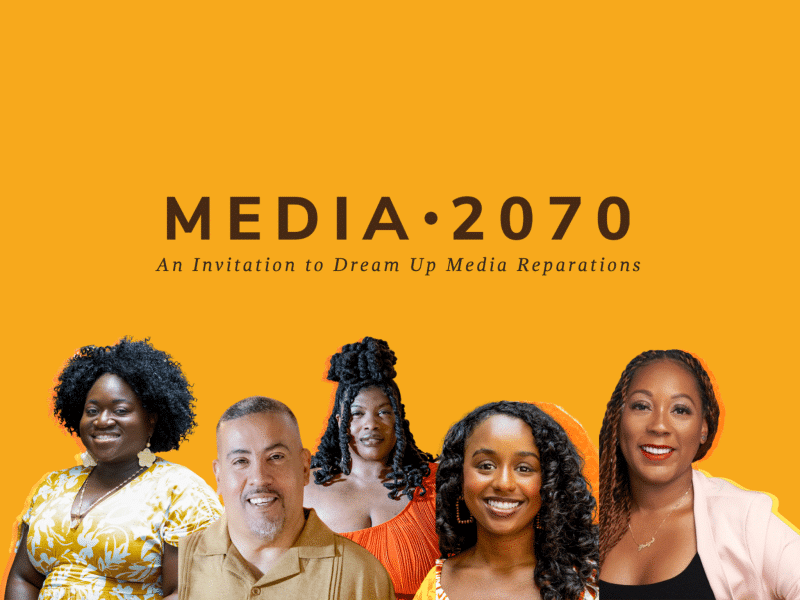
Q&A: ‘We’re winning when media reparations is common-sense’: Media 2070’s new chapter
In the midst of attacks on Black press and journalists, Media 2070 charts a tangible future for Black narrative power and media reparations.
Journalist’s Resource downsizes
After “several funders did not renew their grants,” the Harvard-based hub making academia accessible to reporters cut its program director and managing editor positions.