
For journalists, U.S. government data deletion should reveal gaps, prompt questions
As U.S. government data collection and archiving faces an uncertain future, the parallels between government data and journalism reveal both the hypocrisy and naivete of the news industry.
While the distortion of government data isn’t new, the Trump administration has taken this to a new level, as the Washington Post aptly chronicles: disappearing data about climate, sexual orientation and gender, natural hazards, public safety, and health.
This moment of journalistic outcry over government data deletion can be a transformative one.
It urges critical analysis about who’s left out of datasets. And it asks journalists and news organizations to think about how their dependency on publicly available data mirrors the way that many Americans understand their relationship and expectations for professionally-produced news — despite newsrooms’ shortcomings in making their journalists’ work accessible.
Data has never been “objective”
While the administration has taken aim at a wide array of datasets, it’s notable that one of his earliest targets was gender and sexuality diversity. Choosing not to collect and make public data about these identity groups doesn’t just inhibit our ability to analyze or produce knowledge about them — it effectively erases their existence in records: the known becomes unknown and uncounted. If journalists depend on that limited dataset, its bias becomes further replicated.
Yet news organizations and journalists alike place almost religious trust in the veracity of public data collected by the government. Journalists have rarely pushed back on potential omissions or distortions, this current moment of obvious government meddling being a rare exception.
Faith in accuracy of government data is perhaps one of the most unique and subtle examples of American exceptionalism.
At the beginning of a new research project, I asked an international student from an autocracy to download some census data for our analysis. He was shocked that I could just use the data — without worrying about its quality or potential distortions.
This student’s surprise about my trust in government data has continued to needle me — especially because the categories of data collection themselves have all sorts of shades of gray.
One clear example of this is the Bureau of Labor Statistics’ monthly jobs report’s unemployment data, which only accounts for unemployed people actively looking for jobs, not those so discouraged that they’re officially considered as having dropped out of the labor pool. Yet these numbers are often taken as a key indicator of broader economic health, despite this glaring gap — akin to looking at the temperature but failing to check whether it’s raining.
By and large journalists have imagined data as friends rather than as foes, with the prevailing attitude supporting more data and greater transparency. But data manipulation and omission isn’t a new tactic for politicians, and really shouldn’t catch so many journalists off guard. School districts have goosed test scores. The onset of COVID-19 data collection saw inconsistencies at the local, state, and federal level about how to count cases and deaths that still persist in the current but dwindling CDC data, and the growing Long COVID crisis has been haphazardly tracked.
Worse, government data can be just as problematic in sorting people algorithmically into haves and have-nots — it’s not just big tech commercial data that can be deployed in discriminatory ways. Public data on K-12 school performance has been used to screen out “bad” teachers, missing important context about communities and structural inequality.
The similarities between government data and journalism
Both the press and the census are enshrined in the Constitution — data collection is core to what makes democratic representation possible, while a free press assures the ability to critique abuses of government power.
And government data is a lot like journalism in its imperfections: While not objective by any means, it nonetheless presents an empirical account of reality, and both are starting points for making sense of broader trends outside our own individual experiences.
And it is no surprise that journalists turn to data in order to support their anecdotal reporting: Data can help tell stories about systemic issues in institutions and among groups. For journalists trying to remain impartial, the data can help diffuse claims of bias — moral wrongs are made visible by presenting systemic evidence of unequal access to voting, education, or health care. The numbers speak for themselves, giving journalists an out on rendering their own judgements.
But choosing who gets to be included in datasets is just one of many ways bias is introduced into dataset creation. The way that categories for data collection are structured can collapse or distort entire identities — for example, using Hispanic or Latino/a/x as a racial category rather than as an ethnic one, or leaving an option of “mixed race” without offering additional options, makes it harder to quantify marginalization and inequity. News stories reflect similar subjective decisions — from who gets covered to the order of the narrative to which sources get quoted — and much contemporary criticism of mainstream news has focused on how this subjective bias largely reflects a dominant, white perspective.
The expectations journalists hold for the availability and access to government data, and the questions they might not ask about it, are a mirror for how news consumers view journalism. It’s worth examining those commonalities, especially if journalists want to position their work as a public good, much like the free government data they have come to depend on.
News, like data, is a public good — but neither news or data come for free
Realistically, journalists cannot fathom having to pay for access to data, either because of the potential cost to newsrooms or because of the normative belief that government data should be free.
After all, for taxpayers, it is our birthright — we’ve paid for it and, fundamentally, the data is about us.
Somewhat similarly, in parallel, it’s also hard to imagine most people paying for news just because it’s good for democracy when readers may find it otherwise generally uninteresting, irrelevant, depressing, or not worth the cost in the seeming face of just enough free alternatives.
Functionally, there is an expectation that news, like data, should be free. Just 15% of Americans have paid for a local news source, while 63% of Americans believe their local news outlets are doing just fine financially.
News organizations are no paragon of free and easy access to information. As many have pointed out, when news organizations set up paywalls, they cut people out of easy access to high-quality news and information.
Still, most Americans still don’t pay for news and don’t intend to. And aside from that $1.60 each tax-paying American contributes to public media, journalism is paid for by the market, either via subscriptions and advertising, and when the market can’t support the production of news, well, it’s philanthropy or bust.
At least for many newspapers, paywalls only drop when news reaches a certain threshold — for example, when newsrooms deem their work so essential it might make a crucial difference to whether someone makes it through a disaster or understands an election.
News organizations also do a poor job of making the historical record accessible — a problem only growing worse as news organizations increasingly become digital-only and as their finances remain uncertain. Many news outlets simply aren’t taking care to archive their digital content in any way, which will leave gaping holes in public history.
Whether disappearing news content is intentional or an unlucky consequence of understaffing and diminished resources doesn’t really make a difference to the outcome: the unavailability of a public historical record.
Leaving aside arguments about whether charging people for access to archives is fair game, some news organizations are also failing to upload their online-only content to library databases like Nexis and Factiva.
For instance, Rolling Stone’s Barbie movie review was nowhere to be found on the databases that my university library already pays for — and while I was up for paying for the magazine’s on-site paywall, this is the kind of content that runs the risk of evaporating from our public sphere. These omissions might seem minor, but anecdotally, we aren’t just talking about ephemera, we’re talking about actual important cultural and political content.
My librarian has noticed the same issue with other legacy news outlets like The Atlantic and the New Yorker, and this is before we even consider newer digital-first outlets.
There is no doubt that the disappearance and distortion of public data is one more data point of the new administration’s illiberal tactics — but this crisis is an inflection point for journalists about their relationship with government data and just how much they can depend on it to be free and fair. And whatever the result, journalists should at least develop some empathy for the concerns about media bias that many news consumers negotiate each and every day.
Nik Usher, PhD, is an associate professor of Communication at the University of San Diego. They are the author of four books, including the forthcoming Amplifying Extremism: Small Town Media Storms, and American Journalism (Cambridge University Press, July, co-authored with Jessica Hagman).
This piece was edited by James Salanga. Copy edits by Jen Ramos Eisen.
We depend on your donation. Yes, you...
With your small-dollar donation, we pay our writers, our fact checkers, our insurance broker, our web host, and a ton of other services we need to keep the lights on.
But we need your help. We can’t pay our writers what we believe their stories should be worth and we can’t afford to pay ourselves a full-time salary. Not because we don’t want to, but because we still need a lot more support to turn The Objective into a sustainable newsroom.
We don’t want to rely on advertising to make our stories happen — we want our work to be driven by readers like you validating the stories we publish are worth the effort we spend on them.
Consider supporting our work with a tax-deductable donation.

James Salanga,
Editorial Director
Related Articles
Freelance journalism rates are worse than you think — they’ve barely changed since 2000
It’s not your fault you’re broke. New data from the National Writers Union offers a glimpse into a bleak picture of decades-long wage stagnation in freelance journalism.
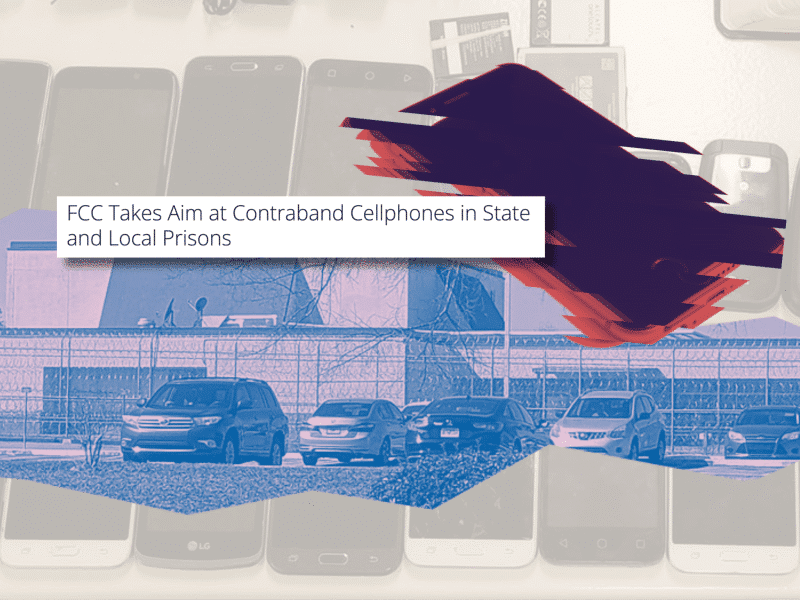
Potential FCC cellphone jamming policy would silence incarcerated journalists
An incarcerated journalist in Georgia calls free press advocates to rally against the 23-state effort to allow FCC-approved cellphone jamming technology, which would limit incarcerated journalists’ efforts to report on harms on the inside.
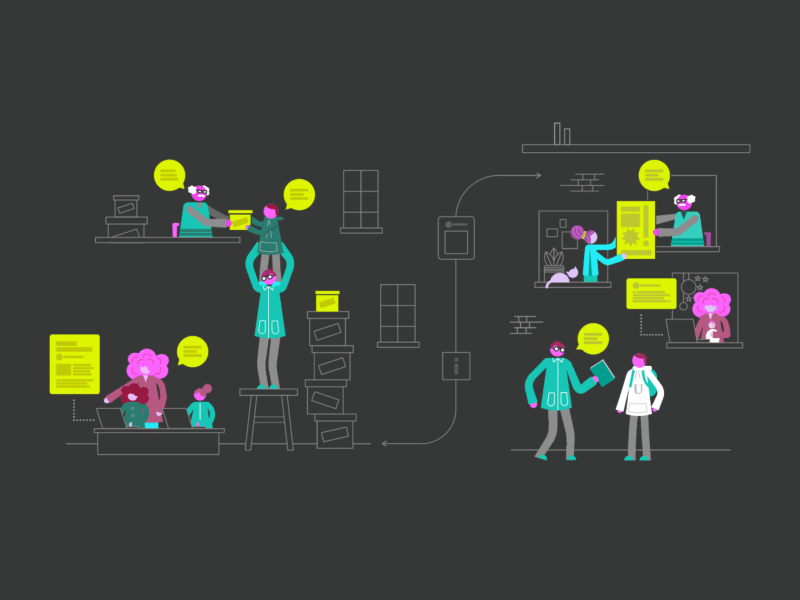
Journalists aren’t the only ones sharing the news, and that’s a good thing
A new framework from Journalism + Design Lab invites newsrooms to build on the abundance, diversity, and momentum already in our communities to strengthen local news.