
Local newsrooms run “Meet Your Mayor” quizzes to increase civic engagement
Outlier Media and THE CITY NY on how quizzes can increase confidence in civic participation.
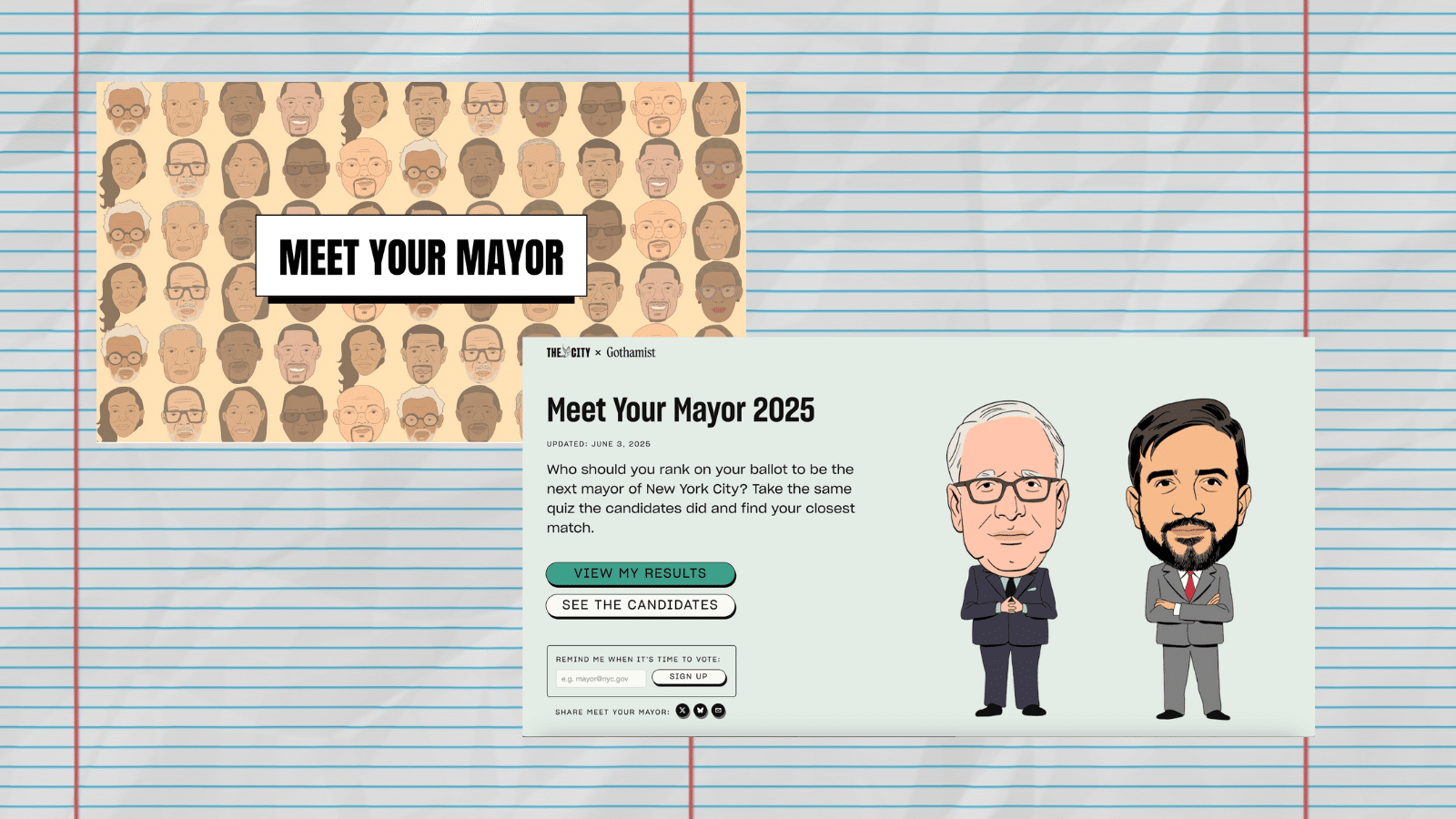
Primaries are getting more crowded.
Progressive state assemblyman Zohran Mamdani emerged from a field of nine candidates to win New York City’s Democratic mayoral primary, positioning him to become the city’s youngest and first Muslim mayor. And in Detroit, voters will choose between 11 candidates in a nonpartisan primary on Aug. 5, its first competitive race after longtime mayor Mike Dugan decided not to run for re-election.
Crowded primaries can be bad for voters, lowering the threshold to secure a nomination and creating a level of choice overload that can hurt civic participation. They’re yet another reason for flagging turnout as trust in our institutions, our democracy, and our system of checks-and-balances remains low. The media, we know, also isn’t blameless, thanks to years of horse-race reporting that rewarded mudslinging over substantive policy discussion to make some voters feel too uninformed to cast a ballot.
How can journalists get voters excited about voting? Or, better yet, to feel their vote is an informed choice? Some of them have started with quizzes.
Alyssa Katz, the executive editor of New York City-based THE CITY, says quizzes “let people engage on their own terms,” especially because consuming news is a “very passive experience.”
“The news organization produces information,” she added. “The reader digests it but then has a lot of questions or counterpoints or thoughts, but never really gets a way to express them.”
This year, over 250,000 people — about 25% of those who voted — started THE CITY’s Meet Your Mayor quiz, said Katz, and about 75% of them completed it. Katz said feedback has been generally positive, with readers saying it made them explore the entire field of candidates or inform themselves on issues they may not have otherwise thought of, like what to do with Rikers Island as it edges closer to shutting down.
All but mayor Eric Adams took the quiz, said Katz, and its very existence forced candidates like disgraced former New York governor Andrew Cuomo and city councilperson Adrienne Adams to double back and form positions after initially skipping several questions.

“You’ve got to give [candidates] a reason to participate” in order for the quiz to work, said Katz. “The cost of not participating has to be higher than the cost of participating.”
This is THE CITY’s third election cycle running its interactive quiz, where readers and candidates answer the same 18 questions and are matched based on their answers’ alignment. Katz said prep for this year’s quiz started in January, as she and data fellow Mia Hollie conducted extensive research to generate the list of questions and curate three answer choices distinct enough to reflect a reasonable spectrum of responses. Candidate surveys went out in March, Katz said, and their answers were cross-checked with prior public statements.
The quiz’s structure is driven by Katz’s time on the New York Daily News’ editorial board. She missed the “intensive interrogation of the candidates and really pinning them down on the toughest questions facing a mayor.” That rigor, Katz felt, was absent from this year’s race after the New York Times decided to publish a nonendorsement while admonishing voters for considering anyone other than Mamdani or Cuomo.
THE CITY makes the code and template for the quiz available to other outlets at no cost. Detroit’s Outlier Media published their version in June to help readers make sense of a similarly crowded field. Over 2,000 people have completed the quiz on Outlier’s website, said product director Kate Abbey-Lambertz, and engagement is quadruple what a typical article gets. The quiz was also republished by BridgeDetroit, Michigan Public Radio, and WXYZ, said its creator Briana Rice, who covers Civic Life for Outlier.
“We have plenty of media coverage of the election right now, but I would say that people are not particularly talking about it outside of very engaged circles,” Abbey-Lambertz said. “To see anyone saying candidates’ names that they didn’t know before this year … has been cool to see.”
Outlier’s Quiz is slightly different: Its slate of questions for mayoral primary contenders are based on the results of the publication’s DMAC survey, which polled 2,000 Detroiters on their priorities in partnership with the University of Michigan at Ann Arbor. Rice said she whittled down a list of 25 questions to 21 that showed measurable differences among the candidates on topical issues, like bike lanes and utility shutoffs.


Rice said the most surprising response has been from the candidates themselves, like venture capitalist John Barlow, who called it “a game changer” for lesser known candidates. All but three mayoral candidates have never held public office, said Rice.
“Outside of the four front runners, [the quiz] feels like a table-setting and leveling-of-the-playing-field,” Rice said. “The comments I’ve seen from people on the quiz are about policy, not name recognition.”
Journalists from both newsrooms told me that quizzes should be one part of a larger newsroom strategy that serves to get people to engage in civic life through play, which can make voting or attending a public meeting feel enriching instead of disillusioning.
“We care so much about our communities. We care so much about what happens, but that doesn’t equate to voting or reading the news,” Rice said. “How do we get people more involved in doing stuff they care about? We have to be actual people and let [readers] meet us and be a part of our journalism.”
Beatrice Forman is a Philadelphia-based reporter who also writes a biweekly column focused on pro-democracy reporting for The Objective’s newsletter, The Front Page. She previously worked as the coordinator for Democracy Day.
This story was edited by James Salanga.
We depend on your donation. Yes, you...
With your small-dollar donation, we pay our writers, our fact checkers, our insurance broker, our web host, and a ton of other services we need to keep the lights on.
But we need your help. We can’t pay our writers what we believe their stories should be worth and we can’t afford to pay ourselves a full-time salary. Not because we don’t want to, but because we still need a lot more support to turn The Objective into a sustainable newsroom.
We don’t want to rely on advertising to make our stories happen — we want our work to be driven by readers like you validating the stories we publish are worth the effort we spend on them.
Consider supporting our work with a tax-deductable donation.

James Salanga,
Editorial Director
Related Articles
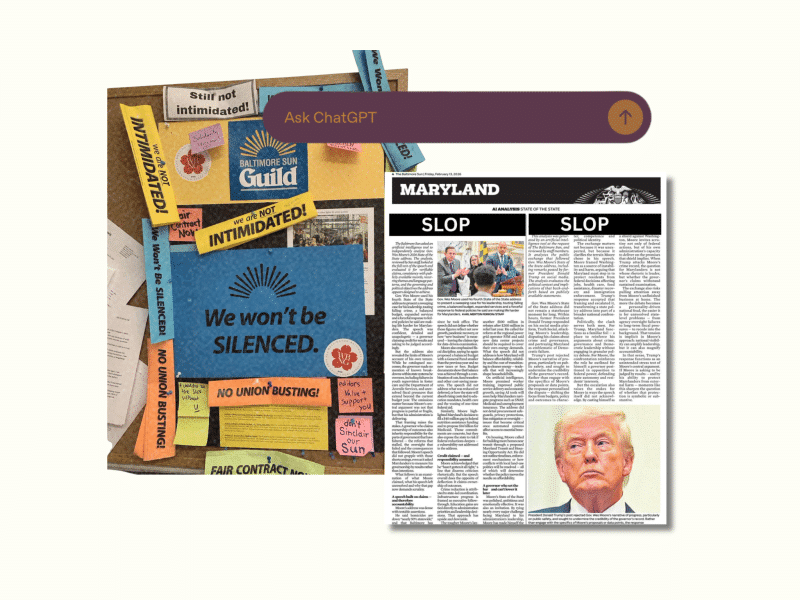
When The Baltimore Sun can’t get journalists to lower their standards, it turns to generative AI
The Baltimore Sun ”once again disparaged … human reporters and their work” by publishing two AI-generated political analyses, the newspaper’s union said.
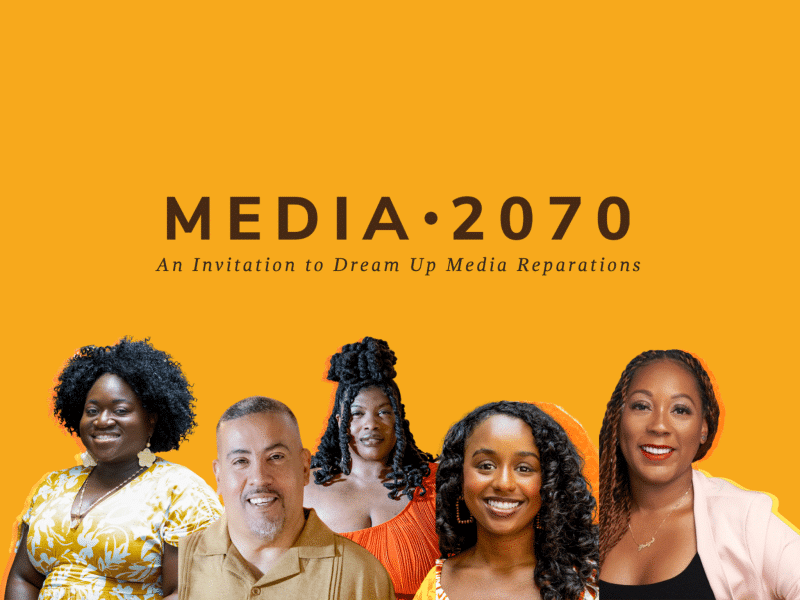
Q&A: ‘We’re winning when media reparations is common-sense’: Media 2070’s new chapter
In the midst of attacks on Black press and journalists, Media 2070 charts a tangible future for Black narrative power and media reparations.
Journalist’s Resource downsizes
After “several funders did not renew their grants,” the Harvard-based hub making academia accessible to reporters cut its program director and managing editor positions.