
How community archivists can be a model for journalists looking to combat historical revisionism
As federal cuts under Trump target public libraries and archives, community-led models are a blueprint for how journalists can preserve community narratives often excised or misrepresented by mainstream news.


As newsroom infrastructures shift and diversity, equity, and inclusion rollbacks strip institutions of resources — especially under this current presidential administration — journalists have an opportunity to turn to the same questions archivists have been wrestling with about long-term preservation and ethical stewardship of memory.
Related: ‘No act of journalism … is too small’: Creating necessary archives
Archives have historically mirrored journalism’s top-down approach, and many archivists, like journalists, are calling into question how traditional and systemic methods contribute to the marginalization of the very people they aim to serve. Methods practiced by those stewarding participatory and community archives can serve as a blueprint for a new journalistic approach.
For example, while it’s rare for legacy media to revisit published work and reckon with the harm it’s caused, the reparative descriptions movement in the archiving world connects members of marginalized groups with archivists to create more accurate descriptions of archival materials. Called finding aids, these descriptions guide collections, and archivists like Pratt Institute assistant professor Kathy Carbone add context instead of rewriting to help users understand and critically engage with the materials while still maintaining the accuracy of historical records.
“White supremacy is a big problem in archives,” Carbone, whose work utilizes crowdsourcing to connect with community members who have stories they want to preserve, said. Also the co-founder of The Amplification Project, she added that these reparative practices help archivists contextualize the past while deepening the relationships with communities who experienced harm.
“That [white supremacy] has colored collecting practices, what has been saved, and the adherence to ‘white norms’ and white supremacist thinking, which has definitely tainted the historical record,” she said.
Both archivists and journalists know that white supremacy isn’t new, even if the industry at large reports as if it is. And some newsrooms did revisit practices that harmed Black communities after the 2020 uprisings in the wake of police murdering George Floyd.
The L.A. Times reckoned with its editorial choices, including using racist language that criminalized communities of color. In 2021, The Boston Globe’s Fresh Start initiative allowed people featured in crime coverage to request their name be removed from their records, especially if their coverage acted as a permanent obstacle to a regular person’s success. And in 2023, The Guardian conducted a public audit of its 19th-century coverage of slavery and colonialism, including acknowledging its pro-Confederate stances and complicity in racist systems. The audit led to a larger reparations project at the publication, including an investment of over £10 million in a decade-long restorative justice program with millions “dedicated to descendant communities linked to The Guardian’s 19th-century founders.”
In 2022, the Washington Post examined a 1956 reporting trip that took place after the Supreme Court ruled segregation in schools unconstitutional.
The trip was a state-sponsored invite to Mississippi, in which 20 journalists from the New England Press Association traveled to the state and experienced a tour carefully orchestrated to influence their reporting. Many returned to their hometowns writing pieces sympathetic to the state’s segregationist views. These pieces in turn can and have become part of archives, reflecting a skewed view of history.
“So many marginalized communities have been misrepresented in dominant records, and how those records then become the basis of archival collections, which then become the basis for how history is written, and thinking about all the silence in each of those steps,” Michelle Caswell, co-founder of the South Asian American Diaspora Archive (SAADA) and professor of archival studies at the University of California, Los Angeles, said.
Caswell is also the author of Urgent Archives: Enacting Liberatory Memory Work, which explores how traditional archival practices have contributed to the erasure or marginalization of different communities, particularly people of color and those in the LGBTQ+ community. Her book unpacks the concept of “symbolic annihilation,” a theory first popularized by mass communications scholar George Gerbner in the ‘70s and later, Gaye Tuchman, who wrote about this theory in relation to the erasure of women in history.
“Most archives steward records that are made by people who have lots of wealth and privilege and power, and create records about people rather than for them or with them,” Caswell said.
This gap in accountability and perspective is exactly what participatory and community archives aim to address. John Anderies, director of the John J. Wilcox, Jr. Archives at the William Way LGBT Community Center in Philadelphia, described the archives’ variety of community events, from exhibitions on gay life in pre-Castro Cuba, to town halls focused on healthcare access in the LGBTQ+ community, to actively engaging people in their own histories.
“I think this is …such a wonderful opportunity for people to … learn about their own community’s past,” he said.
Both Anderies and Carbone stressed that engagement isn’t just important, but imperative to the public’s understanding of history. Projects around the country such as Recollection Wisconsin and the Queens Memory Project are other examples of local, participatory archives that thrive on community engagement and programming to enrich community narratives and, in turn, collections available to the public. Media 2070’s art installation, the Black Futures Newsstand, blends journalism and archiving to invite viewers to imagine an abundant future for Black communities as a reparative practice.
Related: A newsstand that serves the information needs of Black communities
Community-engaged journalism prioritizes community feedback, whether through crowdsourced investigations, listening events, or teaching community members how to tell their own stories. It’s just one way reporters can embrace the spirit of community archives, by preserving memory through a public record that empowers communities to tell their own stories on their own terms.
But for many legacy publications, this level of engagement isn’t sustainably practiced, or is based solely on digital metrics like clicks and subscriptions. This approach may not always capture the persistence of community narratives and the effort required to preserve them.
“Thinking about sustainability means reimagining it beyond just finances,” said Caswell, the SAADA co-founder. “It’s about autonomy, who owns their stories and how those stories are cared for.”
Long before Trump administration policies threatened their work’s existence, community archivists say their archiving has exemplified preservation as resistance. It can offer an ethos for a model for journalism that moves beyond storytelling, kindling the space between building relationships and the responsibility of maintaining them.
“Eighteen years ago, when [SAADA co-founder Samip Mallick and I] first started SAADA, everyone said, ‘This isn’t sustainable,’” Caswell said. ”But what’s actually not sustainable are traditional archives or collections documenting BIPOC and LGBTQ+ communities often [being] the first to be defunded, if funded at all.”
Kristine Villanueva is an independent journalist and educator focusing on information access and community engagement.
This story was edited by James Salanga. Copy edits by Jen Ramos.
We depend on your donation. Yes, you...
With your small-dollar donation, we pay our writers, our fact checkers, our insurance broker, our web host, and a ton of other services we need to keep the lights on.
But we need your help. We can’t pay our writers what we believe their stories should be worth and we can’t afford to pay ourselves a full-time salary. Not because we don’t want to, but because we still need a lot more support to turn The Objective into a sustainable newsroom.
We don’t want to rely on advertising to make our stories happen — we want our work to be driven by readers like you validating the stories we publish are worth the effort we spend on them.
Consider supporting our work with a tax-deductable donation.

James Salanga,
Editorial Director
Related Articles

Journalism philanthropy shifts approach to funding diverse newsrooms
The ebb and flow of the philanthropic sector — especially around stories of marginalized people — has been an issue even before Trump’s targeting of DEI. But new shifts have disproportionately affected organizations led by people of color.
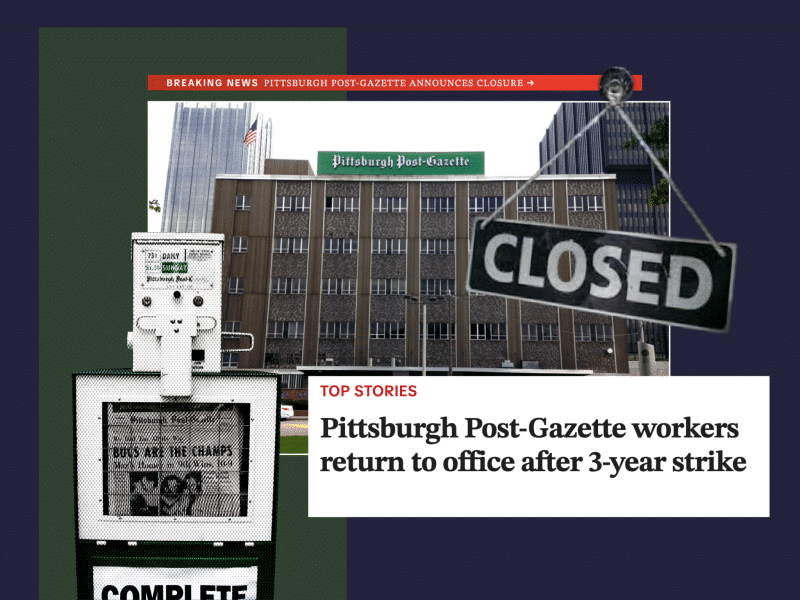
The Pittsburgh Post-Gazette is closing
After a historic three-year strike, staffers at the Pittsburgh Post-Gazette returned to work in late November. Now, the 239-year-old paper is shuttering.
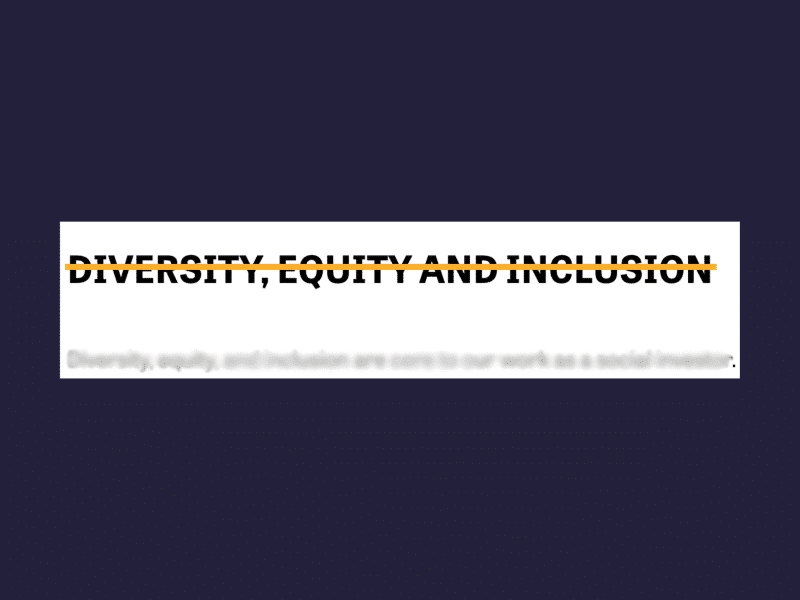
The Knight Foundation scrubs DEI section from its ‘About’ page
One of the biggest funders of nonprofit journalism in the U.S. no longer publicly lists an explicit section about “diversity, equity, and inclusion” on its mission page.