
Q&A: Autonomy News wants to cover bodily autonomy as a human right
Garnet Henderson and Susan Rinkunas, co-founders of the worker-owned reproductive justice outlet, on their new newsroom and what covering reproductive justice looks like in this particular moment.

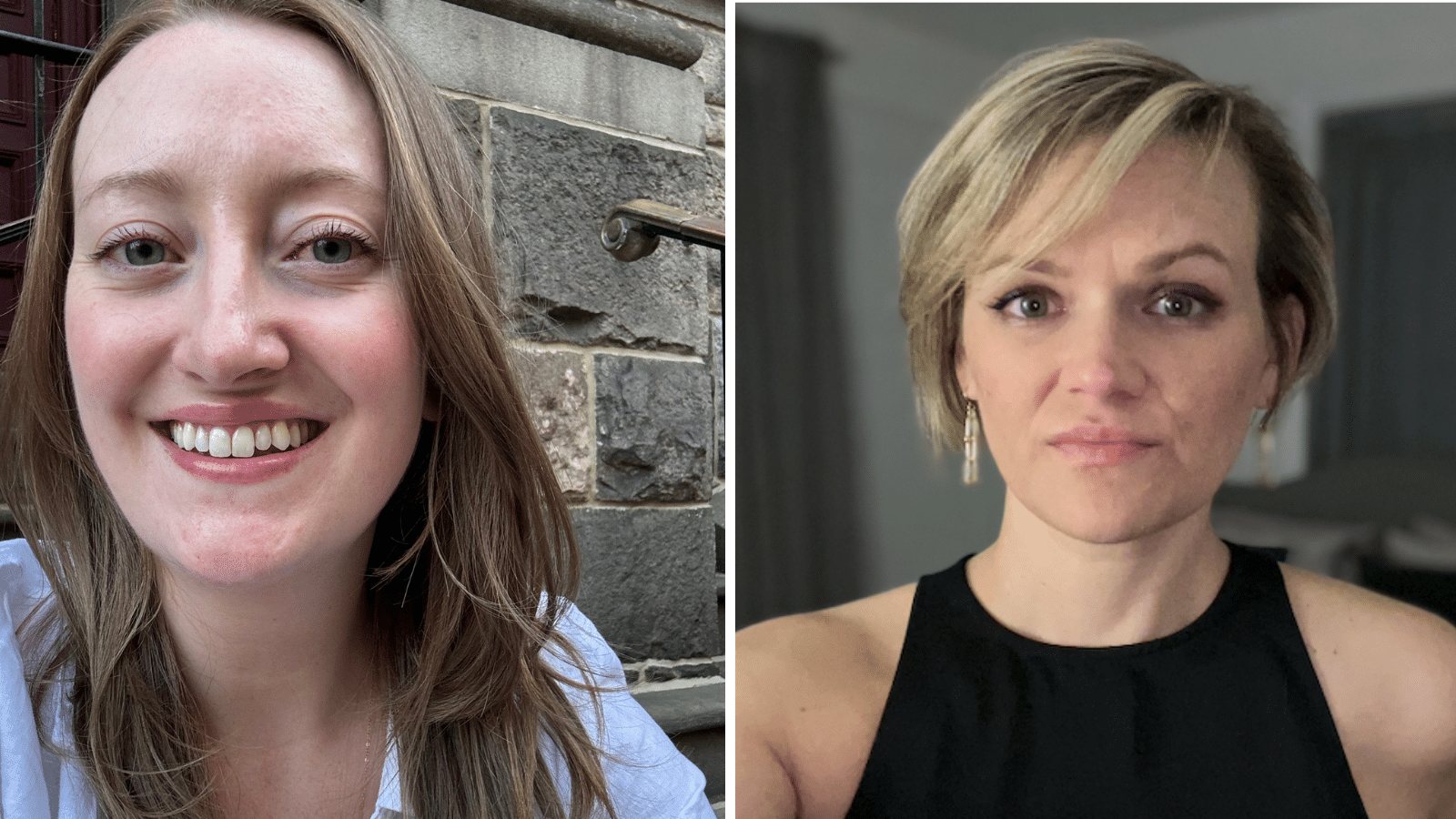
After over a decade of being on the reproductive rights and justice beat, journalists Garnet Henderson and Susan Rinkunas — buoyed by the success of other worker-owned publications like The 51st, Hell Gate, and 404 Media — decided to start their own worker-owned news outlet covering the forces shaping people’s ability to control their reproduction and gender expression.
Their hope is to nuance a media landscape where, as they write in their introduction post, “legacy outlets don’t prioritize having subject-matter experts cover this beat, or frame the topic as merely a political issue or a ‘debate.’”
The overturning of Roe v. Wade was a harbinger for the advent of the Trump administration’s array of attacks on bodily autonomy and reproductive health, from fighting to strip Planned Parenthood of funding to drastically limiting trans people’s access to gender-affirming care.
Autonomy News launched with two deeply-reported stories, about the Trump administration being a “soft eugenics” presidency and abortion providers sharing how a Texas exam puts them and their patients at risk. In weekly round-ups and reported stories, they’ve been doggedly covering the effort to effectively ban abortion.
Co-founders Henderson and Rinkunas sat down with The Objective to discuss their nascent newsroom, their definition of “reproductive justice” and the media landscape covering it, keeping sources safe under this administration, and more.
This interview has been condensed for length and clarity.
It’s been over a month of Autonomy News. How are you both feeling?
Garnet Henderson: I’m feeling really good. I mean, we’ve obviously both been so busy. And there are just so many tasks involved in getting a new publication and really, any new venture, off of the ground, but I actually think we did quite a good job of anticipating all of that and figuring things out as we went along.
We also got some really wonderful advice from other people who either have their own kind of independent newsletters or are part of work around publications.
The folks at 404 Media in particular gave us some really, really helpful tips.
I’m really proud of the coverage that we’ve produced. We chose to launch with stories rather than doing a fundraiser and then launching, you know, a couple months down the line.
And obviously, in some ways, that was the harder way to do things, because it required more uncompensated work upfront. But I’m actually really happy with how it turned out because I think we launched with a proof of concept essentially.
We’ve gotten a lot of really enthusiastic subscribers right off the bat … I don’t know if we would have gotten quite the same response if we had launched with an idea rather than a fully-formed publication with some stories that people could read.
Susan Rinkunas: I think it has just been really nice to see the appetite for worker-owned media and independent journalism. Specifically, our publication is two workers coming together, and we’ve said from the jump that if we do well enough, we’d love to bring in more people into the venture. So I think that people are hungry for that.
As Garnet mentioned, we did do a lot of uncompensated labor — the time with the editing, and then we were working with a designer on a logo, and then customizing our Ghost website, and choosing photos. We chose to write other content, like a welcome page and our mission statement. All of that stuff we did up front.
So it’s nice to see that people recognize and value the work and are continuing to sign up with paid subscriptions to this day.
What did that timeline look like for you from when you decided, “Hey, I want to do this”, to the launch? Why did you end up going with Ghost as opposed to Substack or Beehiiv?
Henderson: Well, we didn’t want to go with Substack because of Substack’s Nazi problem.
… For us, Ghost won out mainly because of the features that are and are not available in the different plans between Beehiiv and Ghost, honestly. And I just really like the look of our site on Ghost … I think it allowed us to launch looking very professional from day one. I like that it looks great just as a website.
If somebody navigates there from a Google search or they only ever want to read stories in their browser, they can do that and it looks nice there, or they can opt to receive them via email newsletter-style.
And like I said, we got some advice from 404 Media. They’re also on Ghost, although I believe they have a custom design. We’re also members of Tiny News Collective, which is going to become our fiscal sponsor. A lot of their member publications are on Ghost.
But we did do a lot of research about the different options out there.
Rinkunas: I have checked the literal receipts, and Garnet texted me on February 22, if I wanted to start a worker-owned publication.
And then we chatted about it a little bit. Then the next day you [Garnet] said, “But wait, I’m actually so serious about a worker-owned publication.”
And then we had our first meeting that week. That was the end of February. We launched the first week of June, so a little more than three months from first text message to launch.
The name Autonomy News speaks to a more expansive conception than just looking at abortion access. What is your conception of reproductive rights coverage? What does reproductive justice mean to you?
Henderson: We have done a lot of abortion-related stories for sure, because there — simply and unfortunately — is a lot of abortion news. But from the beginning, we talked about wanting to have a more broad focus on reproductive justice and bodily autonomy, which of course is where the name Autonomy News kind of came from.
We really are interested in covering everything from abortion to birth control, pregnancy, parenting, gender-affirming care — really anything that falls under the umbrella of or intersects with reproductive and sexual health and all of our abilities to decide what we do with our own bodies and the way that that informs our lives and our future.
Rinkunas: I love the name Autonomy News. We were kicking around several and it fits the framework of bodily autonomy, which is broader than just abortion rights. And also, we are autonomous as independent journalists, so that’s a nice connection.
Going off what Garnet is saying, some publications tend to cover these things as if they are separate from each other, and they are not. The access to all kinds of reproductive health care is really interlocked, and people’s rights are intertwined.
It’s the same groups attacking abortion access that are also writing the laws banning trans kids from participating in sports, and also the healthcare bans … I’m thinking too about “defunding Planned Parenthood”, and conservatives frame that as being about abortion. But it will also shutter clinics that provide birth control, cancer screenings, STI testing treatments, provide prenatal care. When it comes to cancer screenings, it’s pap smears and breast exams. And a lot of these clinics also provide gender-affirming care as well.
An attack on abortion also affects other people’s ability to get healthcare. So we don’t see things in little silos.
We try to look at the big picture, and our news round-ups as well are showing, like, “Here’s all the things happening that affect your ability to get the care you need to live the life you want to live.”
What do you see as the landscape right now for covering reproductive rights, and particularly the attacks on reproductive rights?
Rinkunas: [On gender-affirming care,] I think that if people read up on the strategy of these right-wing groups, they have in fact decided to focus a lot of attention on sports because they think it’s a more of a “winning issue” that parents will get all up in arms about.
… It doesn’t matter how many trans kids are on the sports teams, right? It’s just, like, they realize that that is a more effective messaging tool for them with the broader public.
But then these same lawmakers and organizations are pushing for bans on healthcare, which I really think that fewer parents would be supportive of because this is the state telling them how they can raise their children.
And it goes completely against the right’s favorite concept right now, parental rights — if you’re a conservative parent.
There are groups who have said after the “bathroom bills” got huge backlash in 2016, “We’re going on sports bans. That’s what we’re going to do. And it’s going to be like the skeleton key that unlocks like all kinds of other bans, including for adults.”
As we’re seeing it, … the Skrmetti decision the way it was written does not prohibit states from banning [gender-affirming] care for adults.
Related: New York Times cited 29 times to justify decision limiting trans healthcare
Henderson: Yeah, I think the one thing I would add to that is that, as Susan already said, these are the same people and organizations that have been attacking access to abortion for decades.
A lot of them were also really involved in the fight against gay marriage, particularly in the passage of Prop 8 in California — it’s really like the same cast of characters.
But they tested a lot of these strategies out with abortion, regulating abortion to the point of unavailability in many states in the U.S., kind of when people weren’t looking or noticing, in part because a lot of those laws that reduced access to abortion so much were so inane and boring and things that are really difficult to write about in an engaging way, difficult to get readers interested in.
And I think what we’re seeing with attacks on gender-affirming care and trans people more broadly is just a much more accelerated version of that, because they’ve figured out how to do it really effectively. Now they’re just coming at gender-affirming care really much faster and harder than they did at abortion access, but it’s using the same strategies.
Rinkunas: These inane-seeming regulations were promoted as protecting women, protecting teenage girls who might have abortions, and you’re seeing the same protection frame, like “We’re protecting children from predatory doctors” to “We’re promoting fairness in sports. We just want to be fair and keep children safe.”
How have you seen this current model of journalism ill-positioned to cover these attacks on reproductive rights and justice?
Henderson: Well, I think that both-sidesism is obviously a huge problem.
The idea that you need to always find, for example, in a story about abortion, some random anti-abortion activist to quote, right? Or in a story about gender-affirming care, you have to find some random person who’s part of an anti-trans advocacy organization and you have to quote them as one “side” of that issue.
What we typically have, when it comes to all of these issues of reproductive and sexual health and bodily autonomy, is that on one side you have actual experts and people with lived experience, and on the other side you have hate groups. And it is absolutely absurd.
It’s not unbiased or objective to treat those as though they’re two equal and opposing viewpoints. In fact, choosing a false neutrality in the middle of those two “sides” actually favors oppression. And it contributes to the spread of misinformation, and that is actually bias. It is the very opposite of unbiased or objective journalism.
And so that’s really important to us to say what we mean and to reinforce the truth, even if that means that you are undercutting one particular point of view. If it’s based on misinformation or hate, it is not a valid or factual point of view.
I’ll also say something that I see a lot is that there’s just a lot of trauma porn in news coverage when it comes to these kinds of issues as well.
And I think that’s honestly something that’s really difficult to navigate as a journalist. I want to give people opportunities to be heard and to give them a platform to talk about their experiences if that’s what they want, but I think a lot of stories about abortion bans, about bans on gender-affirming care, they are gutting and tragic and sad, kind of just for the purpose of being gutting and tragic and sad.
To me, it’s really important to ask myself as a journalist, “What is really to be gained from me asking this person to share a really difficult and traumatic story?”
I think a lot about one particular source who told me that she almost died because an anti-abortion doctor denied her an abortion, and she wanted to tell her story because she wanted the laws to change, and then the Supreme Court overturned Roe v. Wade.
I think it was the right thing to do for me to print her story, but I just think about that a lot when I’m asking people to share those really difficult and vulnerable experiences with me.
And I think that there is a certain point at which, sometimes, it needs to be enough for us to be able to show in other ways that people are suffering without always asking them to just bare their souls for essentially nothing in return.
Rinkunas: Hear, hear. I have had editors sometimes push me to get first-person abortion stories, and from my perspective, it should be enough for me to speak to the workers who take care of these patients.
But that isn’t always as emotional as an editor might want.
There are people who want to tell their story and feel really passionate about it — there have been a lot of people who have become advocates and activists after being denied abortions for wanted pregnancies. But I think it’s harder to find people who have been denied abortions and are then parenting, or then chose to get their own abortion pills.
I really worry about trying to be exploitative. I worry about people who might want me to exploit their stories and I feel much more comfortable interviewing people who know about those stories and will share anonymous details that give us a bird’s-eye view of the whole universe.
So I mean like clinic workers, abortion fund workers, doctors who treat patients — doctors can share stories anonymized. They can just say, “I once had a patient that XYZ.”
How have you all been thinking about your sources’ safety as you’re covering these stories, especially for people who might face retribution in some way under this administration for admitting their role in providing or accepting care?
Henderson: Yeah, it’s a really important consideration. I think that inherent to being a journalist right now, or at least a responsible journalist, is really teaching people — if they don’t know — about how to be mindful of their own digital security and to use secure communication platforms like Signal, and to help them understand what kind of information is more or less risky.
It’s always best to have named sources whenever possible, obviously, but I also do think that I’m more willing to grant anonymity to a source than certainly a lot of legacy media outlets would be. Just because I do really respect that there are a lot of people who are very legitimately concerned for their own safety right now. And as Susan was saying, we both have a lot of sources who are workers in the reproductive and sexual health space.
I’m also extremely aware of the fact that those are really small professional communities. Depending on what someone’s speaking to us about, they have genuine reason to be worried about professional retribution for talking to reporters.
Rinkunas: Yes, absolutely want to protect people who are worried about potential criminalization, having either local or federal enforcement coming after them. And then also, we recognize that it is such a small space in the reproductive justice world that if people speak out against something they think is wrong, or even just something that’s new that is happening that they want to alert people about, they shouldn’t be at risk of losing their job for telling someone about that.
Yeah, absolutely. Pivoting a little: What are your hopes for the future with Autonomy News? Any changes you’d like to see or things that you’d like to maintain?
Henderson: We definitely would love, if finances allow at a certain point, to start commissioning freelance stories. And then, as we said when we launched, hopefully bring other people on as worker-owners.
Our first goal is to establish this as a sustainable source of at least part-time income for the both of us. I’m really proud of the fact that we got a lot of really enthusiastic subscribers right out the gate. Obviously, we have to keep producing good stories to keep those subscribers.
And we do want subscription to be a real core of our business model, but we are setting up fiscal sponsorship so that we will be able to apply for grants and take larger contributions.
And so we’re really in the space of learning about running this business and figuring out how to make it sustainable.
But definitely, I think our first priorities — in terms of what we’re publishing, it’s always going to be in-depth reporting investigations, things that you aren’t necessarily reading elsewhere. And everything is going to continue to be edited and fact-checked, always.
Rinkunas: A longer-term goal would be commissioning freelancers, maybe having an editor join us part-time as we are both part-time reporters.
That was one of the things that brought us to Tiny News Collective — to have the community of independent journalists and a lot of worker-owned publications, but also having assistance and help on getting grants from organizations.
We are not a 501(c)(3), but organizations could give to Tiny News, who would then subgrant to us the money.
To wrap up, do you have any advice for reporters who want to do better coverage around reproductive justice?
Henderson: I think my advice to journalists who want to do better coverage in this space would be along the lines of what I said earlier — being mindful that what is actually the most fair way to approach covering these issues is to reinforce fact and not give in to the idea that you have to take some middle-of-the-road stance.
Particularly because the anti-abortion movement is an extremely vocal minority in the United States. Even if you are trying to be in the middle, you can’t be over on that side reprinting those anti-abortion talking points. That’s nowhere near the middle.
And also just being really mindful of sources’ safety and trying to stay away from trauma porn.
Rinkunas: It’s an amazing point that anti-abortion activists and lawmakers are the minority in this country.
Congress and federal elections are not actually representative of views, and [the] electoral college and states are all gerrymandered. Another thing that’s worth taking time to digest are some guides from organizations like Physicians for Reproductive Health and Patient Forward and other groups that have put out guides for reporters.
They do a good job of pointing out what language is an anti-abortion talking point.
ACOG, American Congress of Obstetrician and Gynecologists, has also done some really good fact-check types of content to remind people that there are certain phrases like “late-term abortion”, that’s not a thing.
“Term pregnancy” means up to the due date, so that’s referring to people who go past their due date, “late-term.” I see this kind of thing repeated in stories across like corporate media and mainstream media and reporters who should, frankly know better, let alone their editors, who should also know better.
So I think that it’s incumbent upon people not to repeat these talking points, and to center the harms that people face with restrictions on health care.
The people passing them are doing so for religious reasons, mostly. They are not doing it for medical reasons. This is not for people’s health and safety. This is because people have a certain view of when life begins and that is not how medicine works.
Henderson: I approach and would encourage any other journalists to approach covering not just abortion care, but really, any issue of bodily autonomy, as a human rights issue rather than as a political issue.
You either believe in basic human rights or you don’t. I don’t think there’s anything biased or political about treating your sources and your subjects as a reporter as though they have basic human rights. I would argue that that should be the floor.
James Salanga is the co-director of The Objective and the podcast producer for The Sick Times.
This story was edited by Gabe Schneider.
We depend on your donation. Yes, you...
With your small-dollar donation, we pay our writers, our fact checkers, our insurance broker, our web host, and a ton of other services we need to keep the lights on.
But we need your help. We can’t pay our writers what we believe their stories should be worth and we can’t afford to pay ourselves a full-time salary. Not because we don’t want to, but because we still need a lot more support to turn The Objective into a sustainable newsroom.
We don’t want to rely on advertising to make our stories happen — we want our work to be driven by readers like you validating the stories we publish are worth the effort we spend on them.
Consider supporting our work with a tax-deductable donation.

James Salanga,
Editorial Director
Related Articles
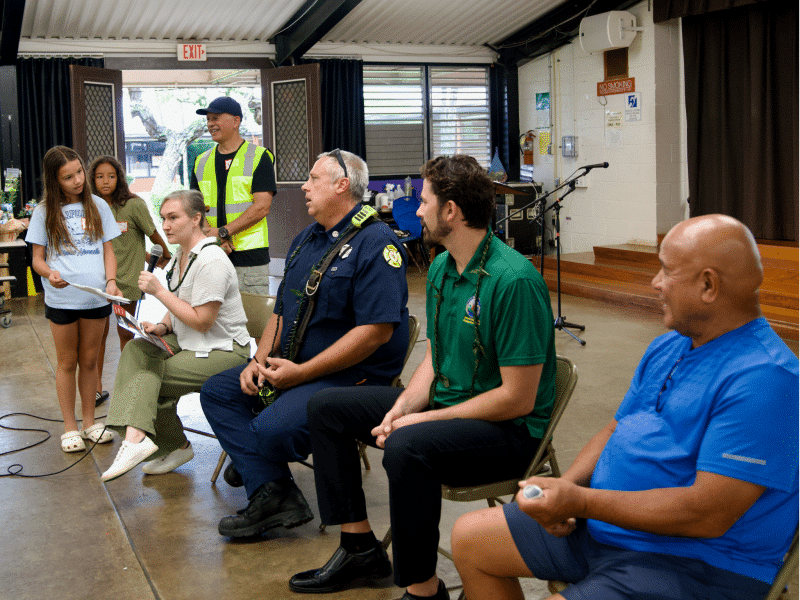
Native Hawaiians, new newsrooms work to shift journalism norms in Hawai’i after legacy media exclusion
As the Hawaiian Islands grapple with rising natural disaster and a news desert prognosis, a wave of community-stewarded projects centering Native Hawaiians and their values is trying to shift the culture of journalism on the islands.
Fort Worth Report becomes Texas’s sixth unionized newsroom
The Fort Worth Reporters Guild voted 11-1 to unionize, and will begin working with management on collective bargaining for a contract.
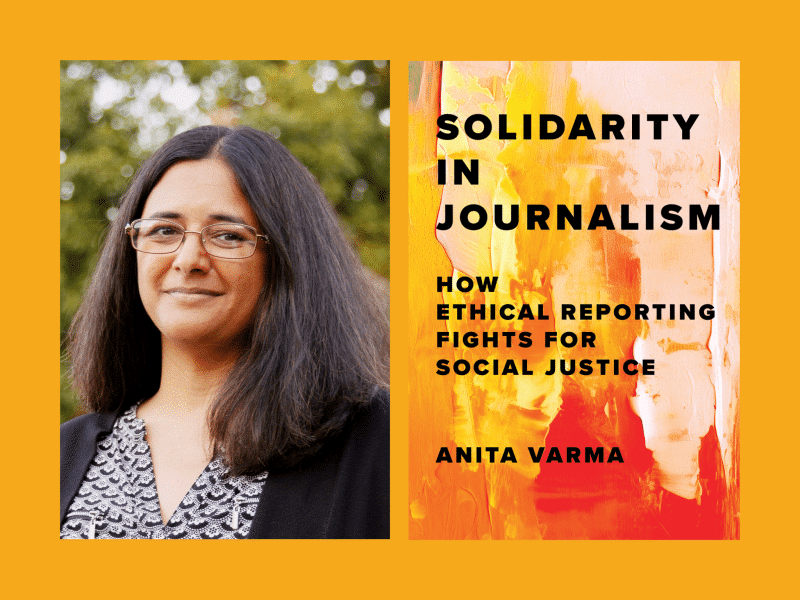
Q&A: ‘All journalism advocates’: Anita Varma on solidarity journalism
Journalism professor Anita Varma on her forthcoming book, Solidarity in Journalism: How Ethical Reporting Fights for Social Justice, the limits of the advocacy vs. journalism conversation, and more.