
The Supreme Court is political. These journalists say treat it that way
Historically, Supreme Court press corps have not treated the Court as a political branch. As the Court presides over decisions targeting the legal rights of those most marginalized in the U.S, that must change.
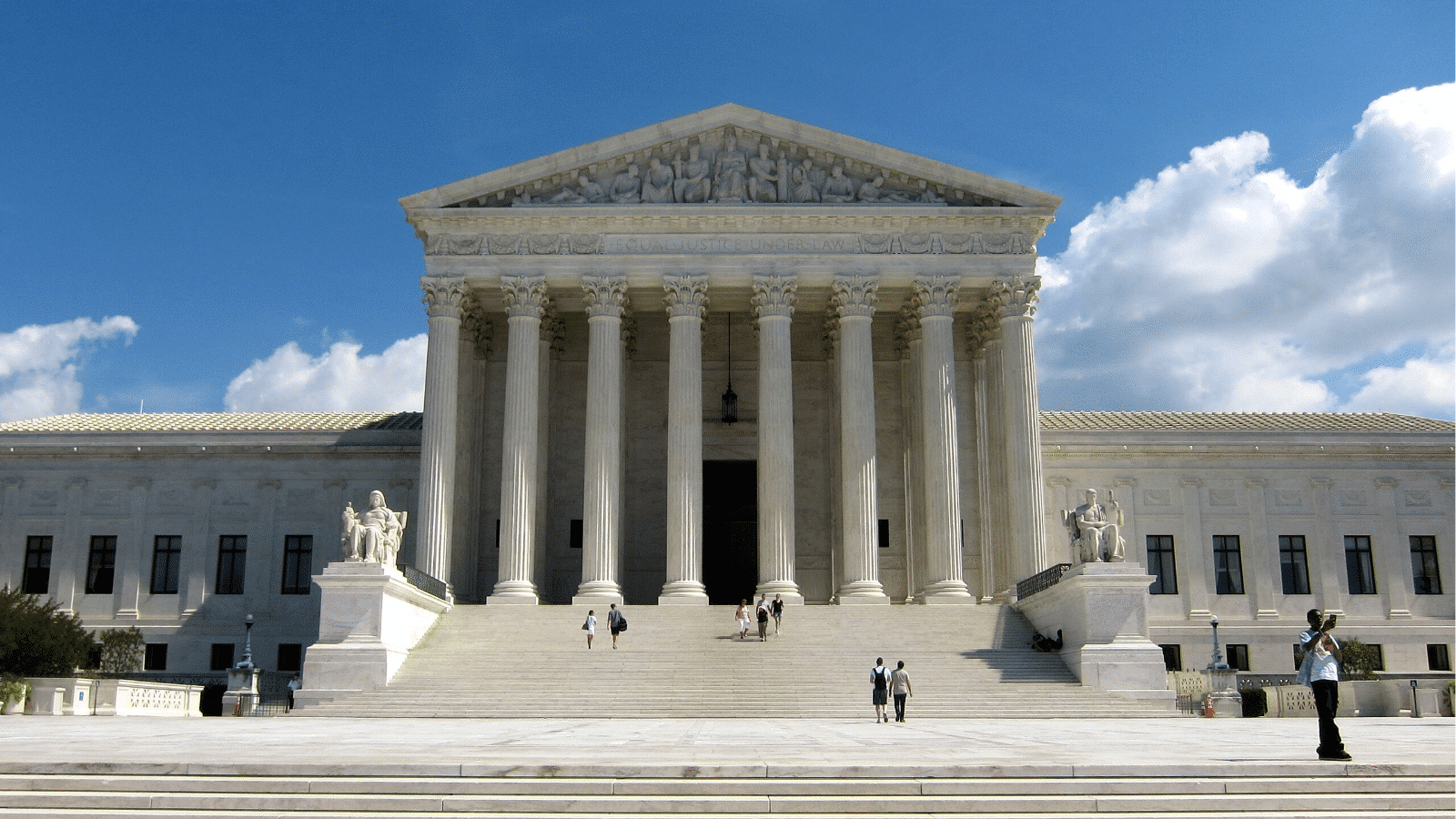

Since Trump returned to office, the Court has been a key ally of the most extreme elements of his agenda. Trump’s three appointments to the Court have created a 6-3 conservative supermajority that some experts predict will hold until the 2050s. Even before his re-election, the Court ended the right to abortion, gutted gun regulations, and ended affirmative action.
But legal journalists, many of whom are lawyers — a profession that venerates the Court — have not historically treated the Court as a political branch. Journalists covering the court regularly focus on the legal arguments behind major cases, as opposed to the political machinations behind the scenes and their broader implications. This leads some analysts to see traditional media as going easy on the Court, especially since media organizations sometimes fail to consider their own role in these battles.
An example of this is the recent U.S. v. Skrmetti decision — the New York Times’ coverage of trans healthcare was cited 29 times in briefs arguing for the Court to permit states to ban gender-affirming care for minors. Clarence Thomas’ concurrence arguing for the bans cited the Times seven times. Yet the paper has not publicly acknowledged its role in providing justifications for crackdowns on trans Americans. And the Washington Post, for example, sat for three years on the story that an upside-down American flag — a symbol of the January 6th insurrection — flew outside Republican justice Sam Alito’s home shortly before Joe Biden’s inauguration.
Related: New York Times cited 29 times to justify decision limiting trans healthcare
As the Court presides over decisions that target the legal rights of those most marginalized in the U.S., coverage of the body and the legal fights within is crucial.
Yet the Supreme Court Press Corps is, just like the Supreme Court itself, an exclusive institution. Only 23 journalists hold coveted “hard passes” granting them access to all of the Court’s arguments. Outsiders have to navigate a complex process to get a day pass to watch arguments.
Historically, said Chris Geidner, the publisher of Law Dork and a twenty-year veteran of writing about the Court, those institutional journalists can give the Supreme Court some deference in their reporting.
“If you’re part of a big institution, to cover another institution is going to be influenced by the fact that you fundamentally believe in these institutions,” Geidner said.
But reporting on the Court, especially this Court, requires “scrutinizing this institution like it’s a government body,” added Mark Joseph Stern, a senior writer at Slate.
One factor that has impeded that scrutiny, Stern says, is justices leveraging their connections with journalists to foster favorable coverage. Because the justices don’t run for office, they don’t have to interact with the public as often or in the same ways as other federal officeholders. Their limited accessibility makes journalists’ off-the-record relationships with Justices that much more valuable. But with those relationships comes “an expectation that journalists won’t be intensely critical,” he said.
See, for example, storied NPR correspondent Nina Totenberg, who had a close friendship with Ruth Bader Ginsburg while covering the Supreme Court. While Totenberg claimed that her coverage of the Court wasn’t affected, NPR’s public editor noted after Ginsburg’s passing that “the closeness of that Totenberg-Ginsburg relationship was never fully disclosed.” And Totenberg received more criticism after she published a book where she described giving questions to Ginsburg in advance of panel discussions, offering Ginsburg the chance to push back on questions to be asked in future interviews.
While Totenburg wrote that she never got a story from Ginsburg, as legal scholar Steven Lubet wrote at the time, “the conflict lay in the scoops Totenberg didn’t even seek.”
Jay Willis, founder and editor in chief of Balls and Strikes, says covering the Court means first recognizing that it is a political entity. While describing his judicial philosophy, Chief Justice John Roberts said, “it’s my job to call balls and strikes, and not to pitch or bat.”
The quote was the basis for Willis’s publication name, but he doesn’t buy it. Though the Court’s business is interpreting the law and Constitution, Willis said, such interpretation is “always a political act.”
Another Court area that goes underreported — and has played an increasingly prominent role in law since Trump’s reelection — is the shadow docket. Also known as the emergency docket, the shadow docket is usually used to resolve procedural matters. But through unsigned, unexplained shadow docket orders, the Court has approved Trump’s dismantling of the Department of Education, authorized sending migrants to countries where they face the risk of torture, let DOGE access millions of Americans sensitive data, and empowered Trump’s ban on trans servicemembers in the military.
Most Supreme Court cases that make headlines take place on the merits docket, where the Supreme Court holds months of written briefing and an oral argument. But that’s a small fraction of the Court’s work, says Steve Vladek. Vladek, a professor of law at Georgetown University Law Center and the publisher of the legal newsletter One First, was inspired to begin writing for a lay audience about the Court because traditional media wasn’t covering these other developments. There is “a public appetite,” says Vladek, for more in-depth coverage of the shadow docket.
Across coverage approaches, a key value for these journalists is transparency. Some, like Vladek, see themselves as “more of an institutionalist,” who think it’s valuable to analyze legal arguments on what the law ought to be, even if the Court is acting politically. Others, like Willis, take another approach: “I don’t hide my perspective. I present all of that to the reader, and I allow them to draw their own conclusions about my argument.” Ultimately, they all want to shine light on an opaque institution, to help readers to make informed judgements about the Court.
In a moment where the Court’s actions are, arguably, not based in law, these legal journalists say thoughtful, transparent coverage is more important than ever.
“[It] does readers a disservice when pundits try and tell them, ‘Nothing to be worried about — this court is still doing law, not politics,’” Willis said.
Grady Martin is a freelance writer and 1L at Yale Law School.
This piece was edited by James Salanga.
We depend on your donation. Yes, you...
With your small-dollar donation, we pay our writers, our fact checkers, our insurance broker, our web host, and a ton of other services we need to keep the lights on.
But we need your help. We can’t pay our writers what we believe their stories should be worth and we can’t afford to pay ourselves a full-time salary. Not because we don’t want to, but because we still need a lot more support to turn The Objective into a sustainable newsroom.
We don’t want to rely on advertising to make our stories happen — we want our work to be driven by readers like you validating the stories we publish are worth the effort we spend on them.
Consider supporting our work with a tax-deductable donation.

James Salanga,
Editorial Director
Related Articles
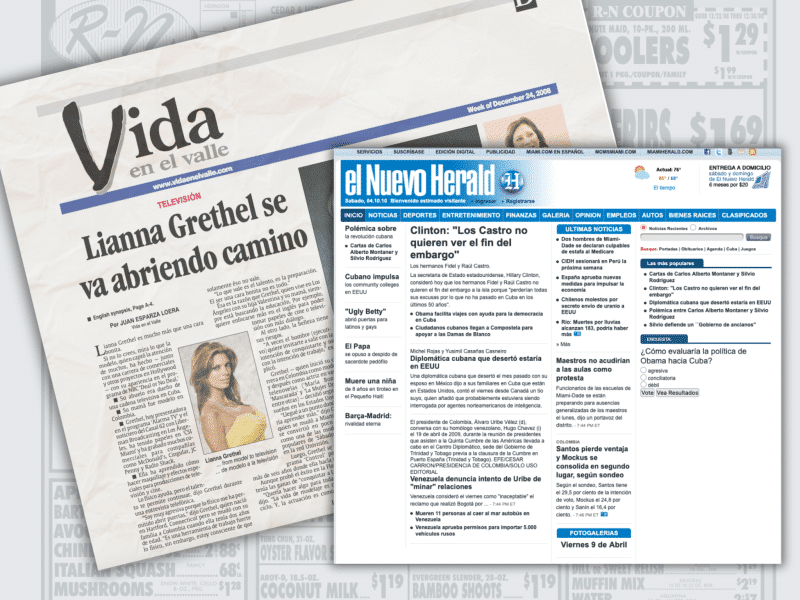
McClatchy layoffs cause ‘end of an era’ for some Spanish-language papers
The latest round of layoffs from McClatchy eliminated editorial staff at two Spanish-language papers, Vida en el Valle and El Nuevo Herald, along with the Spanish-speaking reporter at Tri-City Herald.

Trans News Network calls New York Times boycott for accurate trans coverage, following boycott from WAWOG
For years, reporters, media workers, and media accountability organizations have said the New York Times’ reporting and commentary is spreading harmful misinformation about trans people.
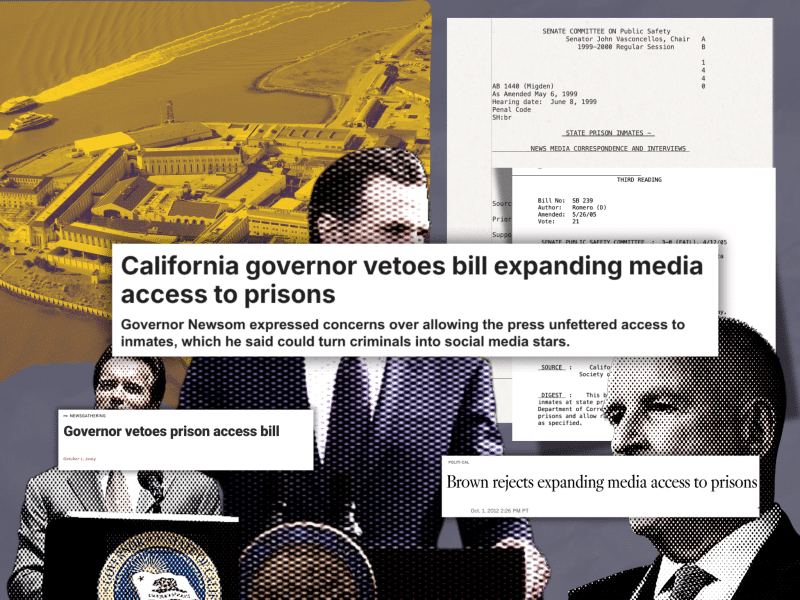
Governor Newsom adds to California’s legacy of stifling prison media access
Governor Gavin Newsom is the latest California governor to consistently veto bills seeking to expand media access and press freedom in prisons, following a precedent set by prior state governors.