
We can resist the robots
Movement journalists don’t attempt to connect to people in order to sell to them, but view this connection as a mission unto itself.
This piece is part of the column series ‘The Case for Movement Journalism‘. Read other column installments here.
We are in an urgent epidemic of loneliness and isolation, the symptoms of which pervade our political and public worlds — increasingly, people are stuck engaging with one another on corporate-owned social media platforms, beholden to the algorithm to keep us connected rather than connecting face to face. We are starved for connections that deepen our understanding of each other and our movements for change. The toxicity of our disconnection shows up at the highest levels — the dehumanizing discourse of our national politicians — and at the most individual and day-to-day, as young people in particular struggle to connect with other people in healthy ways in real time.
Movement journalism can serve the purpose of connecting people within and across identities and experiences, helping to support and create stronger communities. The physical and virtual spaces movement journalists build constitute a key piece of what I will call movement infrastructure — containers for the relationships of trust and connection we so urgently need in order to change our conditions. These connections may be based on geography, identity, or a shared vision or goal. What makes them different from algorithmic connection is that they are decommercialized: movement journalists don’t attempt to connect to people in order to sell to them, but view this connection as a mission unto itself.
The idea that journalism should build community is not just another auxiliary mission to the work of producing and disseminating information. It may actually be what saves journalism from being cannibalized by its own corporatization: Right now, the gaps and holes in people’s trust in media are gaping, and the only way to begin repair is through building trusted and connected media organizations responding directly to what communities care about and need while providing information relevant to their daily life.
One case study for this work is Mainline in Atlanta, founded by Aja Arnold.
“I had a professor say that a journalist’s job is to make sense of the world happening around us,” Arnold, also Mainline’s director, said. “In ancient Greece and Rome, people would gather to tell stories, starting a conversation and creating forums for people to discuss and to make sense of the world that they are living in.”
She started Mainline out of a related urge: Arnold was responding to the multiple crises in Atlanta’s local media, which included the typical shrinking of mainstream print media and a takeover of Atlanta’s alt-weekly by a conservative Trump supporter. Atlanta’s mainstream newspaper, the Journal-Constitution, has long been known for its racism and allegiance to the city’s elites. Sadly, in mainstream journalism, much of what has been labeled “engagement” and even “community engagement” is simply marketing and social media promotion by another name — attempts to stay relevant to communities flooded by information and promotion, without actually orienting towards the needs and dreams of the communities being “engaged.” She envisioned an outlet that would fill some of these gaps and bring together people from the music scene to talk politics.
“It was DIY from the get,” she said. “I’ve gone through the punk music to journalism pipeline.”
Mainline’s first iteration, in 2019, was a printed ‘zine, and they did four thematic print issues before shifting online and beginning to cover news when the pandemic started. Their first major news story was about Cop City, the proposed militarized police training center on 150 acres of forested land owned by the city — Mainline actually broke the story of Cop City’s proposal in the spring of 2021, and followed its development closely on their blog and podcast.
The public attention through Mainline’s work and growing outcry helped generate mass participation in the Stop Cop City movement. At the September 2021 city council hearing, commenters spoke for 17 hours, with the majority against the proposed training center. After the city passed it anyway, local organizers continued a fierce and prolonged resistance, including an attempt to overturn the training center by ballot initiative, and a sit-in movement that garnered national attention, particularly after police shot and killed one of the protesters, and the state filed charges of domestic terrorism and racketeering against dozens of others.
Activists in Atlanta have doggedly continued their fight, and have created a model for other cities as similar initiatives pop up in dozens of states, reflecting a trend toward the regressive expansion and dangerous militarization of policing in U.S. cities.
The city of Atlanta’s insistence on turning green space into policing space is both symptom and cause of the trend of isolation and loneliness: In cities with few places to gather, play, and create communities together, public land is being transformed into military-style training sites rather than any of the things that actually create connection and safety in communities.
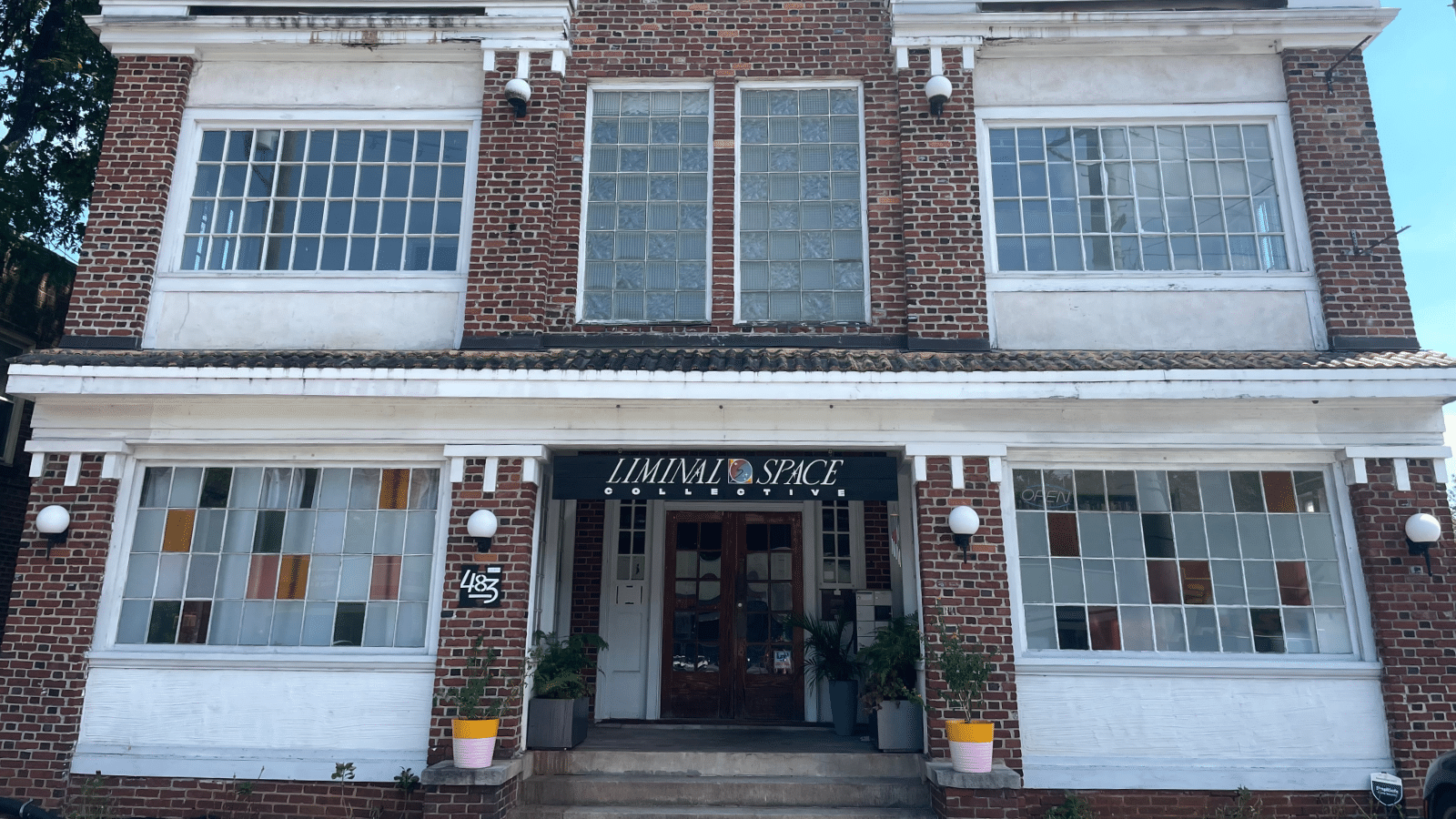
Mainline has responded to Atlanta’s corporate gutting by opening a third space of its own. For two years, Mainline has been collectively leasing a commercial space in Atlanta along with a group of other justice-oriented groups and individuals, including Kiss and Ride, a trans-friendly and feminist sex toy store. The community space stocks Plan B and Narcan, and other tenants are healing workers: chiropractic care and massage. Called Liminal Space Collective, it hosts community markets weekly, and is also a venue for music shows, art shows, and fundraisers.
“It feels like a little bubble that we’ve created for ourselves,” Arnold said. “There’s the outside world and then there’s, like, our space, and it feels very safe here. And whenever I’m leaving, I always feel like I’m like a little kid going out to school and my comrades will be like, ‘Bye, good luck out there.’”
Mainline also collaborates with other local and national organizations on events, like a 2023 Abolitionist Media Panel in Atlanta, and an extensive online training for movement media makers in 2025. All of these are spaces in which the threads of community connection grow stronger as people simultaneously build analysis and make sense of the world while deepening their relationships with each other.
Playing this role also benefits the journalism itself: Because Mainline is involved and trusted in its local community, people in Atlanta bring story tips, useful questions, and sources to Arnold’s doorstep. ChatGPT story suggestions can’t replace word-of-mouth, and Arnold says she always has more story tips than she could possibly pursue.
“We’ve become kind of a destination for people to go to, to learn how to get involved in their communities,” she said.
Liminal Space reminds me of a dream — a utopic vision of healing, sex-positive community and a forum for information, creativity and learning. However imperfect or temporary, this tiny little utopia is real, and in the middle of Atlanta. The ties and connections created by being in such a space will never be replicated or supplanted by artificial intelligence or curated news feeds — which is precisely why it matters so much that journalists dedicate ourselves to creating, or at least being present in, such spaces.
The Southern movement journalism collective Press On, and the organization where I work, Interrupting Criminalization, regularly host spaces for community-building and connection among marginalized media makers without an agenda beyond deepening relationships — including Press On’s movement journalism listserv. These create opportunities for support, story-sharing, and cultivating political analysis and movement journalism praxis.
While not necessarily recognized by funders as such, the premise of this work is that relationships themselves are the most important infrastructure. Trusted community, whether virtual or in-person, may soon be the only thing that differentiates our work from the work of the robots.
Lewis Raven Wallace is the Abolition Journalism Fellow at Interrupting Criminalization and the author of The View From Somewhere: Undoing the Myth of Journalistic Objectivity and the forthcoming title Radical Unlearning. They live in North Carolina.
This piece was edited by James Salanga. Salanga is also part of Press On’s movement journalism listserv.
We depend on your donation. Yes, you...
With your small-dollar donation, we pay our writers, our fact checkers, our insurance broker, our web host, and a ton of other services we need to keep the lights on.
But we need your help. We can’t pay our writers what we believe their stories should be worth and we can’t afford to pay ourselves a full-time salary. Not because we don’t want to, but because we still need a lot more support to turn The Objective into a sustainable newsroom.
We don’t want to rely on advertising to make our stories happen — we want our work to be driven by readers like you validating the stories we publish are worth the effort we spend on them.
Consider supporting our work with a tax-deductable donation.

James Salanga,
Editorial Director
Related Articles
It’s healthy for student journalists to raise concerns about AI
Generative AI isn’t a real solution to the issues facing newsrooms. Students are right to point that out.
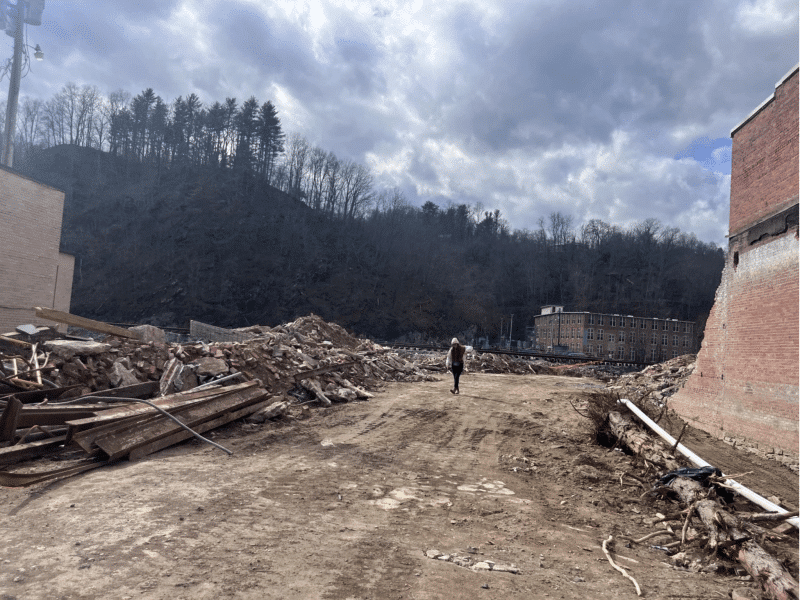
How disaster reporting hit home for two Appalachian journalists after Helene
Disaster journalism is vital, but can be traumatizing for both journalists and sources. We can make it better by treating disaster survivors — and ourselves — with more humanity.
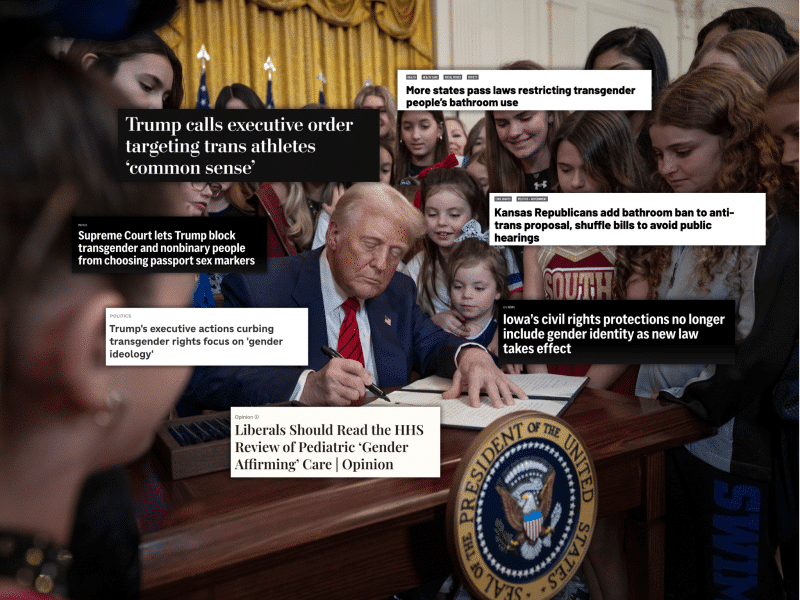
‘Almost media silence’: National, local news ignores trans Americans amid 2025’s anti-trans attacks
The failures of newsrooms to substantively cover anti-trans legislation in 2023 and 2024 have compounded over the first year of Trump’s second term in office.