
Youth want a voice in youth news coverage
Journalists are covering issues that deeply impact young people. But from mainstream media coverage to education journalism outlets and local papers, young people of color especially feel that their voices are ignored in news stories.
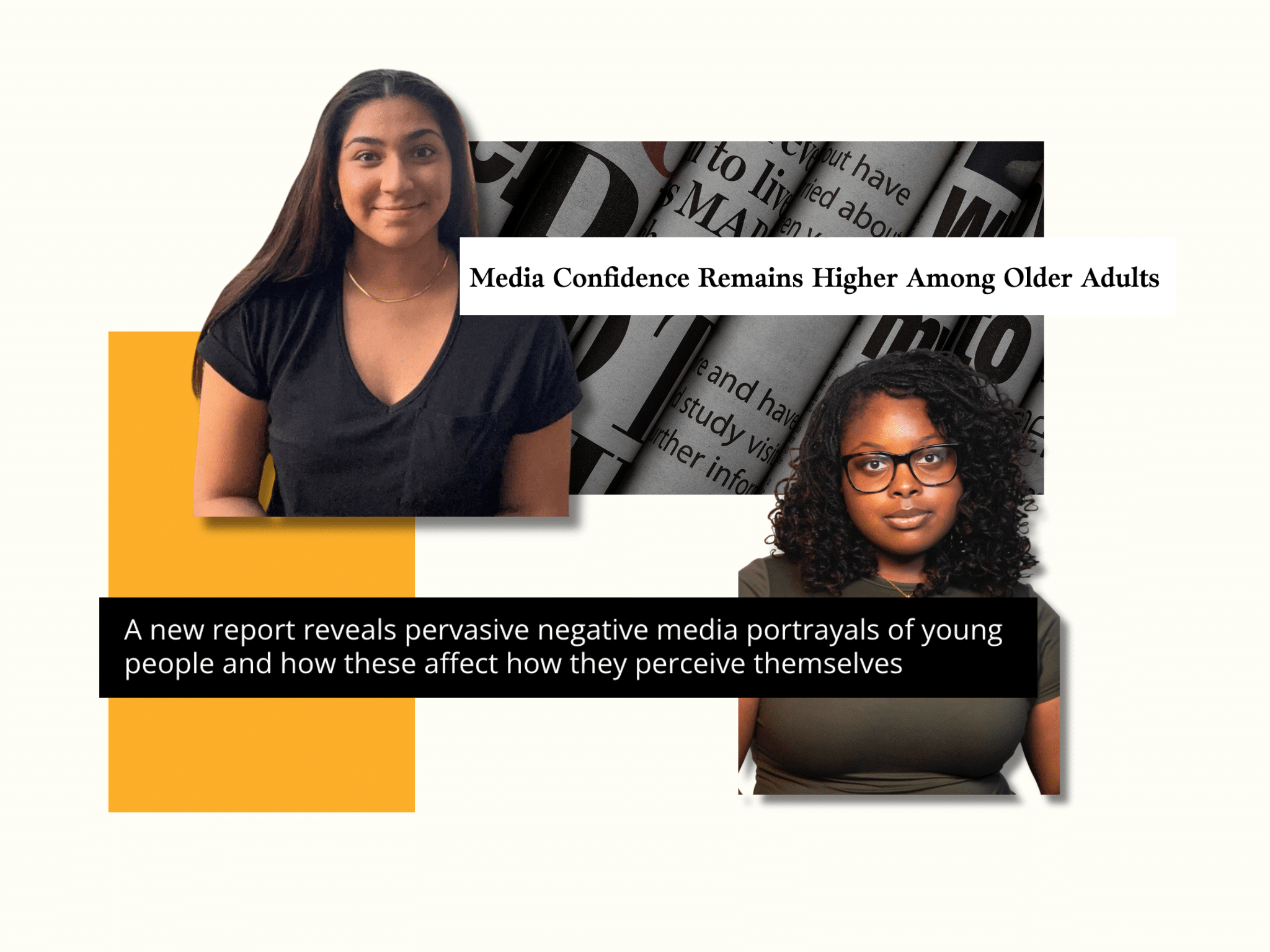
Last fall, Serena Pallan, a high school senior from Baltimore, Maryland, attended the U.S. Senate Page program. For an entire semester, she studied and interned with U.S. senators and student leaders from across the country.
The teachers were genuinely interested in her views on politics, which Pallan said was a stark contrast to the way her experiences as a young person were valued in her local journalism ecosystem.
“Our school newspaper was just cut,” she said. “The journalism class was just cut. When I do read about education policy [locally], the first person they [reporters] go to is teachers. They’re not really talking to students.”
However, even in the program, Pallan said her ability to be civically involved was limited by the lack of youth voices in coverage of social media.
“Senator [Ed] Markey pulled me aside after his speech [on the harms of a TikTok ban] on the Senate floor to ask me what I thought of it,” she said. “I said he made a lot of valid points, but I think it would have been very valuable if he could have cited youth opinions within that same speech. He was citing big headlines from the New York Times and The Washington Post. None of those actually contained any youth voice in them.”
She isn’t the only young person who feels constricted and underrepresented by current news outlets.
From academic pressure to social media usage to climate disasters to the increasingly pressing student mental health crisis, journalists are covering issues that deeply impact young people. However, their perspectives are underrepresented in journalistic coverage, which may further contribute to declining trust in news media. Whether in mainstream media coverage, education journalism outlets, or local papers, young people often feel that their voices are ignored in news stories.
Layla Gentles, a high school senior attending Baldwin High School in Baldwin, New York, said the lack of student voices in stories about curriculum limitations disproportionately affects youth of color.
“[For example], how do the POC students in Florida feel about no longer being allowed to learn about how their race affects them in society?” she said. “If journalists covered how kids feel and react to critical race theory or anti-critical race theory rhetoric, that would change the minds of adults, which would change the minds of lawmakers.”
For Gentles, this underrepresentation she sees of youth of color in mainstream news coverage parallels her classroom research.
“I did an AP seminar paper on how the number of Black girls who go missing in the United States goes uncovered [by journalists],” she said. “It’s usually a runaway or troubled youth, or they just aren’t mentioned ever … I feel for a little Black girl or a little brown girl who just feels invisible because their stories are not talked about.”
When youth are included in reporting, many students across the country from marginalized backgrounds still say they feel that coverage lacks nuance.
“As a young person from an immigrant background, I don’t often see stories that reflect the intersection of youth civic engagement and immigrant identity,” Mateo Cisneros, a sophomore at Christopher Columbus High School in Miami, Florida, said. “Overall, mainstream coverage tends to generalize or oversimplify the complexity of youth experiences.”
The lack of inclusive reporting has been apparent in the way that many outlets have approached everything from legislation around school cell phone bans to curriculum limitations to book bans in recent years.
“It’s disheartening because it often feels like our perspectives are treated as an afterthought when in reality, we’re living through these issues every day,” Cisneros said. “When coverage leaves us out, it makes our voices invisible and reinforces the stereotype that we’re only observers.”
In the same vein, excluding youth experiences can decrease young people’s drive to be civically engaged within their communities. Along with voting age limits, in many communities, youth are unable to serve as significant stakeholders in local school boards, making journalism one of the main venues through which they can share their voices.
But young people across the country also find that in coverage about education policy, the opinions of lawmakers are often covered before their own.
“I have seen too many articles that focus on lawmakers making policies that affect young people without ever speaking to us or understanding our experiences,” Pallan said. “It makes me feel invisible, like the story of my generation is being told in fragments, without the voices that live it every day.”
Through the implication that youth are irrelevant to reporting that should speak to their experiences and identity, young people become disinterested and mistrusting of news coverage.
Without a focus on youth identity, the representation of teenagers, especially youth of color, is missing from the journalistic record.
“It’s not just ‘representation matters’,” Gentles, from Baldwin, said. “If I’m not seeing my stories even be discussed, I’m gonna think my story isn’t real. I’m not gonna think I have a story.”
Still, students are seeing some organizations provide a blueprint for including youth voices in reporting, whether locally or nationally. Cisneros said he felt his experiences as an immigrant were represented by organizations empowering undocumented students to speak out, like Adelante in New York.
“They’re giving the world a new perspective, the perspective of the next generation,” he said.
Meanwhile, for Pallan, seeing youth coverage being done right and youth reporting supported through PBS NewsHour’s Student Reporting Labs reinforced “our perspectives deserve the same weight and respect as professional reporting.”
Gentles said that her local paper embodies what it means to uplift youth in coverage, from covering “up-and-coming stars” to “giving kids that spark and motivation.”
Ultimately, teenagers want to be able to read journalistic pieces that respect them, acknowledging them as stakeholders in their own experiences. For Cisneros, that includes journalism that reflects young people across different cultural and socioeconomic backgrounds and “captures the complexity of our lives.”
“My biggest hope is that youth voices in journalism don’t just inspire change, but actively shape policy and public opinion,” he said.
Other students agree, advocating for youth to be involved not only as sources in the reporting process, but also to have the resources to be reporters themselves.
“I hope the future of youth coverage gives young people real access and resources to report,” Pallan said. “I want to see journalism that passes the torch from generation to generation, empowering each new wave of youth to shape the world and tell their own stories.”
Marium Zahra is a seventeen-year-old independent journalist from El Paso, Texas, covering intersectional politics, education, and culture.
We depend on your donation. Yes, you...
With your small-dollar donation, we pay our writers, our fact checkers, our insurance broker, our web host, and a ton of other services we need to keep the lights on.
But we need your help. We can’t pay our writers what we believe their stories should be worth and we can’t afford to pay ourselves a full-time salary. Not because we don’t want to, but because we still need a lot more support to turn The Objective into a sustainable newsroom.
We don’t want to rely on advertising to make our stories happen — we want our work to be driven by readers like you validating the stories we publish are worth the effort we spend on them.
Consider supporting our work with a tax-deductable donation.

James Salanga,
Editorial Director
Related Articles
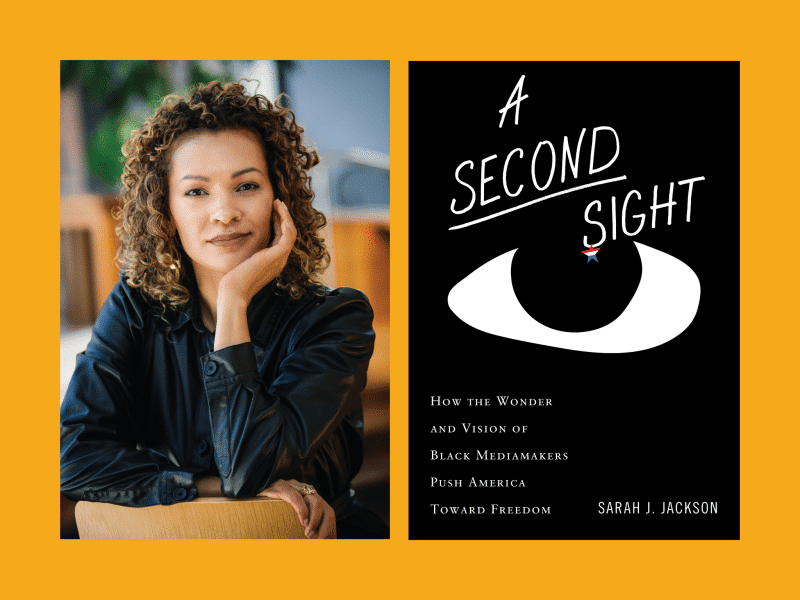
Q&A: ‘A Second Sight’ tells U.S. media history through Black journalists’ lens
Author Sarah J. Jackson sat down with The Objective to talk about her new book, ‘A Second Sight’, and how Black journalists and media-makers have simultaneously imagined and critiqued U.S. mythmaking.
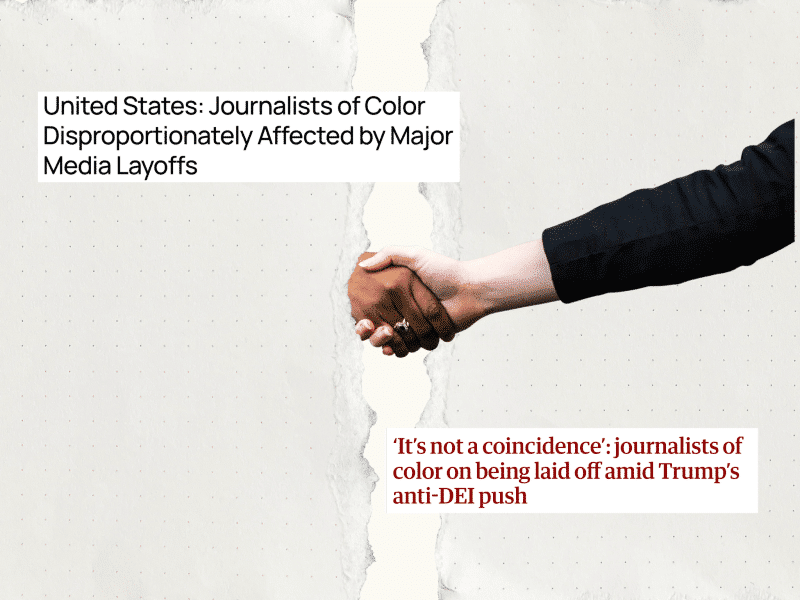
Journalism is increasingly pushing reporters of color out of the industry
After years of diversity promises and amid increased safety risks, journalists of color face an industry that still fails to culturally and financially value their labor.
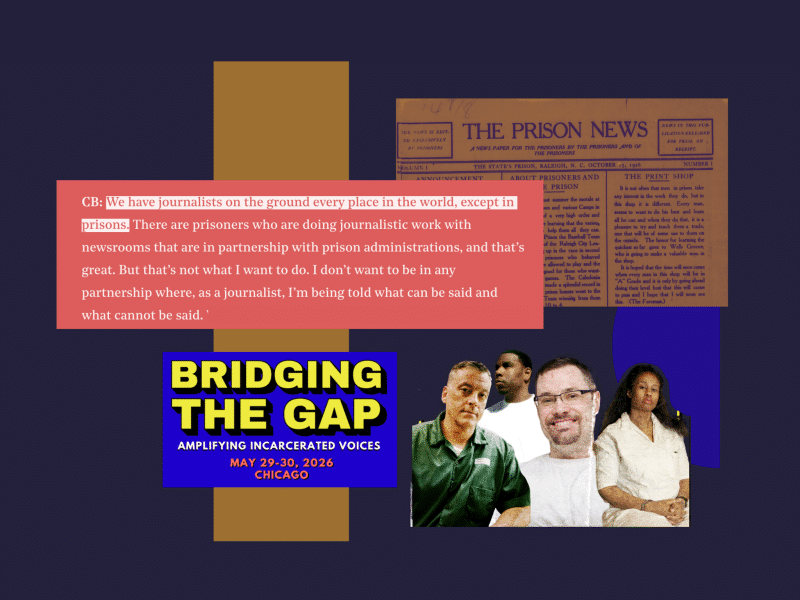
Incarcerated journalists lead first-ever conference on strengthening U.S. prison journalism
Bridging the Gap, a conference focused on improving journalism in and on U.S. prisons and jails, will take place in Chicago on May 29 and 30.