
Journalism philanthropy shifts approach to funding diverse newsrooms
The ebb and flow of the philanthropic sector — especially around stories of marginalized people — has been an issue even before Trump’s targeting of DEI. But new shifts have disproportionately affected organizations led by people of color.

Since coming into the White House last January, the Donald Trump administration has been cracking down on initiatives for diversity, equity, and inclusion across nonprofit, public, and private sectors. These initiatives were first launched in 1961 to ensure that federal hiring processes were equitable and did not discriminate on the basis of race, gender, or creed. Acting chair of the Equal Employment Opportunity Commission Andrea Lucas recently said during her confirmation that eliminating “illegal DEI” in the workplace is a top priority of the commission, and the threat has been looming over corporations as well as nonprofit organizations.
It’s difficult to know to what degree journalism’s philanthropic funders are distancing themselves from funding DEI programs due to federal policies, because the funding process has historically been opaque and the philanthropic field lacks regulation. The federal government’s intentions to investigate DEI programs even in private companies has put corporate America on edge — so it would stand to reason that philanthropic foundations are making similar risk assessments.
While the Institute for Nonprofit News’ (INN) 2023 Index notes increased support for local newsrooms partly due to “funders’ increased focus on DEI since 2020” by prioritizing grantees serving diverse communities, INN notes this was a “relatively recent development.”
AfroLA founder and executive director Dana Amihere says the “performative” DEI time-bound funding that took place in 2020 after the George Floyd protests is currently drying up, and not necessarily because of Trump.
“[Funders] came out with a Black Lives Matter statement, they put up the black squares on Instagram, and then, when the dust settled, it’s like, ‘Okay, we’re back to business as usual,’” Amihere said, adding that she would like to see philanthropic funders address systemic issues impeding smaller, hyperlocal newsrooms like AfroLA from becoming sustainable.
The INN Index also revealed the reverse pattern for national outlets: White-led outlets reported higher levels of funding.
The ebb and flow of the philanthropic sector — especially around stories of marginalized people — has been an issue even before Trump’s targeting of DEI. In the face of potential targeting due to “discriminatory” policies as defined by the federal government, funders haven’t stopped awarding grants altogether, but have shifted their language around public funding.
Uneasy funding landscape before and after Trump took office
Alicia Bell, the director of Borealis Philanthropy’s Racial Equity and Journalism Fund, says that even before DEI was in the crosshairs, nonprofits led by people of color often relied on “whisper networks” to learn diverse grantees were receiving drastically lower amounts from funders in comparison to white-led organizations.
Still, Bell has observed a few shifts in the sector over the last few months that have disproportionately affected organizations led by people of color, who are now under increased scrutiny while already being under-resourced.
“Folks are having to put additional confirmations that [their organizations] are not going to do anything illegal when it comes to immigration or … illegally discriminate against communities,” she added. “Organizations are being asked to maybe take out ‘Black-led’, or to take out ‘Black and Brown-serving’ … out of their applications and out of their mission [statements] and out of their names.”
A smaller study done by the INN, published last September, indicates that more nonprofit publications are currently experiencing short-term financial uncertainty. The survey suggests “political backlash” and “retracted foundation support” as factors “pushing some news outlets to the financial brink,” the report reads.
Related: After 2020, Black-led newsrooms ask: Where is the long-term support?
The informal survey taken by the INN indicates that some nonprofit outlets have depleted their funding reserves and are in danger of closing down. Despite the success of nonprofit newsrooms in captivating audiences, the funding — which clearly depends on the uneven and unstable political environment — simply isn’t following.
“The survey results illustrate a disconnect between audience growth and revenue,” the survey revealed. “Almost half of the respondents report financial struggles despite increases in audience size.”
One executive director at a nonprofit newsroom covering news for marginalized communities has noticed that funding opportunities have become scarcer since January 2025, even with funders the organization had invested in building relationships with. According to executive director Robin, who is using a pseudonym in this story to protect the future funding relationships of their organization, a local funding body rejected a grant proposal from the news organization because it was “too niche.”
According to Bell, this kind of underhanded language is used when funders know that denying the funding doesn’t make sense.
“If you really believed that an organization shouldn’t be funded because it’s led by [marginalized] folks, you would say it with your chest,” they said. “But you know that that’s wrong. And so instead, you say it’s niche.”
Robin cannot confirm these rejections were for certain related to the current backlash against DEI.
But they did have one experience that was about institutions backing away from DEI to protect their own federal funding: Their organization had been working with a university on a collaborative project for about six weeks. The day the project was supposed to go live, the university backed out and shared the news with Robin over a Zoom call.
“They said, ‘We can’t do this project anymore, the head of the department believes that the dean will not accept it because we get federal funding — this is going to be seen as DEI and we can’t be associated with it, because we can’t deal with the optics and we can’t put funding at risk,’” Robin said, adding that they had been working with the representative of the institution directly. “I think the most shocking part about it was that they said it out loud.”
Changing front-facing policies
It’s clear progressive foundations might be in imminent danger of criminalization by the administration. Days after the right-wing podcaster Charlie Kirk was fatally shot last year, U.S. Vice President J.D. Vance pledged to crack down on “radical left lunatics” to an audience of 250,000 people on Turning Point USA’s podcast, naming The Ford Foundation and the Open Society Foundations as nonprofits to target.
The Ford Foundation and other philanthropic groups, like the Knight Foundation, committed to giving $37 million as immediate relief to public media stations after federal funding was cut by the Trump administration. The Open Society Foundations fund both national and international journalism initiatives, including legal funds to protect free speech and newsrooms in the Global South.
Some foundations have changed language on their website in the current climate, including the Knight Foundation and The Pivot Fund. But The Pivot Fund founder and executive director Tracie Powell told The Objective her organization isn’t changing the work they support.
“I had to come around to have to change our language,” Powell said, citing her lawyers’ concerns about the fund becoming a potential legal target. “We didn’t water [the language] down. I think a better framing would be, [we are] more explicit about what it is we serve and why, so we name it. We name intersectional communities.”
Related: The Knight Foundation scrubs DEI section from its ‘About’ page
Additionally, Powell said that language like “diversity, equity, and inclusion” has not always been an accurate portrayal of certain foundations’ values: “We can’t just go by what somebody calls themselves and how they identify on a computer screen,” she said.
And Bell, with the Racial Equity in Journalism Fund, said the federal government’s concern about “DEI” is not founded in the reality of the philanthropic field: “There is no funder or institutional foundation we work with that has ever funded a portfolio that was called ‘DEI’.”
For many people, they added, changing language to accommodate Trump’s backlash is a “tricky” position to be in when it comes to nonprofit journalism, particularly in cases where funders have requested that newsrooms stop covering Israel’s genocide of Palestinians in Gaza.
“I’ve seen folks reject funding because of that, because they weren’t willing to have that kind of editorial oversight from a funder,” Bell said. “Words matter in journalism … There are a lot of people who won’t change the language because the language matters and the words matter.”
If you have a story to share about how journalism funders have responded to the current climate of attacks on diversity, equity, and inclusion, contact Nicole Froio at nicolefroio@gmail.com or nicolefroio.57 on Signal.
Editor’s note: The Objective receives philanthropic funding from Borealis Philanthropy. No member of the organization reviewed this story or quotes before publication.
Nicole Froio is a Brazilian-Colombian journalist and feminist cultural critic currently working in Rio de Janeiro, Brazil.
This story was edited by James Salanga. Copy editing by Jen Ramos Eisen.
We depend on your donation. Yes, you...
With your small-dollar donation, we pay our writers, our fact checkers, our insurance broker, our web host, and a ton of other services we need to keep the lights on.
But we need your help. We can’t pay our writers what we believe their stories should be worth and we can’t afford to pay ourselves a full-time salary. Not because we don’t want to, but because we still need a lot more support to turn The Objective into a sustainable newsroom.
We don’t want to rely on advertising to make our stories happen — we want our work to be driven by readers like you validating the stories we publish are worth the effort we spend on them.
Consider supporting our work with a tax-deductable donation.

James Salanga,
Editorial Director
Related Articles
Fort Worth Report becomes Texas’s sixth unionized newsroom
The Fort Worth Reporters Guild voted 11-1 to unionize, and will begin working with management on collective bargaining for a contract.
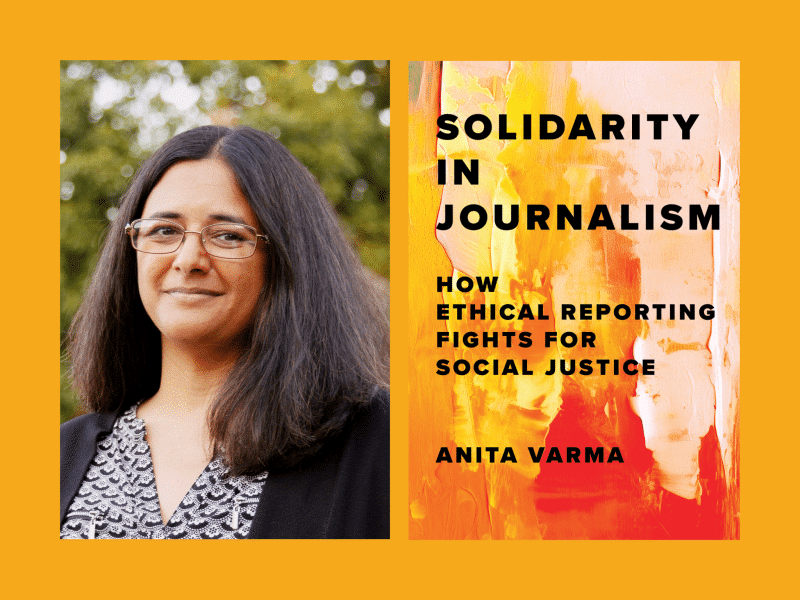
Q&A: ‘All journalism advocates’: Anita Varma on solidarity journalism
Journalism professor Anita Varma on her forthcoming book, Solidarity in Journalism: How Ethical Reporting Fights for Social Justice, the limits of the advocacy vs. journalism conversation, and more.
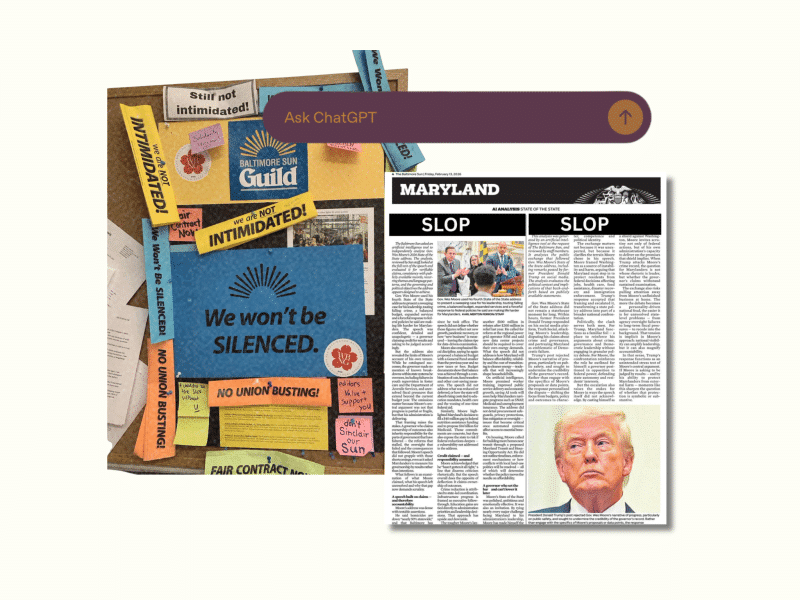
When The Baltimore Sun can’t get journalists to lower their standards, it turns to generative AI
The Baltimore Sun ”once again disparaged … human reporters and their work” by publishing two AI-generated political analyses, the newspaper’s union said.