
Journalist’s Resource downsizes
After “several funders did not renew their grants,” the Harvard-based hub making academia accessible to reporters cut its program director and managing editor positions.
After losing funding, The Journalist’s Resource, a Harvard-based hub for helping journalists navigate the evidence-based research landscape, is cutting its program director and managing editor positions. Three remaining staffers will continue the project, which will continue to be housed in the Shorenstein Center on Media, Politics, and Public Policy, albeit on a smaller scale departments.
The Journalist’s Resource was founded in 2010 and relaunched in 2011, with funding support from the Knight Foundation. The program is an outgrowth of the Carnegie-Knight Initiative, which funds eleven universities to examine what journalism schools in higher education might look like. Last year, The Journalist’s Resource published 80 tip sheets across topics from immigration and higher education to sports betting and preserving federal data.
“J[ournalist’s] R[resource] depends entirely on philanthropic donations,” program director and editor-in-chief Carmen Nobel said in a goodbye newsletter on Wednesday. “After several funders did not renew their grants recently, the Shorenstein Center had to make a difficult decision.”
That decision meant Nobel and managing editor Denise Ordway had their positions cut. Nobel, who formerly worked as senior editor for Harvard Business School’s Working Knowledge, which made business professors’ research more legible for journalists, called her role as program director “the most important role I’ve held in my career as a journalist.”
“I’m most proud of knowing that every single webinar, tip sheet, and explainer made a significant, real-world impact on journalism,” she told The Objective via email. “I’m also proud of building a small-but-mighty dream team of research-loving journalists dedicated to the mission of informing the news with research.”
Liz Schwartz, the Shorenstein Center’s director of communications, said in an email to The Objective that the update newsletters from Nobel and director Nancy Gibbs “contain all that we’re going to say publicly right now.”
“We’re deeply grateful for all that the departing staff have done for the program, and sorry to say goodbye to them,” Schwartz said.
As recently as April 15, 2025, archived versions of the site show The Journalist’s Resource received support from the Carnegie Corporation of New York. On April 16, 2025, that attribution was no longer present. However, Nobel’s farewell newsletter cited “several funders” as choosing not to renew their support.
The Objective has reached out to the Shorenstein Center for further clarification.


The Journalist’s Resource isn’t the only journalism support organization at a major university that has faced funding difficulty over the past year. Last spring, Columbia University “sunset” the Dart Center for Trauma, which focused on providing resources to help reporters navigate their own trauma, after the center lost its major namesake funder in the midst of Trump targeting federal funding to the university — the site of some of the earliest Palestinian solidarity actions after Israeli forces escalated violence in Gaza after Oct. 7, 2023.
On April 11, 2025, President Donald Trump sent Harvard a bevy of demands, including that the university limit campus activism and audit its views of diversity on campus, and threatened to cut $2.6 billion in federal funding if the demands were not met. Three days later, Harvard University president rejected the demands and told the university community Harvard “will not surrender its independence or relinquish its constitutional rights.”
After federal funding was frozen, Harvard won its legal contest against the Trump administration’s decision in September, with the presiding judge writing in the opinion that “the defendants used antisemitism as a smokescreen for a targeted, ideologically-motivated assault on this country’s premier universities.” Trump has said he is appealing the decision, and as recently as last week demanded a $1 billion payment from the university in response.
The formerly-Columbia-based center is continuing its same mission and work under a new name: the Global Center for Journalism and Trauma.
As for The Journalist’s Resource, Nobel said the organization’s senior editor of economics and legal systems, Clark Merrefield, will continue to produce evidence-based pieces and webinars for JR in the same vein of the project’s current work.
“I’m encouraged that the Shorenstein Center plans to continue the good and necessary work of The Journalist’s Resource,” she said via email. “For local and national journalists alike, evidence-based research is a great tool for holding politicians and political candidates accountable for their claims. … In a time when some politicians publicly misconstrue research findings to justify their actions or proposals, the ‘Know Your Research’ section of the JR website can help journalists spot and call out those misleading public statements.”
Former TIME editor-in-chief Gibbs and professor Tom Patterson, founder of The Journalist’s Resource, will shepherd the transition.
“Its value and impact, in supporting journalists and media creators to deliver reliable, rigorous information, have never been more important,” Gibbs said of the Journalist’s Resource in her update newsletter. “We welcome your ideas for how it can continue to serve as a valuable resource to you in this ever-changing information landscape.”
Update, Feb. 12: 12:54 p.m.: This story has been updated with additional comments from Carmen Nobel.
James Salanga is the co-director of The Objective.
This piece was edited and copy-edited by Marlee Baldridge.
We depend on your donation. Yes, you...
With your small-dollar donation, we pay our writers, our fact checkers, our insurance broker, our web host, and a ton of other services we need to keep the lights on.
But we need your help. We can’t pay our writers what we believe their stories should be worth and we can’t afford to pay ourselves a full-time salary. Not because we don’t want to, but because we still need a lot more support to turn The Objective into a sustainable newsroom.
We don’t want to rely on advertising to make our stories happen — we want our work to be driven by readers like you validating the stories we publish are worth the effort we spend on them.
Consider supporting our work with a tax-deductable donation.

James Salanga,
Editorial Director
Related Articles
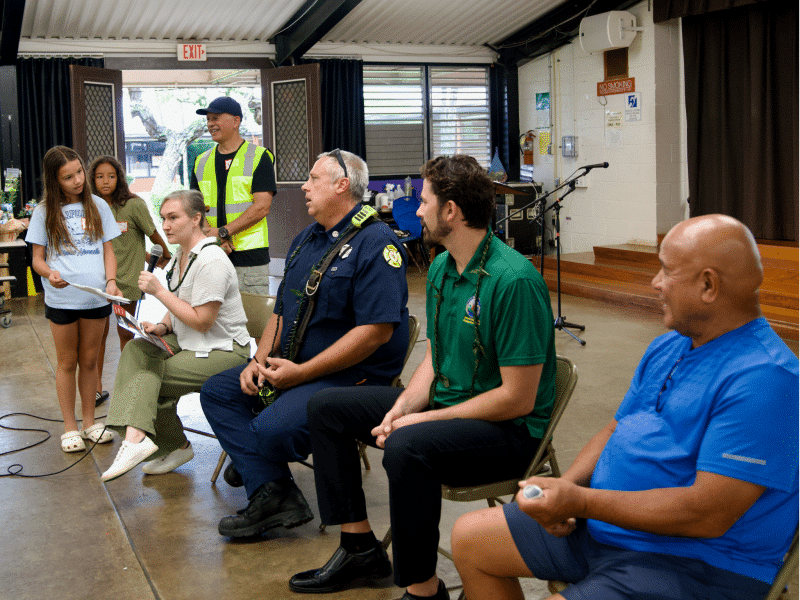
Native Hawaiians, new newsrooms work to shift journalism norms in Hawai’i after legacy media exclusion
As the Hawaiian Islands grapple with rising natural disaster and a news desert prognosis, a wave of community-stewarded projects centering Native Hawaiians and their values is trying to shift the culture of journalism on the islands.
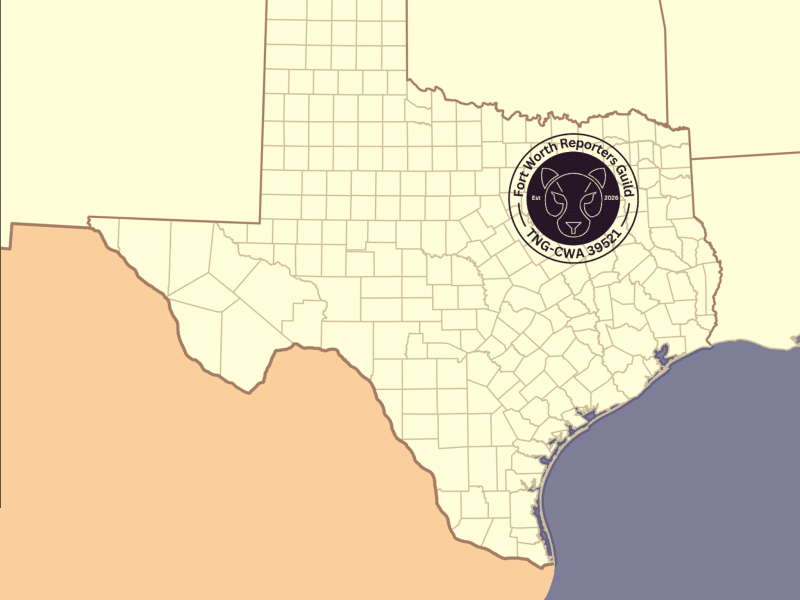
Fort Worth Report becomes Texas’s sixth unionized newsroom
The Fort Worth Reporters Guild voted 11-1 to unionize, and will begin working with management on collective bargaining for a contract.
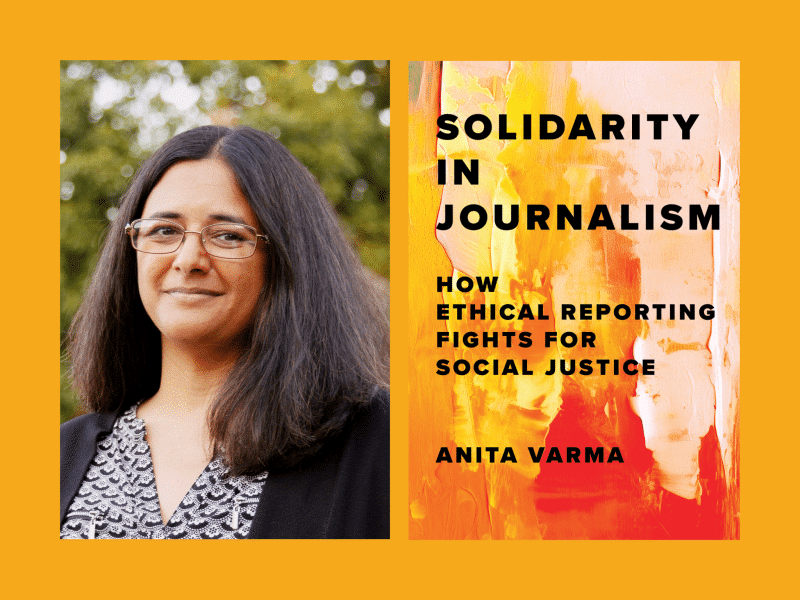
Q&A: ‘All journalism advocates’: Anita Varma on solidarity journalism
Journalism professor Anita Varma on her forthcoming book, Solidarity in Journalism: How Ethical Reporting Fights for Social Justice, the limits of the advocacy vs. journalism conversation, and more.