
Q&A: ‘We’re winning when media reparations is common-sense’: Media 2070’s new chapter
In the midst of attacks on Black press and journalists, Media 2070 charts a tangible future for Black narrative power and media reparations.
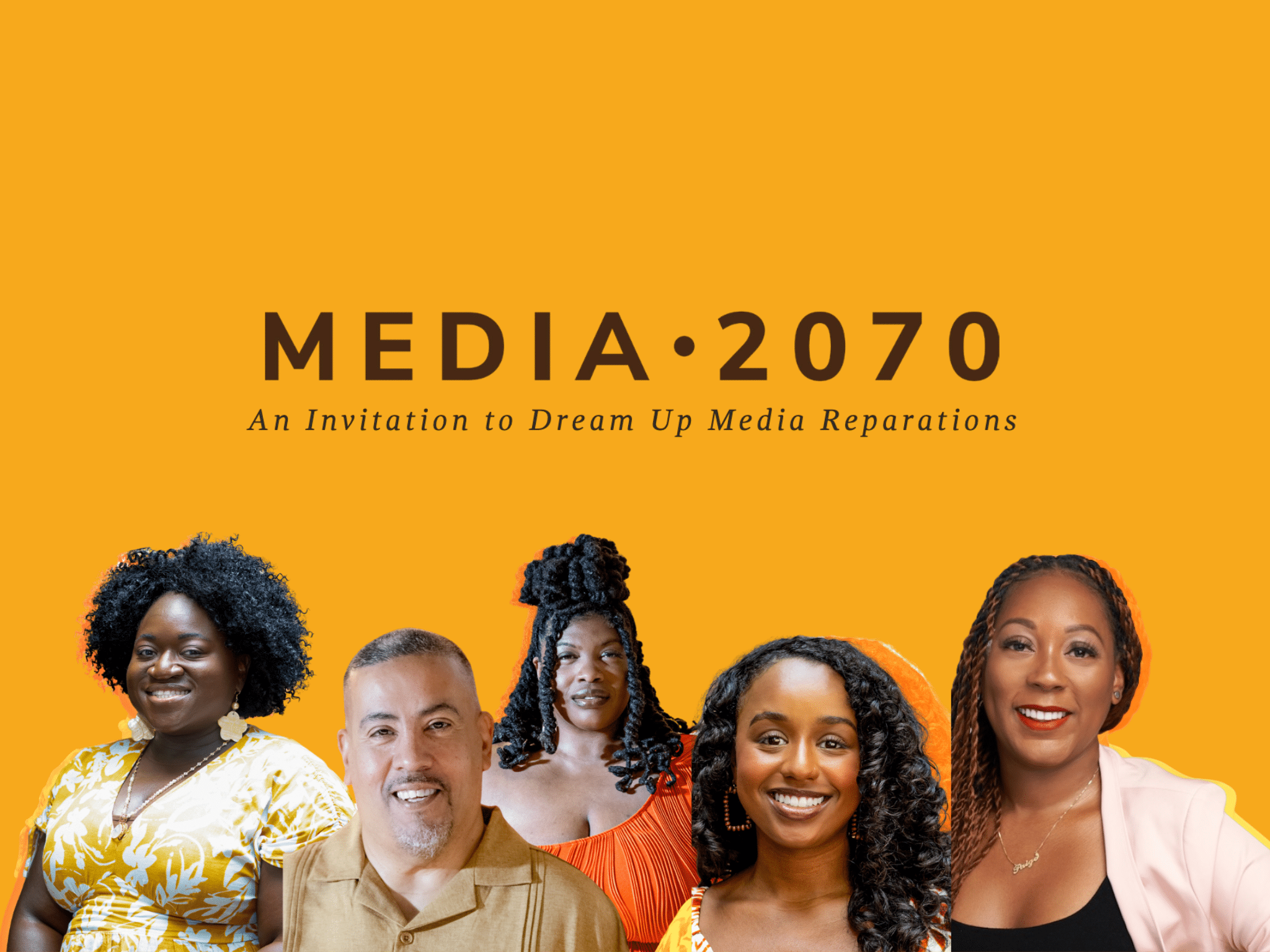
Update, Feb. 19:
Media 2070 released its updated Black Narrative Power Toolkit today, with ways to read about, experience, watch, and listen to Black Narrative Power.
“When we at Media 2070 discuss Black Narrative Power, we mean the ability and access of Black peoples and Black institutions to develop and distribute media, art, and culture,” Media 2070 executive director Anshantia “Tia” Oso said in a press release shared with The Objective.
The toolkit includes resources from Media 2070 partners like Borealis Philanthropy’s Racial Equity in Journalism Fund, Reparations Club, and Scalawag Magazine.
Original story:
Nearly six years ago, Media 2070 launched by outlining a vision for a future where Black communities received media reparations, from transforming the media system so Black people can tell their own stories to publications acknowledging and working to repair damage from their past and continued anti-Black reporting.
“We found ourselves begging the question [about journalism] as people were talking about reparations, just generally: How do we specifically do it in a way and integrate ourselves into an ecosystem where we’re begging?” Venneikia Williams, Media 2070’s director of communications and public education, said. “How do you repair what’s been broken, what’s been stolen, and people who have been harmed?”
Over the past few years, the project — as part of the media policy and advocacy organization Free Press’s spate of programs — sought to begin answering that question through uplifting Black stories and storytellers across a spectrum of experiences while exposing the past and present anti-Blackness of the news industry.
Media 2070’s staff has brought the Black Futures Newsstand across the country, taught a reparative journalism framework, and worked to build an oral history archive of Black experiences in Los Angeles after the 2020 uprisings in the wake of George Floyd’s murder.
At the tail end of last year, in December 2025, Media 2070 became an independent initiative sponsored by Allied Media Projects.
“It’s essentially a full expression of our belief in Black leadership and our commitment to controlling the stories that influence our lives,” executive director Anshantia “Tia” Oso wrote in a blog post. “This new stage allows us to more fully embody our values and move intentionally toward the media future we deserve.”
The Objective spoke with Oso and Williams about what’s next for Media 2070, what it means to grow the project under a time of increased political attack on Black press and journalists, and more.
This interview has been edited for clarity and concision.
For those who are unfamiliar with Media 2070, can you share a brief history of how it came to be and how the project has evolved since its inception?
Tia Oso: Media 2070 is a movement-building project, and the name comes from an Afrofuturist framework: By the year 2070, we’ll have our media reparations.
And so we launched with a really groundbreaking essay called “An Invitation to Dream Up Media Reparations” that laid out not just the framework, but also a timeline and historical analysis about the ways that our mainstream media system is based in anti-Blackness.
And … then an invitation and an agitation to move into a future where media reparations have been made real — this isn’t a system that can just be reformed, right? It needs to be both reimagined and remade.
So that is where the framework came from. The idea is that moving from where we are now to a future where Black communities own and control our narratives from ideation all the way through to distribution — that is a radical concept and a vision that we have.
Venneikia Williams: … So the essay that was mentioned chronicles media harms from the earliest newspaper that was used to traffic enslaved Africans and serve as brokers within that system. But the essay also then chronicles our resistance within that, and so we uplift Freedom’s Journal and Ida B. Wells and people of that nature who fought back against these systems.
Media 2070 finds ourselves, as Tia mentioned, in the Afrofuturist framework saying that “There are Black people in the future. And in that future, our stories are told by us and for us.”
In a project that we did called Black in the Newsroom, a story was told about how white journalists were coming into Black communities to tell Black stories for white consumption. And that’s not a thing that’s unheard of.
But when we win media reparations, that ownership and control of our narrative and our stories, we’ll see an abundance of beautiful Black stories that tell the good, bad, and the ugly of who we’ve been and who we can become.
Oso: From that founding and that grounding after five years as a project of Free Press, at the end of 2025, we spun out into an independent initiative.
Related: Q&A: Media reparations with Collette Watson
In this coming year, what things are you excited to shepherd as an independent organization?
Oso: We’re definitely going to be bringing the Black Futures Newsstand to new cities. We’re really excited about that. We’ll be announcing that later this year, which city it’s going to be.
We’re also going to be looking at strengthening movement-building infrastructure within journalism spaces. So, for example, we’re partnering with the Racial Equity and Journalism Fund at Borealis to build out a policy working group.
And we’re looking forward to other initiatives like that where we can really build not just our thought leadership, but our movement-building leadership with media-makers and journalists as well.
We’re also working on new tools and resources. Now that February is Black Narrative Power Month, we’re going to be rolling out some things this month as well.
Williams: We’re squarely within Black Narrative Power Month, where we talk about different tenets of Black narrative power being love, beauty, care, abundance, and resistance, but really delving into giving more descriptive terms to that and what it looks like fleshed out within the world.
So we have a toolkit that we provide that will be launched within the coming weeks, and within it, we have four components where people can read, watch, listen, and experience. We’re building out not just how to experience Black narrative power in February, but how to build that all year long.
We asked the question of our team, “What does Black narrative power mean and look like to you?” … Black narrative power and building narrative power in general is about having, I would say, epistemic power, the power to make meaning, and to have knowledge-making power to know yourself for yourself and to then share that with the world.
And so we need that now more than ever. We’ll be sharing tools and resources, as Tia said, to help people do that through public education and research and things of that nature.
Oso: I also want to add, we’re going to continue doing our work in academic spaces. We’re often called on to teach reparative journalism as a framework to journalism students and speaking in journalism programs. … Joe Torres, our scholar-in-residence, is speaking to a different class every week, it seems, which is really exciting.
… We see that the next chapter of the essay is going to be about reparative justice and tech, and “What does it look like for us to have tech reparations?” Because we see these tech companies and tech infrastructure and tech policy replicating these same systems of harm that we laid out in the original essay around journalism.
There isn’t a future-focused framework that talks about, what does it look like for us to have tech that is abundant? What does it look like for us to have tech that is feeding into nurturing our well-being?
We have these extractive tech models and this extractive economy that we need to reckon with. And you see it happening with these data center fights and these things of that nature.So we want to lift that up and then also lay a framework for, you know, we can have a vision of the future that is not dystopian and being led by these billionaires.
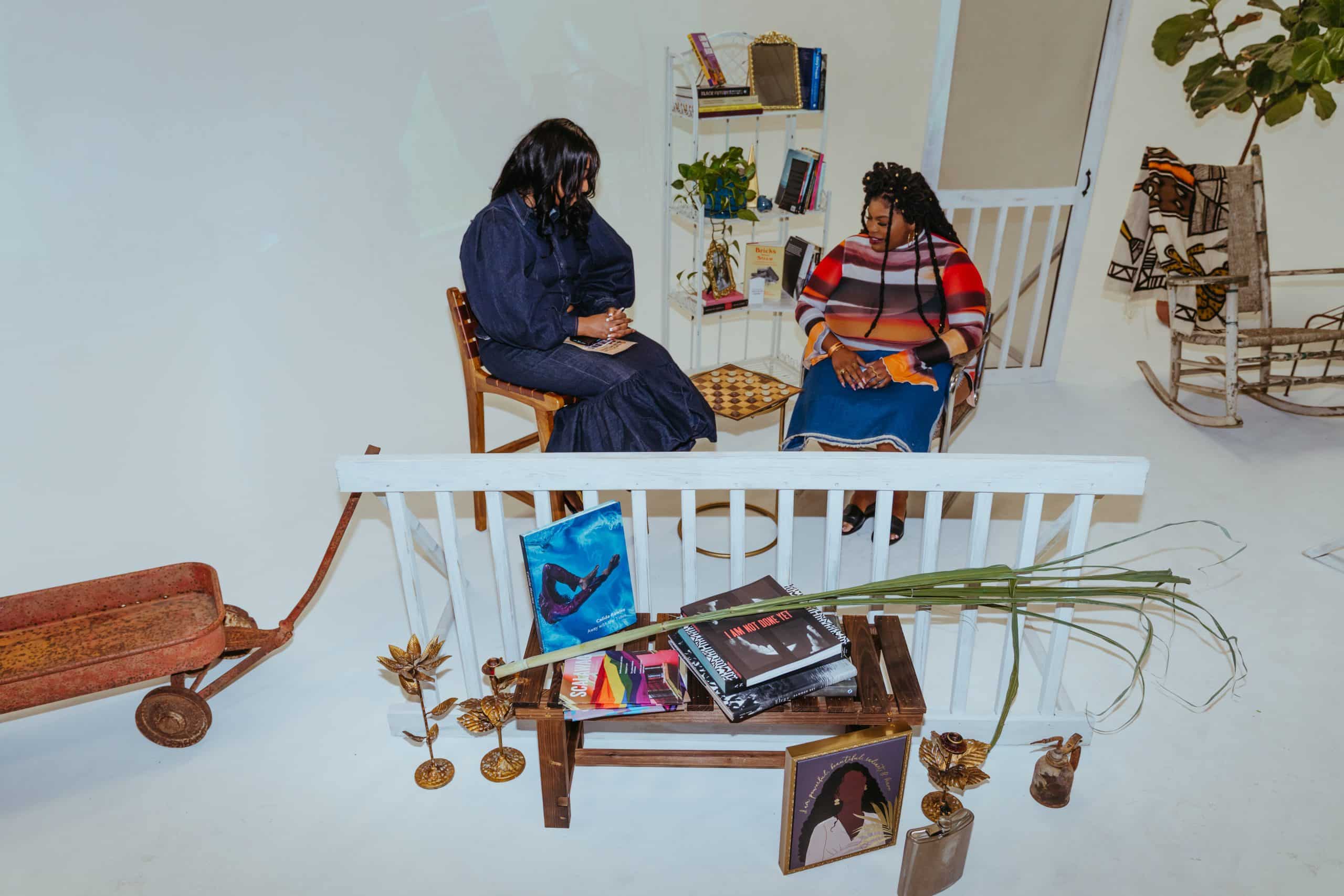
Related: A newsstand that serves the information needs of Black communities
I can see how Black narrative power really plays a role in shaping the sort of vision of that future as well. Maybe this is getting ahead of the toolkit, but what are models of Black narrative power that you’ve seen throughout history? How have you seen that change, meaningfully, if so, or if not, since Media 2070 launched in 2020?
Oso: We talk a little bit about how we have these historic models like Freedom’s Journal, like the New Amsterdam News where less than 50 years after emancipation, we have Black citizens starting news companies and starting newspapers and these portfolios and pamphlets in order to complete their own cause, to influence public opinion, to tell our own stories and our own narratives.
The earliest Black newspapers didn’t just talk about race. They also talked about the lived experiences of Black communities. They published poetry and short stories and recipes, and that has always been the role of Black media as it has been shaped — to push back against anti-Blackness and against racism and also to represent Black people and Black communities in the fullness of our humanity.
The roots of Black media have always had an agenda that is concerning itself with the conditions of Black people. Today, what we see is, even though there are not as many Black-owned media outlets, the ones that are there, it’s been shown that the reporting by ethnic media leaves its audiences better informed, even to the point of improving public health. … Their role is even more important as we see the mainstream media being captured by political elites who are in the hands of the Trump administration.
And so we want to lift up independent Black-owned media. We also want to lift up the ways that citizen journalists and individual creators are also using their platforms and … using digital platforms to lift up and tell stories to assert humanity to speak to power in these days.
Williams: Yeah, and we have colleagues and comrades in different newsrooms as modern day examples like Lisa [Snowden] at Baltimore Beat, Ryan [Sorrell] at Kansas City Defender, and the Kansas City Defender is a beautiful example of the media that shapes your, your entire life that Tia was just mentioning, because they have food pantries, they have basketball tournaments, they have community programs that benefit and speak to the fullness of Black life and not just Black excellence, but the Black mundane, which is as beautiful and as important.
So we get to see investigative journalism stories that wouldn’t be picked up by other outlets.… They also pushed back against just being stenographers for the police, and we need that as people are talking about being “objective” and being “unbiased.” We need people who will actually take a stand and say, “Sometimes there aren’t two sides to an issue, there’s right and wrong, and we need to call out injustice when we see it.”
Oso: I want to lift up The TRiiBE, also in Chicago, another independent Black-led media outlet.And then also there’s freelance journalists like Thandisizwe Chimurenga, she’s based in Los Angeles, California. She has a show on Radio Pacifica, the 90.7 FM station there.
These are folks who are, you know, by hook or by crook, sometimes, leading the charge and serving these communities and serving audiences at a time when we were not being served by mainstream media. But especially now, it’s really critical that we have outlets like this that are doing this work and even legacy outlets like the New Amsterdam News [with] over 150 years in publication still going strong.
I’m thinking about that Free Press report that came out last month about the ways that corporate media really capitulated to these executive orders under the current administration. I think it’s really crucial for people to diversify their media diets, and especially to look at what independent and local media are doing.
For both of you, what does it mean to be able to usher in a new chapter of Media 2070 at a time when we’re seeing these attacks on Black journalists, Black-owned media, and this wide-scale crackdown on policies and an atmosphere that was intended to desegregate the media?
Oso: Yeah, you know, we started off Black History Month with Black journalists being arrested. That is the world that we’re living in right now.
It’s not lost on me that we spun off into independence at the end of last year, and being able to respond in a way that is unfiltered, and being able to respond in a way that is a unique and authentic Black-led voice — it’s really important that we were able to do that. When you’re within a larger institution — in a multiracial institution — being very focused about what’s happening with Black people and Black journalists in particular isn’t something that you can always do.
I think it just pointed out for me that we made the right decision in becoming independent because we were able to respond so forcefully and so quickly, and be a voice that other outlets were able to pick up and share that thought leadership and that analysis. It sometimes can seem like a small thing that we’re doing, because we’re not a frontline institution, but being able to support what journalists are doing and point out the way that things are racialized, I think, is a very important role at a time when things like DEI are being attacked and Black history is being erased from public spaces by our government.
Being an unapologetically Black organization is actually really important in a time like this.
Williams: It’s timely that we’re in this space positioned as we are with the tools and resources that we have. Because I think we have something to say … we have a unique opportunity in this time to do something that our forebears only dreamt of.
Attacks on Black journalists isn’t a new phenomenon. Mainstream media being captured by elite interest isn’t a new phenomenon. These things have been happening. So to raise consciousness and awareness around that fact, and to point people to people-led and people-focused solutions versus profit-driven ones is exactly what’s needed right now.
The news should inform. It should be a product of a well-functioning democracy, which some can argue this has never been. Now is the time, as we’re talking about constructing what we actually need, what actually serves us all — we have to actually pursue media reparations, because it feeds then into all the other social issues that we’re talking about, whether it be health care, climate, racial justice.
How we talk about these things and how people are making meaning around these things is important. It’s the work of propaganda and anti-propaganda.
I think we have the unique task of teaching the populace about our power to make meaning. And it’s a beautiful charge and it’s one that’s worthwhile. We say that media reparations isn’t just possible, it’s inevitable. So, just as we talk about reparations as a thing that’s coming, we talk about … the hope gap. People believe reparations should happen but don’t believe it’ll happen in their lifetime, right? … The work in this moment is to not only mobilize people through anger and clickbait and things of that nature, but to actually organize and to empower people.
I’m hoping that’s what can be done through media reparations, through reparative journalism, through a larger reparations movement in general.
Oso: I don’t see us spinning off an independent as negative to any other entity. It’s about us growing the institutions that we need to fight the fights that we need to fight right now.
How have you seen media reparations in action as a structural change that stands in contrast to some of the changes that were promised in 2020?
Oso: We get asked all the time, “What is media reparations?” or “How’s that going to happen?”
I first point to people towards the fact that we have the same questions about reparations that we do about all different types of change and structural change that needs to happen. There’s the hope gap: We know that something needs to change, but we don’t really know how, and that space between where we are and where we’re going really is our challenge to organize into.
There are journalism schools that are now teaching or asking us to come and help teach reparative journalism. Teaching journalism in a new way is going to lead to a future where people are doing journalism in a different way. That’s one example of a small structural change that can grow into a larger structural change.
The Guardian UK, they are a journalism institution that’s engaging in a reparations process right now, where they’ve actually done not just the historical research about their role in the slave trade but are now going back to Sierra Leone, to the Caribbean, to Charleston and South Carolina, and making repair with those communities.
That is an example of media reparations.I think the other example that I want to lift up is the fact that in small ways all across the country we have local journalism policies that are moving.And now that it’s been three years, five years, where people are seeing the results of those tax credits or other things. Sometimes the institutions that are the most in need, or that are serving communities of color are not the ones that are being able to take advantage of those and so they’re looking for ways to change those policies and with our media reparations framework, we’re saying that reform isn’t always going to be enough and oftentimes reform isn’t going to reach the solutions that we wanted to, it’s time for us to look at reparative policymaking.
And so that’s some of the work that we’re engaged in now.
I think it’s really important for us to understand … we’re going to have to use our imaginations about how this can move forward. That’s also why we do the Black Future Newsstand — dreaming and imagination is going to play a large role in us being able to find those solutions that we’re working towards.
Williams: The way that Media 2070 operates and thinks about all of these things are always considering both the infrastructural and the cultural things needed to have these happen.
I think one without the other would be necessary, but not sufficient, so things such as reparative policy without a cultural undertaking and understanding of these issues wouldn’t be sufficient. That’s why I’m appreciative of things like the Black Future Newsstand, our film Black in the Newsroom … and the tools that we’re putting out into the world.
Because one of the ways that we talk about knowing that we’re winning when media reparations is a common-sense concept — when people hear media reparations and understand. But there are a lot of people who don’t fully understand reparations in and of itself and they then don’t understand how the media works.
Putting those two together, you’re at a deficit. So it’s doing the work of educating and empowering people to understand that they are media-makers, not just media consumers, and then also doing the work of saying “Harm has been done, and here’s how we seek to repair what’s been lost, stolen, and destroyed.”
Oso: As part of Black Future Newsstand last year in a partnership with USC, [we did a] community archive where we actually partnered with journalism students to interview people in the community about their experiences of the media around the 2020 uprisings.
And so that collective of those interviews and those stories is available on our website. It’s called the Riot to Repair community archive.
I think that a lot of times the way that traditional, mainstream journalism is done is you go, you cover the story, and you leave and you don’t revisit the impact that had on the subjects of your story. You don’t remain in community. … I think that journalism that is centering people’s well-being and journalism that is concerned with more than just getting the story is also a form of repair of journalism that we’re helping to demonstrate … with our experiments.
How has being part of Media 2070 shaped your imagination for what’s possible in journalism?
Oso: That’s such a good question. Being a part of Media 2070 has, number one, opened my eyes to just how many amazing journalists are out there and how much groundbreaking, beautiful work Black folks are doing, which is really encouraging. Being able to see things like the research that shows how much better quality the reporting is by ethnic media outlets — I’ve been saying, at this point, our outlets might be the last line of defense for democracy.
If a robust journalism system is a part of a functioning, thriving democracy, then these are the folks that are actually holding the line. And if these are the folks that are holding the line, then I’m very encouraged, because they’re brilliant. They have the community’s well-being at the center of the work that they’re doing.
At a time when people have major outlets turning to [generative] AI to do their reporting, people can see and feel tangibly that they’re not being served by mainstream media.
So it makes this work even that much more relevant and that much more timely and that much more important. This work has been very encouraging to me to be able to work in a space of imagination and to be able to work with colleagues that are agitating towards a bright and bold future and not a dystopian one. I feel really honored to be able to do that.
Williams: I love this question. As someone who doesn’t come from a journalism background, I’ve been able, over the past five years, to learn so much.
I’ve been learning about the wonderful people who are literally keeping the ship afloat. It’s been beautiful to see that there are people who are seeking something different and building alternatives to empire. And I’ve always thought of Media 2070 as … an oasis for people who are weary and tired of being the only ones doing this work, where they can come together and collaborate or commiserate and dream together and agitate, as Tia was saying. I also believe it’s forced and dared me to dream bigger as we talk about what’s possible. To not just dream of a world with constraints as they exist now, but to take the limits off and to say that we can actually build towards a world that actually serves and benefits us all.
I would say that Media 2070 has done the work of that infrastructural and cultural piece, where it’s not just bland information, but it’s beautiful. It’s aesthetics and substance put together, and I think both are needed as we talk about art and media and movement-making. I’m grateful for [Media 2070] being a tangible definition of what that can look like.
Editor’s note: The Objective receives philanthropic funding from Borealis Philanthropy’s Racial Equity in Journalism Fund. No member of the organization reviewed this story or quotes before publication.
James Salanga is the co-director of The Objective.
This piece was edited by Marlee Baldridge. Copy edits by Gabe Schneider.
We depend on your donation. Yes, you...
With your small-dollar donation, we pay our writers, our fact checkers, our insurance broker, our web host, and a ton of other services we need to keep the lights on.
But we need your help. We can’t pay our writers what we believe their stories should be worth and we can’t afford to pay ourselves a full-time salary. Not because we don’t want to, but because we still need a lot more support to turn The Objective into a sustainable newsroom.
We don’t want to rely on advertising to make our stories happen — we want our work to be driven by readers like you validating the stories we publish are worth the effort we spend on them.
Consider supporting our work with a tax-deductable donation.

James Salanga,
Editorial Director
Related Articles
Fort Worth Report becomes Texas’s sixth unionized newsroom
The Fort Worth Reporters Guild voted 11-1 to unionize, and will begin working with management on collective bargaining for a contract.
Q&A: ‘All journalism advocates’: Anita Varma on solidarity journalism
Journalism professor Anita Varma on her forthcoming book, Solidarity in Journalism: How Ethical Reporting Fights for Social Justice, the limits of the advocacy vs. journalism conversation, and more.
When The Baltimore Sun can’t get journalists to lower their standards, it turns to generative AI
The Baltimore Sun ”once again disparaged … human reporters and their work” by publishing two AI-generated political analyses, the newspaper’s union said.