
Q&A: Yousef Munayyer on Western media’s complicity in Israel’s occupation of Palestine
Double standards are at the heart of lopsided news coverage unlikely to center Palestinian experiences under an apartheid regime.

Splattered across breaking news coverage from Western news organizations on Oct. 7 was an unfurling narrative: Palestinian militants launched an unprovoked attack on Israel.
But the characterization of an “unprovoked attack” came from official sources, including a U.S. government press release condemning Palestinian militants — and it was, of course, uncritically parroted by Western news organizations, which, after the show of force, are pouring resources into covering Israel and Palestine.
Since Oct. 7, at least 900 Israelis and 830 Palestinians have been killed, according to a Tuesday noon update. Civilians make up a troubling portion of the lives lost in recent days.
That’s what much of Western news coverage is focused on, but disparately — namely when Israeli people experience violence.
At the heart of the matter is how violence towards Israeli people appears to command when and how Western news organizations fixate on the region, because when Israeli settlers carried out pogroms in February, May, and June — and torched or destroyed Palestinian homes, community schools, vehicles and businesses — it attracted little attention from the same news organizations that have swooped into Israel to supply 24-hour news coverage since Saturday.
It’s a curious reality of Western news coverage — ranging from broadcast media outlets like CNN and NPR to print and digital outlets like The New York Times and Wall Street Journal. Especially when news organizations local to the region, including Israeli ones, take hardline stances, squarely calling attention to Israeli settlers carrying out pogroms in Palestinian towns, and identifying Israel’s regime as an apartheid.
Even Haaretz, the longest-running Israeli newspaper still operating today, ran opinion editorials, calling for Prime Minister Benjamin Netenyahu to resign after noting how his right-wing policies and his government’s genocidal sentiments bolstered longstanding tensions.
So then what’s keeping Western news organizations from doing the same?
To piece together this troubling double standard, The Objective’s Omar Rashad spoke with Yousef Munayyer, a Palestinian writer and policy analyst who, for many years, has closely examined the relationship between Israel and Palestine, as well as U.S. foreign policy toward the region. He is widely published in major news organizations around the world, and in the U.S., including The New York Times, The New Yorker, The Washington Post, CNN, and NPR.
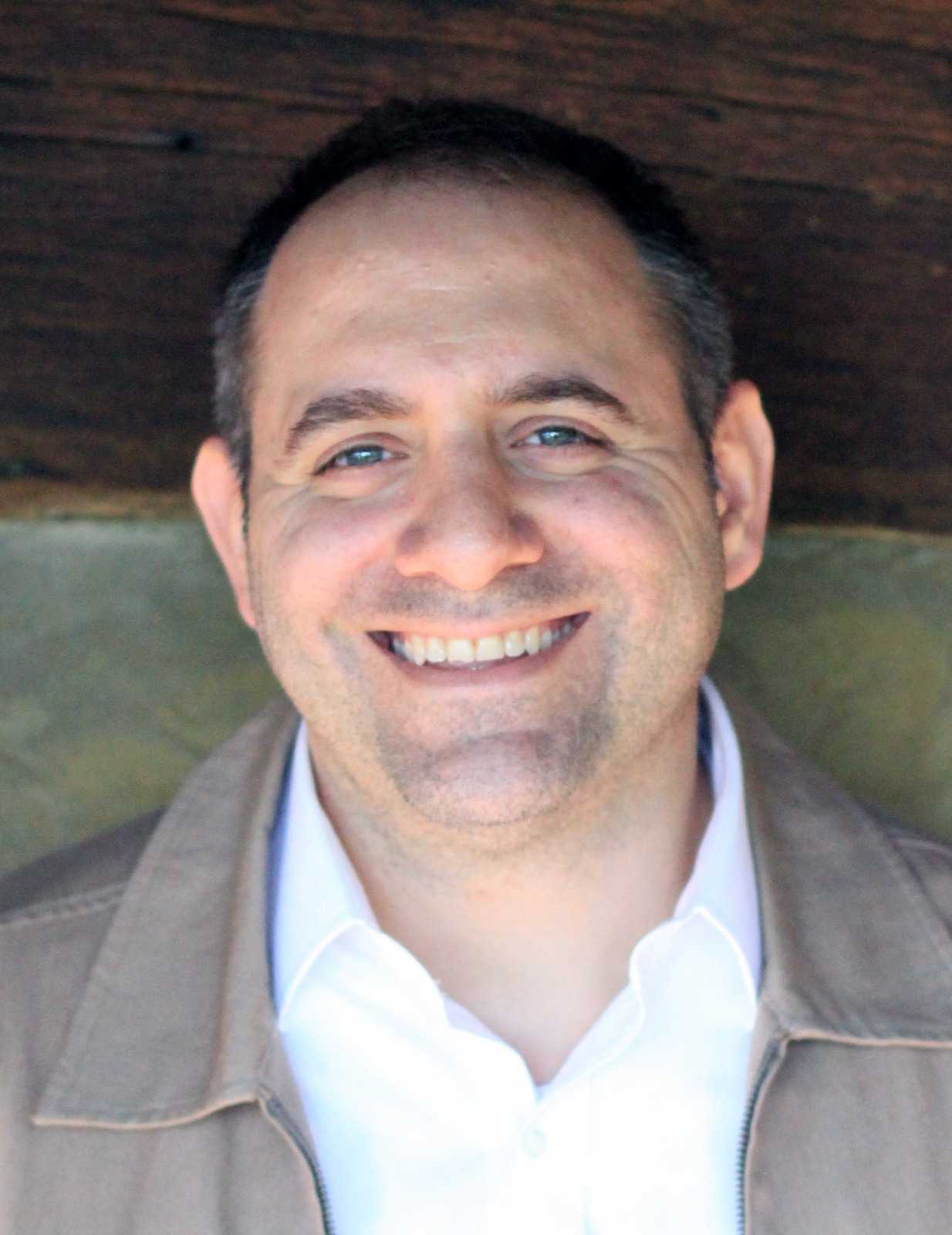
He thinks there has been progress in U.S. journalists including more Palestinian voices in recent years. But in Munayyer’s mind, Western news coverage is complicit in Israel’s occupation of Palestine. That’s especially when Western media turn their cameras away from Palestine, as if the conflict has evaporated, only to fix cameras back on the region when Palestinian militants push back against Israel’s colonial occupation.
(The American and Middle Eastern Journalist Association has issued a media resource guide on how to cover Israel and Palestine with the appropriate context.)
In the following Q&A, Munayyer spoke to Rashad about how Western news coverage regularly fails to center Palestinian voices and experiences, and how consistently lopsided news framing produces a serial episode of Western journalists invalidating Palestinian experiences.
This interview has been edited for length and clarity.
Can you talk about what’s been on your mind over the weekend, and how you’ve seen Western media coverage of Israel and Palestine take shape?
For the last several days, my phone has been ringing off the hook with calls from journalists who want to talk about what happened. This is coming at a time, of course, when there are Israeli casualties. Without fail, when Israelis are being targeted, there seems to be a ton of media interest in this issue. Once ceasefires happen, though, no one’s interested in talking about the situation anymore.
My phone goes silent until the next time. Sometimes it’s six months. Sometimes it’s two years. Inevitably, it’ll start ringing again. People want to know, “Oh, my gosh, how did this happen? How did we get here? Can you explain?” The problem, of course, is everything that’s going on in between those periods — when nobody wants to pay attention to what Palestinians are experiencing.
This is the daily violence of occupation and apartheid, which Palestinians live with in every aspect of their life under Israeli control. The last several years have been particularly bloody and violent for Palestinians. The United Nations noted that in 2022, the highest number of Palestinians [were] killed in the West Bank by the Israeli military in some 20 years. 2023 is on pace to outdo those record numbers.
Israeli settler violence has been running amok across the West Bank. You have, today, the most extreme right-wing government and folks in charge of security in Israel who are openly calling for ethnic cleansing of Palestinians.
The problem is that if you turn your attention away from this situation, of course you’re going to be surprised when you tune back in. The “how” and “why” you tune back in is part of the problem.
Related: Q&A: Jamal Rayyis of AMEJA
This year, we’ve seen Israel’s military raiding towns and displacing Palestinians. We’ve also seen Israeli settlers carry out pogroms in Palestinian towns throughout the year, from Huwarah to ‘Ein Samia to Turmusaya. I was scrolling through B’T Selem’s online database of recorded settler violence, and none of these incidents attracted the same U.S. media attention as those from the past few days. How do you process that clear discrepancy in what U.S. media covers and what it doesn’t?
It comes down to racism, at the end of the day. There’s a lot to it, but I think that’s what it boils down to: Americans, and those who are shaping coverage of this issue for Americans, identify with the humanity of Israelis over the humanity of Palestinians. There’s really no other explanation than that.
The systemic discrepancy — the consistent systemic discrepancy — can only be explained by such racism. This is something, of course, we have been trying to make clear to folks in the media, and I think there’s a little bit more sensitivity to this than there was in the past. Moments like this, once again, expose that great disparity and the failure to see Palestinians as the very human beings that they are.
Whenever a Palestinian person is brought on television to discuss Israel’s occupation of Palestine, the first question from a journalist is about condemning Palestinian militants. How do you reflect on that being automatically baked into framing of news coverage?
It’s a very strange sort of theatre that takes place, and I think it’s actually quite dangerous. The easiest thing to do politically in the United States is to condemn Palestianians. There’s literally nothing that takes less courage for American politicians, for the American government, than condemning Palestinians. It’s an extremely easy and simple thing to do because of the extent to which Palestinians have been dehumanized — and of course, the fact that the United States is a direct supporter of the very policies that are brutalizing Palestinians.
I also think it’s a very dishonest conversation when the conversation is entirely about, “Do you condemn this or that?” and then we don’t address the root causes of the violence that people are supposedly condemning. The easiest thing to do is to put out a statement and say, “I condemn this, I condemn that.” What takes a lot more courage is addressing the actual causes of this violence in a way that brings it to a peaceful and sustainable end.
It’s a lot harder to have the difficult, substantive conversations on policy that actually address the root causes of this violence. Until we understand that has to happen, I think, our media is complicit in the situation we continue to see on the ground.
For people who don’t know, can you speak to that daily violence of Israeli occupation? I’m aware of everything from not being able to build a home and not being able to vote to restricted security checkpoints and segregated roads. Can you speak to specific rights that Palestinians are systemically deprived of?
It’s hard for people to fully appreciate this, even if I describe it to you in explicit detail. Here in the United States — many of your readers might be in the United States or elsewhere in the Western world — we thankfully don’t know what it’s like to live under a military occupation, or, at least, most people here certainly have never had that experience.
It means not having freedom over your life. It means simple, mundane decisions that we take for granted every single day: Going to the grocery store or going to visit a relative; figuring out where you’re going to apply for college; figuring out whether or not you can go on vacation. Whether it’s safe to venture outside of your town. Whether there is any way to seek justice for crimes that are committed against you and your family.
Citizenship is something that Palestinians don’t have, because they are subjects of this military occupation. The right to have rights — this is something that Palestinians are denied. This impacts every aspect of their life. This is on top of decades of ethnic cleansing, people being denied return to their homes — separated from their families. I could talk to you for hours about this, and it would be difficult to fully understand the experiences of Palestinians who are suffering under this brutality. It’s hard to know what else to say.
Could we take a step back with a history question? There’s a common reference to Israel colonizing Palestine. I know there is a lot of history to explain how Israel was born out of the European colonial project in the Middle East, but could you provide a brief summary of this history?
The modern Zionist movement starts in the late 1800s, at a time where the native population of Palestine is overwhelmingly an Arab population. This movement seeks to establish a Jewish state, a demographic-majority Jewish state, in a space that is an overwhelming demographic majority of Arabs. This was done against the will of the native population, and it was supported by Western powers — first by Britain, and then by the United States.
It was done at a time where the Western world was talking about the principle of self-determination, all while knowing that they were denying self-determination to the Arab people of Palestine. It’s been a process of displacement that’s been going on for over a century.
It continues today in the Gaza Strip. It continues in Jerusalem throughout the West Bank and elsewhere throughout the land. There’s obviously a very lengthy history here. But from the Palestinian perspective, this has been the overarching process.
To switch gears to the journalism industry — especially since the murder of George Floyd, journalism industry leaders, in at least local journalism across the U.S., have expressed a desire to center previously ignored communities. It’s a notable change that has been reflected in local news coverage since 2020.
But when U.S. news organizations cover Palestine, it’s entirely different. I’m curious to get your thoughts on the literal distance that U.S. news organizations have with Palestine: None are headquartered there, and most are likely to have a bureau and reporters in Israel. One could make the claim they are not reporting for Palestinians — their direct audience is a U.S. one. Do you at all think that contributes to the consistency in failing to center Palestinian perspectives?
I think it of course does. I just saw a tweet a little while ago from CNN’s PR account, talking about how they are covering the story with reporters in different places. They listed out four of their reporters, all of them in different Israeli towns, without anyone in Gaza.
How can you cover this story and not have anyone in Gaza? Maybe that’s changing, maybe they will get somebody there.
But the priority in the Western press is almost always to show things from the perspective of Israel. Israel receives tremendous support from the United States. Many Israelis have family in the United States, many Israelis are also Americans. So there’s a tremendous amount of interest and ties that make many American viewers want to see what is happening in Israel and to learn about what’s happening from an Israeli perspective — but honest journalism that covers a situation like this needs to reflect on these disparities.
The disparities are very, very, very stark. We see this not just in where reporters are placed, we see it in who is quoted in news stories. When you have news stories written about events in the West Bank, or in Gaza, that are not in moments like these, I can’t tell you how many times these stories are not filed from the location in which the events took place, but [are instead] filed from some location where the journalist happens to be based, whether it’s Jerusalem or Tel Aviv, and [are] largely based on an Israeli account of events and official Israeli authorities.
Related: Q&A: Sana Saeed and Abdallah Fayyad on U.S. media coverage of Palestine
That’s not good journalism. It’s just not. And this is a function of a whole lot of things — it’s a function of bias, it’s a function of limited budgets. The prioritization is clear. Palestinians are not on the list. Palestinian perspectives are not on the list. Israeli perspectives are much higher on that priority list.
I think there have been changes in recent years, though, which are important. You point to sort of the cultural shift or reflection in the post-George-Floyd era, which I do think is important. I do think also that social media has played a huge role in shaping media coverage of events. I can tell you that it’s had a very significant effect because now you’re hearing from voices directly from places that previously you never would have heard from through news outlets.
That has changed the way coverage happens … because if you don’t include this information and these voices, readers are actually going to get it from somewhere else. And that makes them start to question the credibility and usefulness of your news production. So it has forced an adjustment in the information-creating space to reflect voices in places that previously were not included or deemphasized.
A popular topic of conversation has been how Israel’s occupation of Palestine is very complex, very complicated. And there’s this online sentiment that posits it being okay to not have a detailed understanding of what’s going on. Have you seen this at all?
I haven’t noticed in the last few days, I’m sure it’s out there. I can tell you this: there is a difference between complicated and complex.
There is a lot about the situation that is complex, but that does not mean it needs to be complicated. Complicated means that you can’t quite tell right from wrong, there’s a lot of gray — it’s hard to know what the morally right thing to do is.
I don’t think it’s that way … I do think it’s complex, because there are layers and layers of different policies and tactics and history. But it is a quite simple reality when you understand who is being oppressed and who is doing the oppressing, even if that oppression might be multifaceted and complex. The moral question here is not complicated.
Another portion of this online sentiment is the recommendation that people amplify Palestinian voices instead of trying to become an expert overnight and speaking for them. How have you reflected on this particular concept in your many years of being very close to this?
I think it’s very important to hear from Palestinians, to hear about their experiences, what they’re seeing, what they’re feeling, what they’re thinking, and how they understand the situation. That being said, just being a Palestinian does not necessarily mean that you have total understanding of the situation. I think that goes the same for Israelis and all people, by the way. But to put together some piece of news production on this issue that doesn’t include Palestinian perspectives is a huge failure in journalism.
So, obviously, the voices need to be included, but also, I think it’s important to think about which voices you’re including, [and] how representative they are, to not mischaracterize Palestinian perspectives. This has to be done in a careful and nuanced way, but obviously, there needs to be [a] priority of including Palestinian voices in coverage of issues that affect them.
What would you like to see differently from Western news organizations like CNN, BBC, the Washington Post — the whole lot of them — going forward in terms of coverage of Palestine?
Don’t turn away. I think this is the biggest issue. Too often, news media is an industry. We’ve seen models of the news business that are all about the breaking news, and “What’s the next story in the 24-hour news cycle? Alright, it’s time to move on to the next thing. What’s the next scandal?”
That might be good for selling commercials — I don’t know. But I can tell you, in terms of doing the job of informing and educating the public about issues that impact people around the world, tuning in and tuning out of this issue only in moments like this is a disservice to readers, to listeners, to those watching broadcast on TV.
The biggest thing I would say is don’t tune out. It’s impossible to cover one issue all the time. That’s not what I’m expecting. But it’s important — when we do see increased focus on this issue, and especially in moments like this, to provide an honest assessment of the context that brought us to these moments. I’m tired of getting phone calls from journalists that are surprised about how this happened.
“How did we get here? Can you explain how we got here?” It’s hard to have those conversations. This [occupation] doesn’t turn off when you turn it off. It continues constantly. And unless you are representing that reality to those you are trying to inform, you’re misinforming them.
Omar Rashad is a California-based reporter, where he covers local government and public spending.
This piece was edited by James Salanga. Copy edits by Jen Ramos Eisen.
We depend on your donation. Yes, you...
With your small-dollar donation, we pay our writers, our fact checkers, our insurance broker, our web host, and a ton of other services we need to keep the lights on.
But we need your help. We can’t pay our writers what we believe their stories should be worth and we can’t afford to pay ourselves a full-time salary. Not because we don’t want to, but because we still need a lot more support to turn The Objective into a sustainable newsroom.
We don’t want to rely on advertising to make our stories happen — we want our work to be driven by readers like you validating the stories we publish are worth the effort we spend on them.
Consider supporting our work with a tax-deductable donation.

James Salanga,
Editorial Director
Related Articles
Journalism philanthropy shifts approach to funding diverse newsrooms
The ebb and flow of the philanthropic sector — especially around stories of marginalized people — has been an issue even before Trump’s targeting of DEI. But new shifts have disproportionately affected organizations led by people of color.
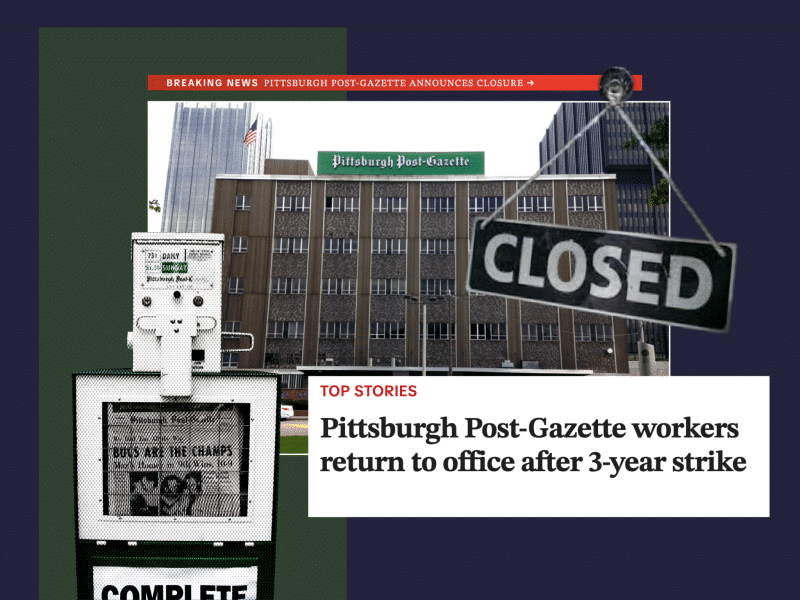
The Pittsburgh Post-Gazette is closing
After a historic three-year strike, staffers at the Pittsburgh Post-Gazette returned to work in late November. Now, the 239-year-old paper is shuttering.
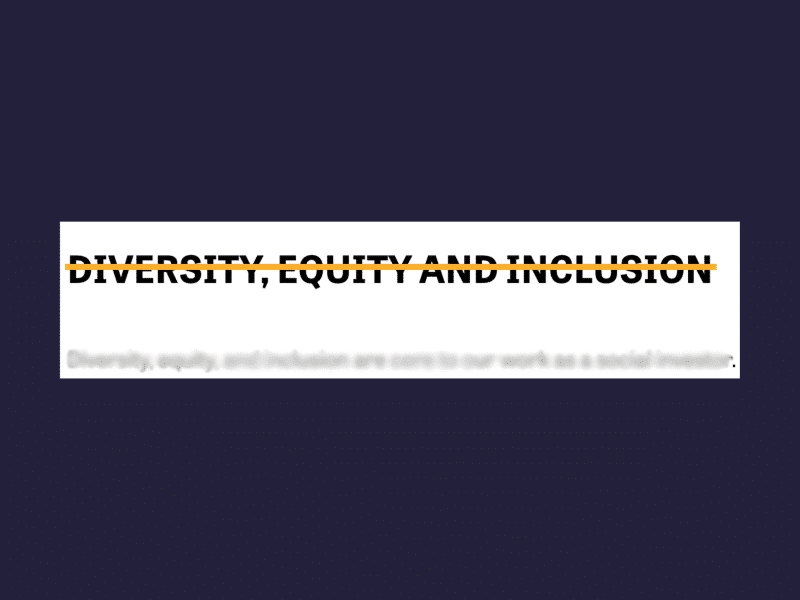
The Knight Foundation scrubs DEI section from its ‘About’ page
One of the biggest funders of nonprofit journalism in the U.S. no longer publicly lists an explicit section about “diversity, equity, and inclusion” on its mission page.