
Looking back at one of news’ longest strikes in recent history
The Pittsburgh Post-Gazette strike — and striking workers’ publication, the Pittsburgh Union Progress — are almost one year old.
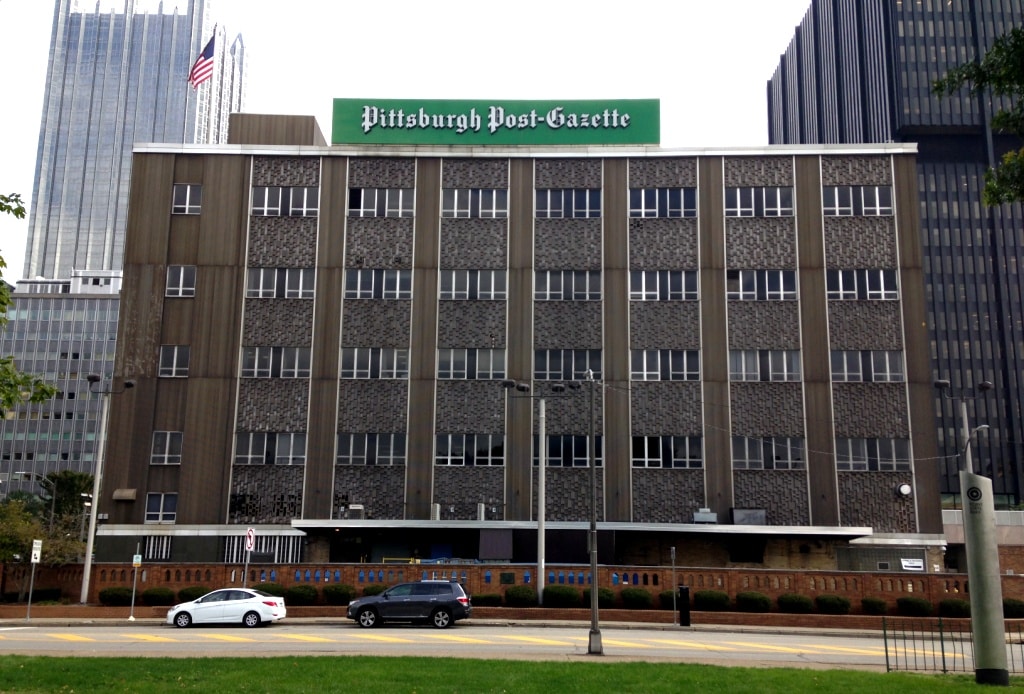
In two weeks, a strike publication will celebrate its one-year anniversary: Pittsburgh Union Progress.
With journalists holding the picket line, they are unable to file stories for their day job — so they’re doing their own thing through the Union Progress. It, like other strike publications, holds multiple purposes, serving as a negotiating tool to temporarily poach subscribers and advertisers from their companies, coverage continuity while labor disputes persist, and a way to stay busy in the midst of work stoppage.
The Union Progress springs from the pens and labor of Pittsburgh Post-Gazette journalists who have been on unfair labor practice strike since Oct. 18, 2022, citing company-imposed conditions that forced them onto a more expensive, less thorough health insurance plan. (The publication began on Oct. 20, two days after the strike started.)
But today marks the anniversary of other Post-Gazette strikers beginning their efforts: Pressmen, mailers, drivers, and advertising workers at the paper went out on strike exactly one year ago after losing health care coverage.
Roughly 30 journalists have been continuing to cover their city at the strike publication, forming partnerships with other local outlets, all while every story at the Post-Gazette is provided by a scabbing worker. The union does say it’s happy to welcome any workers to the picket line “with open arms”, even if they’ve published for the Post-Gazette during the strike.
Across the five unions on strike, who represent non-journalists at the paper, there are over 100 workers holding the picket line.
“In thinking about that, I’m just mad,” Union Progress interim editor Bob Batz Jr. said of the strike’s one-year anniversary in a video posted to X, formerly Twitter, this morning.
He and the other striking Post-Gazette workers haven’t had a contract since March 2017, and while bargaining sessions have happened, talks have stalled and sputtered. Their demands remain the same as at the strike’s start and despite guild proposals, there hasn’t been movement at the bargaining table.
The progression (or lack thereof) reflects the paper’s ownership patterns: The Block brothers, who bought the paper during a prior strike in 1992 (and temporarily put it out of business), also own The Toledo Blade, whose union hasn’t had a contract for even longer — over a decade.
CEO of Block Communications Inc. Allan Block hasn’t weighed in on the strike since it began, the Union Progress reported — barring a Nov. 2022 altercation where he struck an inquiring NewsGuild worker with a bag of Wendy’s food as an answer.
In the face of media ownership that is becoming more and more oligarchic and intransigent across the industry, the Union Progress exemplifies the power of worker-owned local media and community support, as The Objective’s Democracy Correspondent Jacob Gardenswartz covered earlier this year. It offers journalists the latitude to invest resources into covering communities an employer may not or will not prioritize, and like the strike, highlights the strength of worker solidarity.
In conversation with Gardenswartz, Batz Jr. pointed to coverage of drag bingo nights and high school sports leagues as examples of stories that might’ve been overlooked at the Post-Gazette. He also highlighted an ongoing partnership between Union Progress and the Pittsburgh Jewish Chronicle to cover the Tree of Life synagogue shooting trial, something he said his employer would never have pursued.
“When you’re at the big daily in town, you wouldn’t be working with any other outlet. You’d be trying to beat it,” Batz Jr. argued. “We see that, you know, whatever size outlet you are, working together can bear some fruit.”
Should owners’ refusal to budge on negotiations continue, the strike could eventually surpass the longest newspaper labor withdrawal effort in the U.S. since the 1990s, when Detroit journalists struck for close to two years.
The strikers have an active fund, which can be donated to here. A rally is being held at 1:00 p.m. CT today on the 300 block of North Shore Drive.
This piece originally came from The Front Page, our twice-monthly newsletter on that examines systems of power and inequity in journalism. Subscribe here.
Janelle Salanga is a journalist from the California Central Valley. They edit for The Objective.
Edits by Curtis Yee. Copy edits by Gabe Schneider.
We depend on your donation. Yes, you...
With your small-dollar donation, we pay our writers, our fact checkers, our insurance broker, our web host, and a ton of other services we need to keep the lights on.
But we need your help. We can’t pay our writers what we believe their stories should be worth and we can’t afford to pay ourselves a full-time salary. Not because we don’t want to, but because we still need a lot more support to turn The Objective into a sustainable newsroom.
We don’t want to rely on advertising to make our stories happen — we want our work to be driven by readers like you validating the stories we publish are worth the effort we spend on them.
Consider supporting our work with a tax-deductable donation.

James Salanga,
Editorial Director
Related Articles
Billionaire newspaper owners prompt deluge of unsubscribers
The decision to not endorse at the LA Times and Washington Post reflects the perilous situation at virtually every major mainstream newsroom: billionaire owners decide without worker input.
Where is journalism going? Ask media workers, not elites
If anything, what’s useful to learn from the New York Magazine piece is what many reporters have already experienced — that some editors and leaders don’t care whether they’re entirely out of touch with their employees.
News’ artificial intelligence fixation deserves more scrutiny
Journalists shouldn’t passively accept the encroaching presence of generative AI into the news industry.