
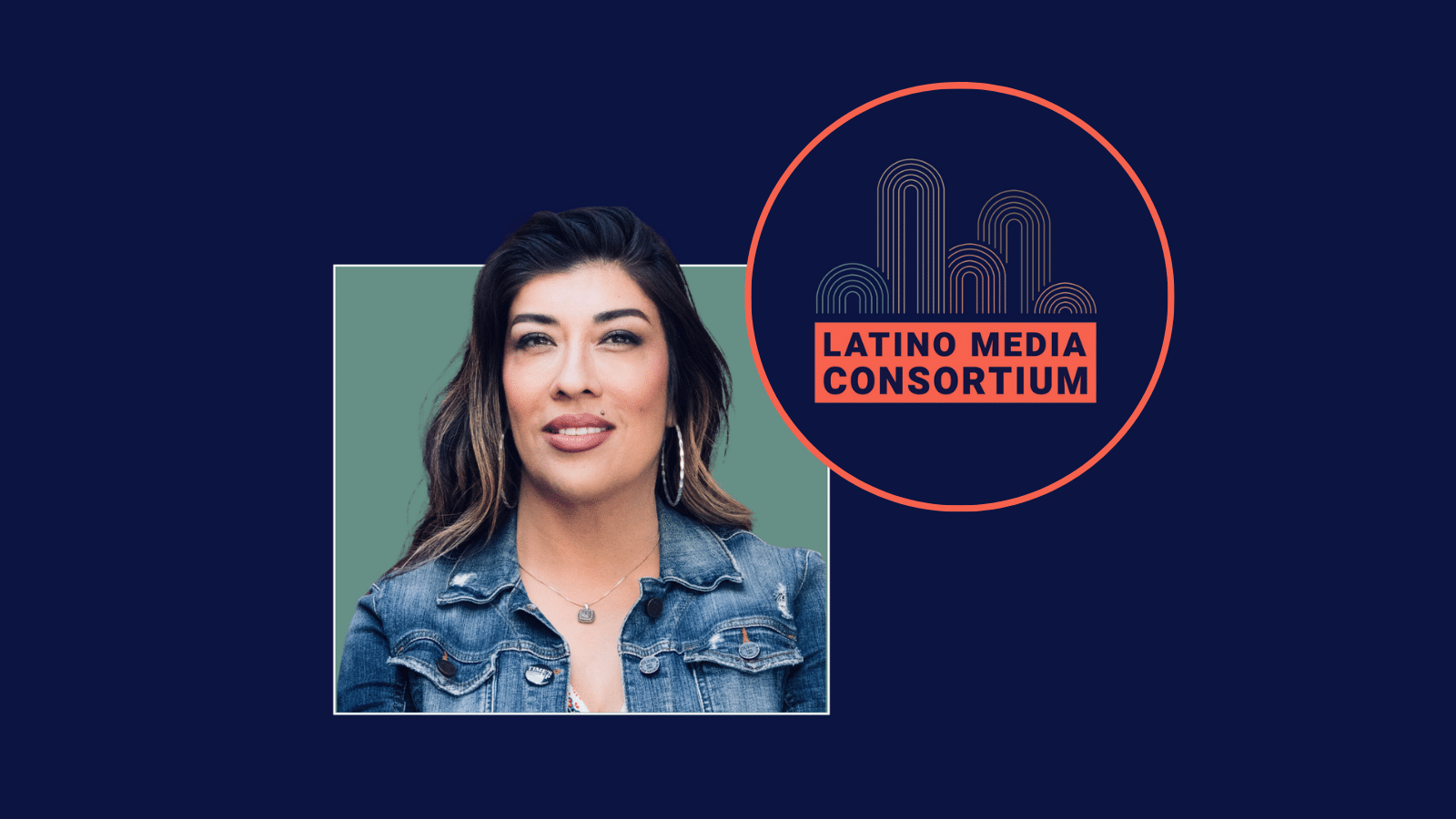
Q&A: Lucy Flores on the Latino Media Consortium
The consortium co-founder, Luz Media publisher, and former Nevada state assemblymember talked with The Objective about the dire lack of support for Latino media in the U.S., the importance of a robust Latino media ecosystem to a democracy, and more.
This article is part of U.S. Democracy Day, a nationwide collaborative on Sept. 15, the International Day of Democracy, in which news organizations cover how democracy works and the threats it faces. To learn more, visit usdemocracyday.org.
Local news tailored to community needs is essential to informing people about the policy decisions and choices affecting their lives, and urging voters to turn out for local elections — not just state or national ones — that directly shape their day-to-day lives.
But that democratic fabric is threadbare without accurate, thoughtful news coverage. Just 558 media organizations, by one estimate, serve the nation’s over 64 million Latino residents. And many of those organizations are not prioritized by philanthropic support. So the Latino Media Consortium launched to bolster support for Latino media seeking to close news gaps for Latino communities throughout the U.S.
The solution according to the Consortium: Latino publishers needed to unite forces. This spring, Lucy Flores, the CEO of Luz Media, and Amanda Zamora, who co-founded The 19th, began working on pulling together the coalition.
The Latino Media Consortium launched on Sept. 4 with 9 members: El Tecolote, Conecta Arizona, Enlace Latino NC, Pulso, LatinaMediaCo, Palabra (NAHJ), Luz Media, Agencia Media, and the Latino Newsletter. With Latino communities making up nearly 20% of the U.S. population, the consortium is asking for proportionality. Its main goal is to raise $100 million over 5 years, or 20% of the $500 million investment in U.S. local news put forth by thePress Forward initiative.
“The reason why we’ve been moving at light speed is because of how critical this is,” Flores said. “We really need to identify other publishers who also need this kind of support and collectively go out there and target equitable investment.”
The Objective talked with Flores, also a former Nevada state assemblymember, about the dire lack of support for Latino media in the U.S., the importance of a robust Latino media ecosystem to a democracy, and more.
This interview has been edited for length and clarity.
It’s been a little over a week since the consortium announced its launch. Are there any stories or experiences from people who are reaching out, especially publishers or practitioners that really moved you in response to the announcement?
You know, I think the response that moved me the most was that there was this very consistent throughline of people just saying, “Thank you.” So many of the emails that we got didn’t even ask for anything for themselves. …
We had folks say, “This is my background. I would love to volunteer my time.” Even talking about it now, I get chills, and I know that sounds super cheesy, but this has been such a lonely experience as a Latina independent publisher.
So to put ourselves out there and say, “We have to do this together, this is the only option — that is the only way in which this is going to work if we come together and collectively, you know, move towards something equitable that this community deserves” — to have so many people say “Yes, me too,” and to raise their hand and to say, “We want to be a part of this as well,” it felt really nice.
What are other collaborations or modes of working together that you all were inspired by?
Well, I think a lot of the inspiration behind the approach really came from my experience as an organizer. My background is in politics. I’m a former elected official. I got my start by knocking doors and organizing in my community. And, you know, you really do start to understand that the fundamental way in which systems can be changed is through collective effort. Really, the approach that I brought to the structure of this initiative and this group was that … I just really applied those basics to it.
And when I realized that the landscape was shifting in a very positive, unprecedented way in terms of available funding and commitments that were being made to media at large in the United States, I really said to myself, “If we don’t come together now in this moment, we will be passed by again.”
I don’t say that as an accusation. I say that because Latinos have been so erased and because the Latino media ecosystem is so almost close to non-existent in proportion to the amount of Latinos that live in the United States, right? We are very easily forgotten about, and oftentimes it is not conscious. People aren’t intentionally excluding Latino media.
… And there’s too many stereotypes and false understandings of what the Latino media ecosystem is. For example, in our deck, we highlight that when it comes to broadcast and radio, these are mediums that Latino consumption patterns are moving away from. You still have this dominance of global corporate behemoths like Univision and Telemundo. And that’s what most people know. When they think of Latino media, they think Spanish[-language content], and they think [about] either one of those two corporate giants.
When we’re able to showcase the actual — the truth of the landscape — and what that looks like, you immediately see that that’s actually doing a very large disservice to the entire Latino community. We’re not covered just because we have Univision and Telemundo. It’s the actual opposite.
So that is really just one example of ways in which we are able to really demonstrate that as individuals [outlets], we don’t have an influential and very powerful voice because so many of our outlets are fairly small, but together, we’re reaching millions of people. That is noted in the open letter that we published, the announcement article that we published, where we really lay out the erasure of Latinos in the U.S., the type of coverage that we get and why this is so necessary to the fundamental existence of U.S. democracy.
To you, how does a robust Latino media ecosystem tie into greater Latino civic engagement and participation in democracy?
One of the number one goals of media in general is to keep an informed and engaged electorate. If people don’t have information that they trust, information that can help them discern and make their opinions and form their opinions and their decisions, then we do start to see the breakdown of society as a whole. We’re already seeing that.
That’s one of the areas in which philanthropy has really stepped up and said, “We have to do something about this.” We cannot continue losing local news, independent news, et cetera. The rate at which misinformation and disinformation is taking hold, it’s spreading like a virus. And within the Latino community, this community is even more vulnerable. And we’ve known this for quite a while, [more] than others, because of the lack of credible sources [for Latino communities]. And because of the fact that they don’t know who they can trust.
Now, obviously, this is a generalization — we can’t say this about all Latinos, but we have to understand that 64 million people is a lot of people. It is 20% of this country. And frankly, and we say this in the letter, it really would be — at worst democratic — malpractice to allow that many people to remain woefully, uninformed, confused, unengaged, and susceptible and vulnerable to misinformation and disinformation and bad actors who know that they can go into this community and confuse them. So that’s really the fundamental nature of why this is so critical.
Because you’re announcing this just a couple of months before the election, right, how do you see the connection between this initiative and its imperative to one presidential candidate — Donald Trump — who has been very prolifically sharing harmful stereotypes about Latinos, immigrants, and playing on the ways that the media in general has criminalized immigration?
I say this all the time. The way in which these stereotypes and misinformation about communities leaves them vulnerable is because the outside world doesn’t have a thorough understanding of what these communities actually are.
Whether it’s Latinos or immigrants or any other community, it’s very easy to sow a lie, to plant that seed and for it to grow immediately, because people just don’t know, right? They only know the stereotypes.
And so when you have a [former] president that says that an immigrant community is eating people’s dogs and cats, as ludicrous as that sounds, there’s still an entire segment of the population that has only read terrible and false things about certain communities. That’s all they know. And they accept that then to be true. And so hearing something like that then doesn’t sound ludicrous at all. It actually to them makes a lot of sense because that’s the only false information they know about a certain community.
And so being able to vilify and scapegoat immigrants and Latinos and women, et cetera, it’s easily done when you don’t have a robust media system that is putting out accurate, culturally relevant, nuanced information.
That makes me think about the broader concept of solidarity. How do you see a more robust Latino media ecosystem and, hopefully, a larger consortium breed solidarity across different communities?
I mean, you know, we are as open source as we can be and we’ll continue to be. If this is a model that actually works, that can be successful, we can demonstrate it is a model that other communities can also … recreate.
We also very much recognize that the number one goal here, of course, is direct investment into these publishers. But specifically for Latinos, there is so little information available about what the media ecosystem even looks like — how much money has been invested in the past, what is the difference between for-profit and nonprofit [newsrooms], English[-language] dominance, Spanish[-language] dominance. There’s so much nuance involved and so little research and data available that we don’t even have a … very accurate starting point to even make various comparisons from, right? We’re guesstimating so much of this, and that in and of itself is a massive problem.
So we also identified that … it can’t be just if this is about sustainable media that can grow. It isn’t just about writing checks, although we would love that we end that with 100% [of] what we need.But we also need the support and sustainability ecosystem around those publishers to also be expanded. So many of these publishers are either new or they’re small … some of these folks don’t even have a newsroom — they don’t have a single person that’s creating original content and news and information content. And so everyone is at different levels, and we don’t know what we don’t know.
We need to be able to do, for example, a needs assessment on what is actually needed in order to ensure that these entities are sustainable into the future, including revenue models. Whether it’s a for-profit or a nonprofit, you need a sustainable revenue model. And then that also expands out to the talent pipeline, right? So partnering with folks like the NAHJ and others.
Again, this isn’t a problem that exists just for Latinos. This is across the media ecosystem, but it’s just more amplified and it is in a much more dire state for Latinos than it is in other places. We’re in conversations with CUNY, for example, who are really like one of the leaders in any kind of media analysis and research that’s been done, but even their research is from 2019.
That really shows how the lack of investment from the data side also impacts the ways that communities can advocate for themselves.
Yeah, that’s right. And that’s really what we’re trying to solve for. We are saying, “Let us be a solution for you. Let us be the people who’ve done the hard work, who’ve done the vetting, who’ve really broken down what needs to be addressed in order to really be able to sustainably build up a Latino media ecosystem. And let us try to be your partner, you know?”
This is less about “calling people out” and more so about saying we are putting ourselves forward [to philanthropists and funders] as a solution, as help, as the experts — to the extent that we can be — on Latino media and specifically what practitioners, what media entities need in order to be able to grow and to exist in a long-term sustainable way. That’s why we also focus on [saying] transformational investment versus just saying investment.
I really feel strongly that … a $25,000 or a $50,000 grant once a year … does not enable them [newsrooms] to be able to actually grow their operations, to advance their tech stack, whatever it is that they need, to pay the talent that they need in order to develop a sustainable news and information content in operation. Why do we continue getting these [grants] that, of course it’s it’s useful, but it’s not transformational? Let us be the entity that allows you, and by you, I mean, funders of the world, to truly make a substantive and long-term impact and change in a positive direction, in a systematic way.
Again, if this is a model that can be replicated amongst other communities, then we of course want to be able to, you know, help develop that, help support it, et cetera, in any way that we can.
You also mentioned that you’re hoping, though it’s not necessarily your primary goal, the consortium will also advocate for policy solutions. What kinds of structural policy changes do you feel are needed to better support Latino media makers and to really ensure that they can be sustainable?
As far as policy is concerned, that’s definitely the pillar that we’ve spent the least amount of time on. And again, you know, I think one of the things that I really wanna underscore as well is that we are not interested in becoming yet another highly bureaucratic entity, replicating much of what is already out there.
We exist essentially as a book club. We don’t have a legal formation. We were just a bunch of publishers who came together and said, “Let’s do this, let’s put this together.” And we don’t want to become this big, massive thing that needs to feed itself first in order to exist. We really do wanna function as … an advocate where we can then move direct funding into funding partners, whether it’s, for example, the Valiente Fund or the Latino Community Foundation or other community foundations or philanthropies themselves, where the money is then managed and dispersed through folks who are already doing it. There’s no point in recreating wheels, particularly if those entities are already focused on certain communities, the Latino community, et cetera.
We are very much looking at this from a [perspective of], “How can we empower and how can we enable those who are already doing the work?” And that includes the policy work. How can we partner with, for example, Congressman Joaquin Castro, who’s one of the more vocal policy leaders … on media and diversity in media and others that are already doing this kind of policy work? And if that means also moving money and investment towards them, then we’re able to do that. But we really see ourselves as a conduit.
We also don’t have any interest in doing work that is outside of our scope, right? Like I’m a publisher, I just wanna do my job. I just wanna create amazing news and information content for my community, for Latinas, empower Latinas, inform Latinas and remove harmful stereotypes about Latinas in the U.S. … I have been called into doing this other work because it’s just necessary. And that’s it.
We do want to tap the talent that’s already there, tap the work that’s already there and shine that spotlight on all of these various pieces of this ecosystem and say, “This is where we can channel more money. This is where we can channel more energy. This is where there’s still massive needs.”
To close things off: What does justice for a Latino media ecosystem look like for you?
Justice for me really boils down to one word, I think, and that word is “proportionality” ’cause that’s all we’re asking for. We’re not asking for more, we’re not asking for less.
If, for example, Press Forward has made a $500 million commitment as a whole, we understand that the money is being distributed in a number of different ways, whether it’s directly from some of the philanthropies or through the Press Forward pooled fund and other ways … because $500 million from Press Forward is not the only funding that is available for media.
Unfortunately, again, because of lack of data, we don’t really know what’s the number that’s been invested in Latino media in the past. So we don’t even know where to start from, right? We can’t even identify [if] we should grow X percentage because we don’t even know what that number has already been.
So for me, justice, frankly, is just a fundamental acknowledgement that we need to invest in this community, that it is just such a necessary and inextricable component of this country — if we continue to ignore 64 million people, it is to our collective detriment. It’s not just the detriment of this community, it’s the collective detriment of this country. And so all we’re asking for is proportionality.
This piece was edited by Omar Rashad. Copy edits by Gabe Schneider.
James Salanga is the co-director of The Objective and the podcast producer for The Sick TImes.
We depend on your donation. Yes, you...
With your small-dollar donation, we pay our writers, our fact checkers, our insurance broker, our web host, and a ton of other services we need to keep the lights on.
But we need your help. We can’t pay our writers what we believe their stories should be worth and we can’t afford to pay ourselves a full-time salary. Not because we don’t want to, but because we still need a lot more support to turn The Objective into a sustainable newsroom.
We don’t want to rely on advertising to make our stories happen — we want our work to be driven by readers like you validating the stories we publish are worth the effort we spend on them.
Consider supporting our work with a tax-deductable donation.

James Salanga,
Editorial Director
Related Articles
Q&A: Karen Attiah says her firing shows mainstream media still fails at talking about race
Karen Attiah, former long-time Washington Post opinion columnist and editor, sat down to talk about objectivity, “Democracy Dies in Darkness”, Black representation in news, and more.
Q&A: Autonomy News wants to cover bodily autonomy as a human right
Garnet Henderson and Susan Rinkunas, co-founders of the worker-owned reproductive justice outlet, on their new newsroom and what covering reproductive justice looks like in this particular moment.
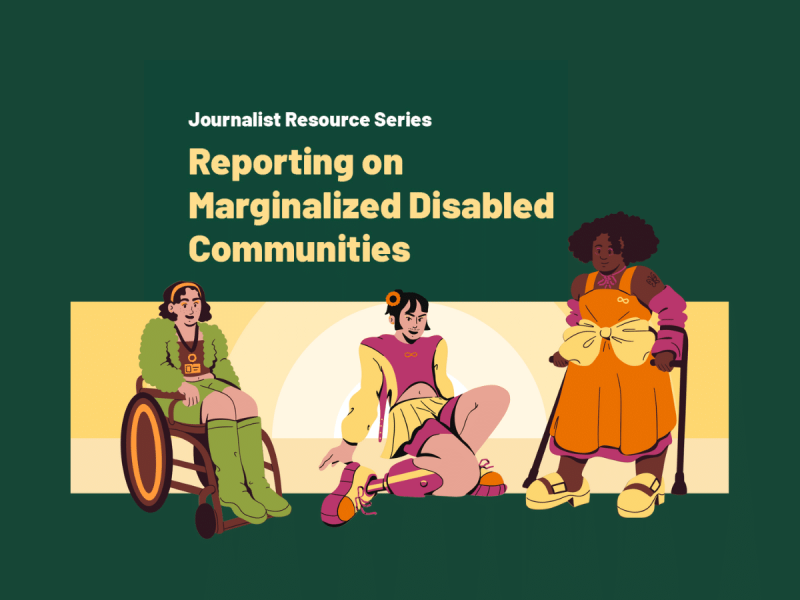
Q&A: Guide for Reporting on Disabled Communities
Ericka A. Dixon and Sebastian Margaret, senior national organizers with The Disability Project at Transgender Law Center, on crafting a guide for better reporting on disability focused on those most at the margins.