
A new president and fewer journalists to cover his policies
More U.S. newsrooms have laid off workers so far this January than at this point in January 2024 or January 2023.

As a new presidential administration comes to power, more U.S. newsrooms have laid off workers so far this January than at this point in January 2024 or January 2023.
It’s grim news when we need people to contextualize the deluge of life-altering policy decisions (even from this past week alone) and worsened by the fact of the industry‘s increasing dependence on platforms like Meta and X, whose CEOs have aligned themselves with the anti-press president.
“This is just destroying people’s morale,” said Katherine Reynolds Lewis, the founder and executive director of the Institute of Independent Journalism (IIJ). IIJ published a report and survey on the layoffs’ impact on marginalized journalists last year and has been tracking industry layoffs since 2023.
CNN is laying off 6% of its staff, or about 210 employees. NBC News is laying off “under 50” workers. The Washington Post cut 4% of its staff, primarily its business department. HuffPost laid off more than 20% of its employees. Reckon News shut down. This American Life saw “rare” undisclosed staff reductions. Vox Media executed its third round of layoffs in the past two months. The Chicago Reader laid off six employees in hopes of avoiding total closure. Dotdash Meredith laid off 143 workers. “Less than 10 people” lost their jobs at Tech Crunch. Local tech news publisher Digital Trends laid off more than a dozen journalists. And the Chicago Sun-Times (which is part of Chicago’s NPR member station WBEZ) is now offering buyouts to avert layoffs of between 20-30 staffers.
“There are fewer journalists who are working to cover the important policies in our country, and also the ones that are left are often working under a threat of layoffs, worried about their job security, or under-resourced because so many people have left their newsroom,” Lewis said.
Matt Pearce, President of the Media Guild of the West, said part of the shift is due to the increasing entanglement of social media platform moguls with the anti-press administration.
The NewsGuild, of which Media Guild of the West is a part, passed a 2023 resolution to “stand for journalistic independence“ and “only support platform-publisher legislation that substantially ensures newsrooms spend news funds on newsroom employment.”
“Our ability as journalists to reach the public is being controlled by these people who are actively currying favor with an administration that seems largely indifferent to press independence and press freedom and indifferent to people getting accurate information about their own lives and their community,” Pearce said.
Nonprofit newsrooms may also face additional precarity with accurate reporting during this administration and beyond. An “anti-terror bill” making its way through Congress would allow the Secretary of the Treasury to unilaterally revoke nonprofits’ tax-exempt status if they’re deemed to be a “terrorist-supporting organization.” Similar bills have been used to target journalists in the Philippines, which saw a media shutdown in 2020 on the back of the passing of an Anti-Terrorist Bill during former president (and Trump supporter) Rodrigo Duterte’s administration.
Independent journalism allows reporters to reach an audience that wants to hear their reporting, but it may also leave them more vulnerable to legal challenges and is also beholden to a different kind of personal commodification. Still, Lewis points out that freelancing or going independent — while accompanied by financial hurdles and complications — can be one way for reporters to do values-aligned work that doesn’t hinge on the whims of media moguls and economic change.
“There’s a whole community of freelancers who know how to do this sustainably, and together we can build a whole ecosystem that doesn’t rely on the ups and downs of the media industry,” she said.
Community-building will be crucial for the next four years and beyond, which movement journalists who covered the initial Trump administration have highlighted. And Pearce says ultimately, while it’s easy to feel defeated looking at layoffs and the state of the industry, change is possible through acting in coalition.
“You have to know what your values are and be willing to stand up for them, and to organize around those principles and find alliances with people and groups that have similar values,” he said. “The people who show up make that change happen.”
James Salanga is the co-executive director of The Objective and the podcast producer for The Sick Times.
This story was edited by Gabe Schneider. Copy edits by Omar Rashad.
We depend on your donation. Yes, you...
With your small-dollar donation, we pay our writers, our fact checkers, our insurance broker, our web host, and a ton of other services we need to keep the lights on.
But we need your help. We can’t pay our writers what we believe their stories should be worth and we can’t afford to pay ourselves a full-time salary. Not because we don’t want to, but because we still need a lot more support to turn The Objective into a sustainable newsroom.
We don’t want to rely on advertising to make our stories happen — we want our work to be driven by readers like you validating the stories we publish are worth the effort we spend on them.
Consider supporting our work with a tax-deductable donation.

James Salanga,
Editorial Director
Related Articles
‘Pick your hard’: Black independent journalism isn’t as simple as Substack
While it might be simple to suggest that reporters launch a newsletter or an independent newsroom when laid off from corporate media, those career pivots cost more than just money — particularly for Black independent journalists.

Should journalism have an industry-wide ethics policy for covering artificial intelligence?
Tech journalists have set their own standards as journalism organizations haven’t yet issued consistent guidelines around generative artificial intelligence — whether around how it’s used in newsroom processes or how it’s covered.
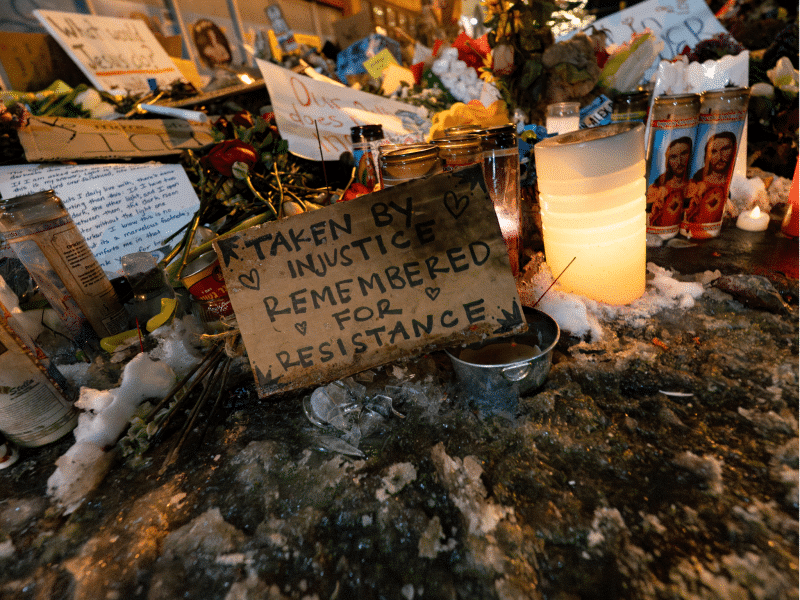
Reporting on ICE killings follows a long history of normalizing state violence
Mainstream coverage of Renee Good, Alex Pretti, and Keith Porter’s killings shows how anti-Black news standards desensitize communities to state violence.