
Q&A: Guide for Reporting on Disabled Communities
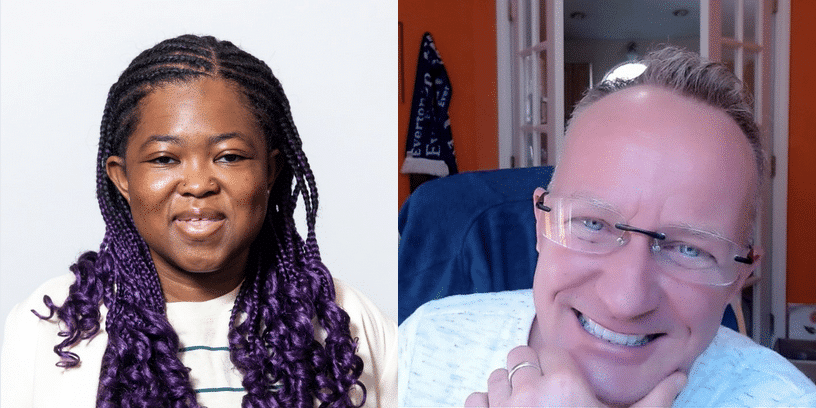
Ericka A. Dixon and Sebastian Margaret, senior national organizers with The Disability Project at Transgender Law Center, on crafting a guide for better reporting on disability focused on those most at the margins.
The second Trump administration transitioned into the White House during a resurgence of casual ableism manifested in not just halls of power but everyday conversation. In the past two months, it’s only further amplified that ableism — normalizing eugenicist rhetoric and policies by cutting entities like the Office of Long COVID Research and Practice (OLC), the message is clear: government support for disabled people, particularly those experiencing multiple marginalizations, is deemed wasteful.
But policies focused on eliminating people viewed as “less fit” aren’t just limited to the current administration. The burgeoning anti-trans policies moving through legislative halls are tied to similar eliminationist logic. As of 2022, thirty-one states still had forced sterilization policies.
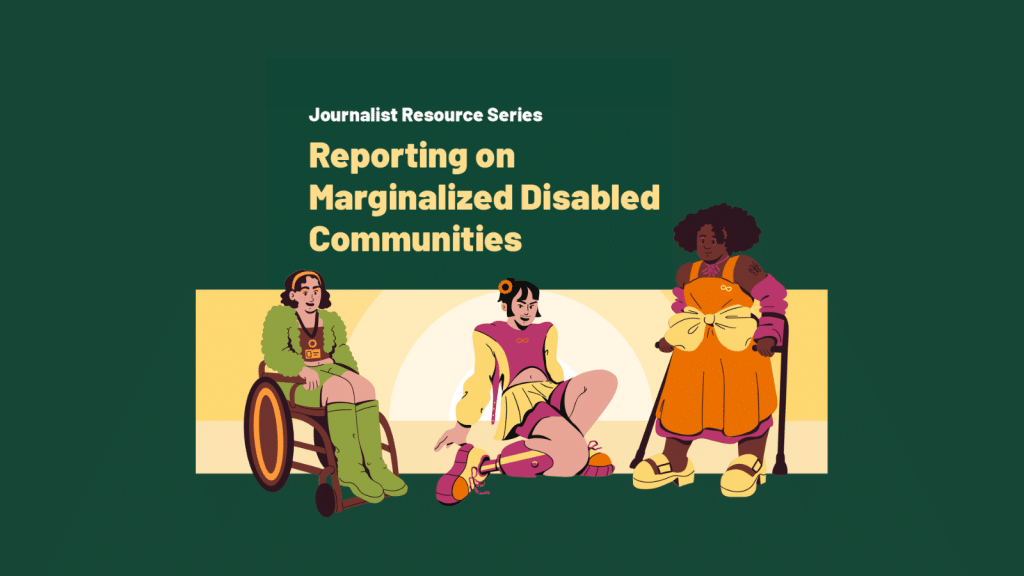
So The Disability Project’s Senior National Organizers Ericka A. Dixon and Sebastian Margaret, alongside other disability organizers, created the Guide for Reporting on Disabled Communities as part of the Transgender Law Center’s Journalist Resource Series.
Released Tuesday, the guide has four sections about shifting away from ableist frames, centering those most at the margins, looking at systems placing disabled people in harm’s way, and emphasizing self-determination. Its introduction contextualizes modern eugenics, and the guide ends by underscoring journalists’ power to disrupt the rise of ableism and eugenic laws, policies, and practices. It’s also accompanied by a slate of resources for further investigation.
In a conversation with The Objective, Margaret and Dixon reflected on their work creating the guide, the interlocking systems of oppression impacting marginalized disabled people, how to expand journalists’ ideas of what “disability stories” are, and the importance of recognizing disabled people as the narrators of their own lived experiences.
This conversation has been edited for length and clarity. Margaret and Dixon would also like to recognize and appreciate the innumerable marginalized disabled and Deaf activists whose labor expertise and persistence in service of the self-determination and freedom of our communities is rarely appropriately-resourced or acknowledged.
What brought you to working on this guide?
Ericka A. Dixon: What brought me to working on the guide was really being tired of seeing the same kind of tropes and stereotypes about disabled people being perpetuated by the media that we’re either inspiration porn, or “We’re something to be pitied”, or “Our lives aren’t worth living”.
And really wanting to shift that narrative, and make sure that as disabled people, we are in charge of our narrative, and that we can work with journalists who are on the same page to really help change the tide of reporting and have people report on disabled people, specifically BIPOC, trans, poor, migrant, disabled people.
Sebastian Margaret: I think the other piece of it is really hoping that it would encourage and cajole and entice and challenge journalists to not only know what not to do, but also to be intrigued to find out more about the material conditions that disabled folks, particularly [those] marginalized, live in currently. Because there’s also just an underreporting of some of the most extreme places of oppression and violence, and we are invested in trying to turn up journalists’ — particularly investigative journalists’ — attention to much needed areas of inquiry.
… The struggle for self-determination for disabled folks, particularly marginalized, is such a place of reflection and similarity for the struggles that all of us who are marginalized in this country continue to face. We have a unique opportunity under this particular heightened state of oppression to come together and build collective power.
How did the guide’s structure work to advance your goals for it?
Dixon: We have an intro, and then we start talking about the history of eugenics.
We really wanted to make sure that the history of eugenics was part of the guide because I think it’s really important for journalists, and for everyone who’s doing this work, to understand that the root causes of what we’re living through right now are part of a eugenicist logic and practice that’s been put into play through policy.
We start by defining eugenics and naming it and talking through the connection between ableism, anti-Black racism, misogyny, [and] eugenics, so that everyone kind of has a baseline understanding.
And then we go into different tips for reporting on disabled folks and disabled communities, like shifting away from ableist frames, avoiding minimizing violence against disabled people, and highlighting our right to self-determination and autonomy.
And those are really to push back … on the ways that people already report on disability and disabled communities. So interrupting how disabled people are often seen as objects of pity or inspiration porn or that we’re unruly or that we’re, you know, a burden, and really making an intervention in those frames — making an intervention around how, oftentimes, when violence against disabled people happens, it’s either not reported on or it’s very much minimized or their disability is minimized or ableism is minimized.
Then, highlighting that we should have self-determination and autonomy, and that being disabled doesn’t mean that we automatically give up that right.
Margaret: I think the other thing that comes to mind that, as a team, we were clear about that was tantamount to reference in the guide is the impact of political education work that we do at The Disability Project.
Some of that emergent work over the last several calendars has been to try to more explicitly talk about the existence of a disability carceral state, as a series of locations that are created with the specific, explicit and very precise role of criminalizing, incarcerating, segregating, and surveying disabled people by design.
So not the carceral systems that we know exist already within the prison industrial complex, that are designed to do the same for all manner of folks in particular to continue the incarceration, control, and exploitation of Black communities — these are different locations that are specifically created and serve a similar function to the PIC [prison-industrial complex] but whose focus is disabled communities.
And we’ve been talking about a cluster of locations purportedly that are created to serve, care for and protect disabled individuals as an entity that runs parallel to the PIC that folks currently, particularly in abolition spaces and decrim[inalization] spaces, are less aware of.
That piece, the existence of a disability carceral state as an emergent moment in the framework of disability justice, as relevant to all movements connected to ending oppression and creating freedom and erosion of the power that all supremacy systems have over our lives — having the disability carceral state touched upon in the guide was a critical piece of what we also sought to have in its structure.
I also wanted to talk a little bit about how you’re producing this guide in partnership with the Transgender Law Center (TLC). How did the context of that partnership inform the guide?
Margaret: Thank you for that question, and it feels, really, a critical one to ask. The Disability Project exists because of an act of bold leadership that TLC, the Trans Law Center, chose to implement and then to commit to when The Disability Project was founded, which was over half a decade ago now. The DP was initially made possible through a fellowship that, without support, would have amounted to so much less, if it wasn’t for the commitment, capacity and the intention of TLC leadership [for The Disability Project] to become a permanent program within the Programs and Policy department of the Trans Law Center.
Without the Trans Law Center’s strategic political commitment to invest and trust in disabled leadership, to take a curiosity in and a desire to understand more deeply the crucial relevance of disability justice politics and framework, within the work to fight for freedom, autonomy, and self-determination for trans folks, and grapple with the truth that these in fact are inextricably linked — in truth, The Disability Project wouldn’t exist.
… This is what bold leadership can result in, and this is why we ask for it. … I’m not saying everybody should be in a national organization, or even that many of those opportunities exist for disabled activism — sadly, the opposite is still true.
I’m not saying everybody is TLC or has a similar level of resources and therefore privilege and therefore responsibility. Yet there is so much that can be done at many different scales by any of the predominantly able bodied-led justice and movement spaces, organizations, efforts, cohorts when that desire and curiosity [about disability justice] can become an implemented and strategic commitment.
And disabled activists have been asking for different versions of this for far too long with not enough reciprocity, when we actually have been very clear — particularly multi-issue disability activists, who bring a whip-sharp understanding of the connections that exist between the systems of our oppressions and the ways that we’re divided and the need to build power collectively.
And then, of course, in there, the other piece would be: Disabled folks are trans. Trans folks live with disabilities. We are not separate entities. We’re not separate groups of people.
Of course, that connection is because our communities or identities cannot be siloed or separated in that way. To think they can is to essentialize and erase parts of who we are, and therefore create inadequate solutions to some of the most pressing and horrific challenges that we all are navigating.
Dixon: Yeah, they pretty much answered the question. [laughs]
Yeah. That really sums up so much, especially underscoring there are ways movements and organizations can make a commitment to disabled people, and this guide and partnership are a reflection of what could be possible if organizations listened to disabled people and took them seriously.
Going back to material conditions, the experiences of disabled people in coastal versus rural areas in the U.S., especially with overlapping marginalizations, can be very, very different. How did you account for that understanding in the guide?
Dixon: I think we addressed it in the guide by really centering and really making sure that journalists understand that they should be working with those most at the margins, and making sure that includes … both coastal folks and also folks who live in rural areas. And really making sure that , there’s an understanding in the journalist guide of how intersecting forms of oppression play out for disabled people, especially disabled people of color and BIPOC folks and migrants and poor disabled trans folks. All the intersections.
… That analysis, I think, will help them go to places that aren’t New York or the Bay Area.
In all the work that we do, we always recognize the fact that even disability justice as a term is very city-fied. It came out of the Bay Area, it came from coastal areas, and that it might not resonate with folks who don’t live in those areas, and that’s okay.
And that we want to reach them and we want other people to reach them because they’re still in our community, they’re still disabled. And because they are more isolated, more vulnerable, and cut off from community, potentially, and resources and services and all that, [it’s important that we’re] making sure that journalists have that understanding to reach people who aren’t as easily accessible.
Margaret: Initially, in the first draft, we considered calling it a DJ, a disability justice guide, but as we grew our clarity about what DJ means to us as a team and a project we realized it’s not the right fit … DJ as a term, for all its strengths and utility, does not necessarily resonate, as Ericka said, with [the] people who we fundamentally believe are deeply connected to work that seeks to erode ableism. It just might not be in the way it happens on the coast or in big cities — these folks and their efforts needs and perspectives too should be acknowledged and centered.
And so this is not a DJ guide exactly. The lack of that terminology is deliberate in the absence of its title. It is referenced in the guide, but we chose not to title it that way.
For sure. I appreciate the clarification, because I think that term post-2020 has really been thrown a lot without proper contextualization and distinction between the fight for disability civil rights and disability justice (a term coined by the group Sins Invalid).
To that point, what missteps and misunderstandings have you seen from reporters looking to report on disability?
Dixon: I think a lot of the missteps are … in terms of, you know, people only seeking out kind of the like white, blonde hair, blue-eyed child that runs on their prosthetic leg and is like, “Oh, look, I’m going to the Olympics despite it all.”
I think people seek out the sensational stories of overcoming and [without] recognizing that’s feeding into a really harmful trope of disabled people as being inspirational simply because they have a disability and they’re living their life, as one does — as we all do.
But it also, I think, just narrows the audience of who people are reaching and whose stories are getting told. So [I’m] really wanting to broaden people’s perspectives of what disability community stories are, and how they can be held with care and give people dignity and respect.
Also, something that I’ve seen happen, that we address in the guide, is when people are reporting about police murders, for example, they’re reporting about a Black person, but they don’t talk about their disability or they don’t talk about the role that ableism played in the violence that they experienced. And that’s a piece of disability reporting — calling out when ableism is being used and leveraged to support anti-Black racism, to support white supremacy and to support misogyny.
Being able to recognize that and call it out when it’s happening in news stories, I think, is something that journalists might not do.
I think something that also happens is that journalists try to speak for disabled people instead of letting disabled people share their own stories.
Margaret: One of the other ones is not being duped into believing that an advocate — somebody (usually able-bodied) who works in disability service provision, somebody who’s an able-bodied parent, a guardian, a close friend, a partner, a sibling of a disabled person — that they are a suitable person to speak about the experiences of their familial relation, their students, their clients, or disabled communities. That [advocate] is not the right person.
And too often, in regard to disabled life experience, our lived experience therefore politics, analysis, culture, history, and resistance — more than for any other identity group, it is still acceptable to believe somebody who doesn’t live with personal experience of the oppression is a viable proxy for the people who do. That this happens with frequency in of itself reflects the deep ways ableism prohibits the recognition of our competency and innate credibility.
And to what Ericka said: We are the narrators of our lived experience and our politics. No one else can do that for us. No one else should be asked to do that for us. And if you are asking somebody else believing they are a credible person, then it’s time to pause right there. Because they’re not.
I would also add, and I believe it’s in the guide: Collaborate with disabled journalists, because they too exist and have been working hard and accountably to shift narratives from inside the journalism world for a long time. Explore how you can amplify their work. You’re in a field of expertise and have a platform and privilege to leverage to corrode practices and traditions that are likely biased in multiple ways against disabled journalists.
What can you do if you are a non-disabled journalist to help amplify the work and the leadership of disabled journalists? In particular, BIPOC disabled journalists, because that’s a very clear place of what credible leadership looks like from a disability justice framework. And if there’s not BIPOC folks available, then make sure the white folks you’re talking to are coming from and very closely connected to a working-class experience and work closely with BIPOC colleagues.
Towards something maybe a little more hopeful, what story ideas about disability would you both like to see reporters take a wider interest in, especially after using this guide or reading this guide?
Dixon: I think one of our really big ones that we’ve been talking about that’d be amazing to do something around is group homes, and working with investigative journalists to look into, like what’s really happening at privately-run group homes. Where’s the money coming from? Who’s getting paid? How are the resources being used? What are the actual conditions? What are the barriers? Also, talking to the people and [learning] what their stories are living in a group home.
It’s one of the first things that I would like to see. And then, I think after that, I would be really interested in having a better analysis of when there is violence against disabled people, having that be reported with the … dignity and respect that it should be reported with, and not minimizing. Going back to the [phenomenon of] “mercy killings”, not saying like, “Oh, well, the parents were just really burned out and tired.”
No, actually name what happened. Name that this was a mercy killing or filicide or that a disabled person was murdered because of their disability, because of the rampant ableism that happens in a society.
Or that someone was denied something because they happen to be poor and disabled and BIPOC. And [explaining] how those things work together — not just kind of reporting on “Oh, this like BIPOC person didn’t get the service,” but what’s happening systematically to create these conditions.
What are some other resources, concepts, ideas that you’d like to recommend to reporters who are interested in becoming better reporters when it comes to disability?
Margaret: We actually list a bunch of resources at the end of the guide. So, there’s a lot of resources, there’s a lot of references to other articles, there’s a lot of places where folks can learn more and can choose to self-educate.
And I think that’s always a piece, right — take responsibility for the education you can do solo so you can turn up in mixed company in a way that is supportive of your own learning and supportive of balancing the privileges you may or may not carry.
Personally, the other thing to think about is: … Follow the money. Get curious in a principled and intentional way about what is happening around the money that is in play around the [purported] care [of disabled people] — the absence of money and the capacity for us to control that money and where it needs to be, and all the ways that profiting from disabled needs money is such a driver of what happens to us.
… We think there are brilliant journalists out there who can find it [data] as to how the money is playing a part in the variety of different locations where disabled folks receive care or education or support or engagement or community or just activities of daily function. Because chances are, it’s not going to be neutral.
Dixon: Yeah, I echo all of that. And I think one thing to add is, I would want people to get curious about eugenics and really start doing that self-learning around the history, how it’s evolved to be in our present.
Especially during this political time that we’re in, really start interrogating — ”How can this policy … be used to eliminate, dispose of, warehouse certain types of people?” Start being able to name eugenics. In our current political moment with everything that’s going on, I think [that] is really critical.
We depend on your donation. Yes, you...
With your small-dollar donation, we pay our writers, our fact checkers, our insurance broker, our web host, and a ton of other services we need to keep the lights on.
But we need your help. We can’t pay our writers what we believe their stories should be worth and we can’t afford to pay ourselves a full-time salary. Not because we don’t want to, but because we still need a lot more support to turn The Objective into a sustainable newsroom.
We don’t want to rely on advertising to make our stories happen — we want our work to be driven by readers like you validating the stories we publish are worth the effort we spend on them.
Consider supporting our work with a tax-deductable donation.

James Salanga,
Editorial Director
Related Articles
Q&A: Karen Attiah says her firing shows mainstream media still fails at talking about race
Karen Attiah, former long-time Washington Post opinion columnist and editor, sat down to talk about objectivity, “Democracy Dies in Darkness”, Black representation in news, and more.

Q&A: Autonomy News wants to cover bodily autonomy as a human right
Garnet Henderson and Susan Rinkunas, co-founders of the worker-owned reproductive justice outlet, on their new newsroom and what covering reproductive justice looks like in this particular moment.
Q&A: Communities Beyond Elections
Da’Shaun Harrison and Lara Witt, both involved in co-founding the Movement Media Alliance, spoke about movement journalism, decentering politicians, and what it would take for newsrooms to shift their election coverage.