
Freelance journalism rates are worse than you think — they’ve barely changed since 2000
It’s not your fault you’re broke. New data from the National Writers Union offers a glimpse into a bleak picture of decades-long wage stagnation in freelance journalism.
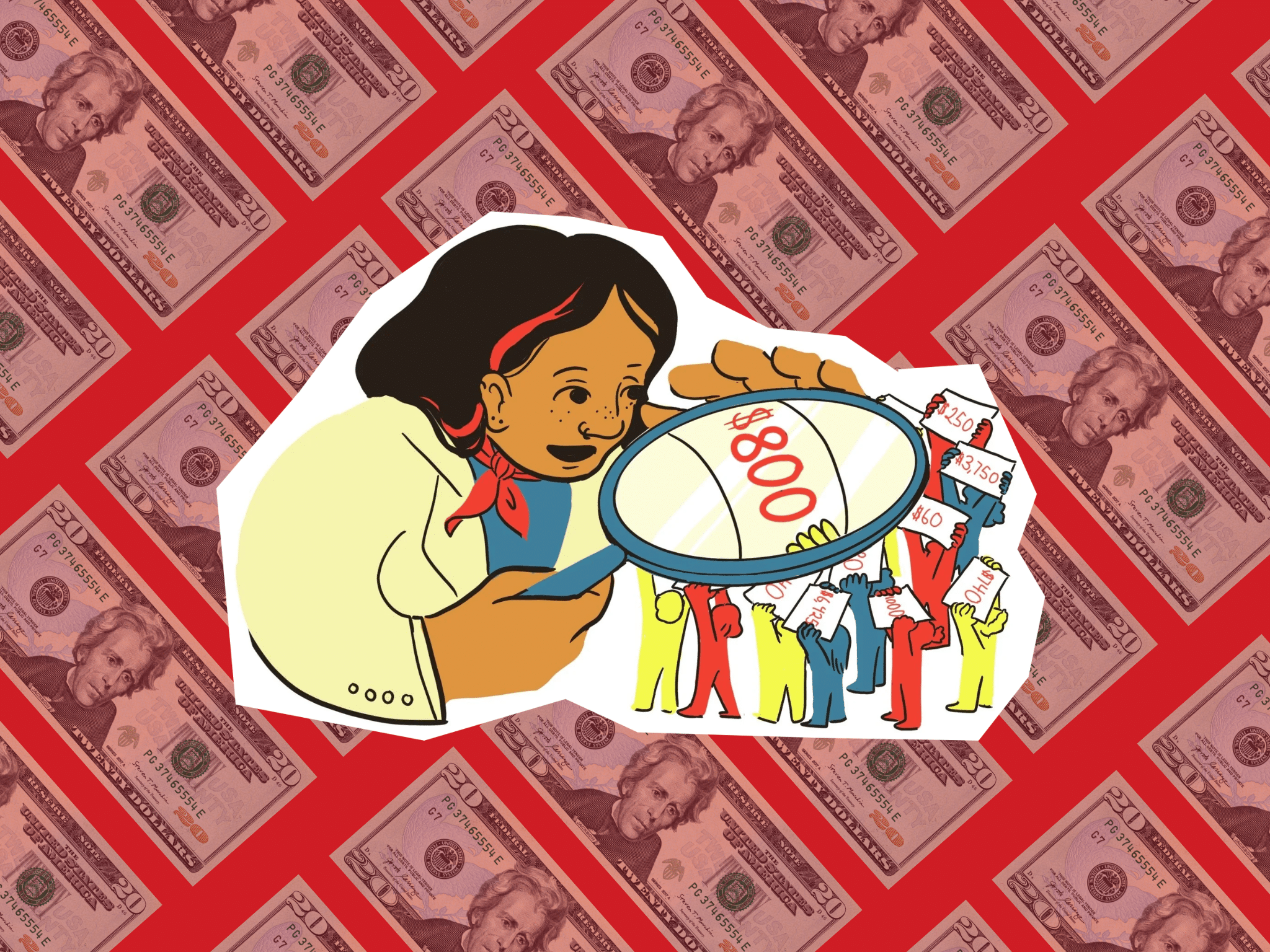
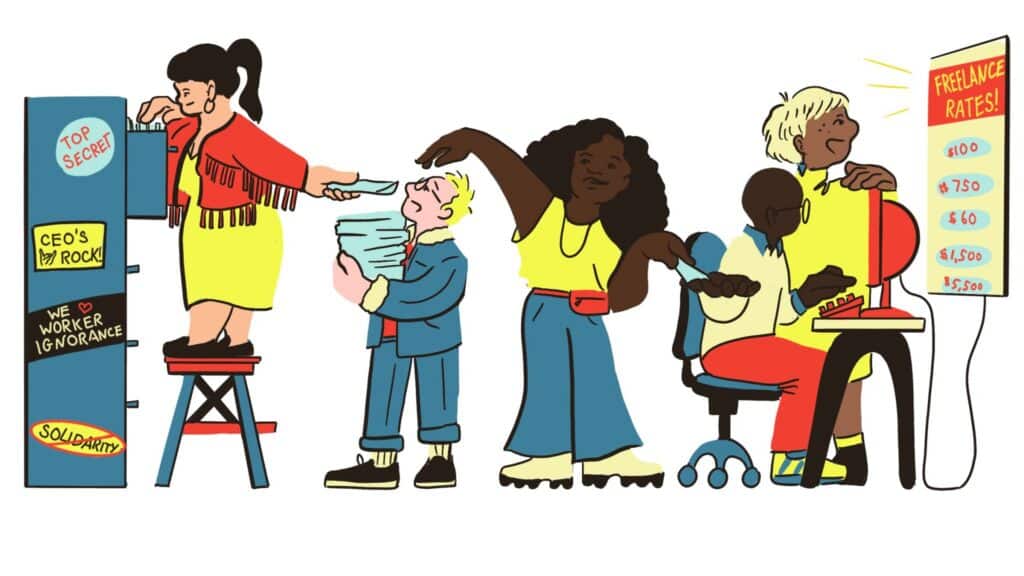
In 2020, the National Writers Union’s Freelance Solidarity Project (NWU-FSP) launched the Rate Sharing Database, asking freelance media workers to enter as many of their pay rates as possible. We’ve spent the past year reviewing the data we’ve collected since the database began to better understand what freelancers were really making, so we could use the information to negotiate for better rates, build campaigns, and organize for better pay.
Twenty-six years ago, the National Writers Union advocated for a $1/word pay rate. Since then, the cost of living in the United States has approximately doubled, and rent has gone up about 141%. Between 2020 and 2026 alone, living expenses in the U.S. have increased 29%, and rent has increased, on average, 34%.
Thus, if that $1/word rate from 2000 matched today’s inflation, the average writer should be making about $2/word. But — according to our data — they aren’t.
Since 2020, the average reported pay rate has hovered around $1/word, and stagnant wages mean that freelance writers are functionally making less money now than they were 26 years ago.
The survey, coupled with our personal experience as two freelance journalists who have both taken full-time survival jobs outside of journalism, reiterates what we already know: the media industry is in crisis, especially for the working class. Combined, these difficulties have had a profound effect in destabilizing the reporting capacity of journalists. Many of our fellow union members have had to get full-time jobs to supplement their freelance work over the last few years. Some have left the industry altogether.
What did we find?
The rates database was designed to help freelancers negotiate their rates, so each submission is anonymous, representing a single rate. That means there are limitations to our analysis. We don’t know how many people were repeat contributors, for example. Our survey’s sample size is comparatively small — 1,275 entries — and its participants were self-selecting.
Among the 71% of respondents who included their race or ethnicity, 83% identified as white; 10% as Asian; 6% as Black; 5% as Latine; 1% as Middle Eastern, Arab, or North African; and 0.9% as Indigenous. These identities overlap, as 21% percent selected multiple races and ethnicities.
Of the 70% who included their gender identity, 64% identified as female (cis or trans), 18% as male (cis or trans), and 10% as nonbinary. Fifty percent identified as cis, and 4% as trans.
We were able to hire a freelancer to helm the analysis of our data, though the survey construction and outreach were largely organized by unpaid union members. Though our data and analysis were limited, they raise major red flags nonetheless.
Trans and Hispanic survey participants, whose communities have been heavily targeted by the current political administration, reported significantly lower than average rates — $0.38 and $0.34 per word, respectively.
Freelancers experience the brunt of journalism’s instability
Journalism’s deteriorating conditions have resulted in mass layoffs, budget slashings, and publication shutdowns — all of which have made freelancing more competitive and less reliable.
Along with the increased inflation and economic instability in the United States, the past six years have recorded unprecedented levels of attacks against journalists, meaning that freelancers — who lack the resources of staff reporters — face increased precarity.
Related: Journalism is increasingly pushing reporters of color out of the industry
According to the Committee to Protect Journalists, 538 journalists have been killed across the world since 2020. In 2024, the National Writers Union documented increased cases of retaliation against media workers after the genocide in Gaza began, including politically-motivated layoffs. Within the United States, since 2020, reporters have faced “dramatically” increased attacks, lawsuits, arrests, and online violence — in part amplified by the use of generative AI.
And, as a result of these forces and more, some publications are closing their doors.
For Elena, one of the co-authors of this piece, YES! Magazine was their first byline as a freelancer. They developed a rapport with their editor and published a second story at YES!, until their editor was laid off in the midst of budget cuts. Then, the publication shuttered altogether. For a staffer, a closure might mean severance; for a freelancer, it means starting from scratch, pitching new publications and finding new editors.
Related: Pre-reporting is part of being a freelance journalist. Is it free labor?
By definition, full-time freelancers don’t receive benefits and thus have to pay out-of-pocket for the support that most other full-time jobs provide. One full-time freelancer we spoke to, who wishes to remain anonymous, published eight stories in one month alone and is still unable to make ends meet.
“My rates are the lowest they’ve been since 2020 when I started,” they said. “I borrowed money for rent multiple times, I borrowed for car insurance this time; every time I pay someone back, I’m underwater again.”
Similarly, without the institutional backing of a staff newsroom job, freelance journalists are often left to fend for themselves when it comes to safety, legal, extraction, overwatch, PPE and resource support. These dangers are felt even more acutely by journalists of marginalized identities, and safety concerns combined with undervalued labor have marginalized journalists questioning whether they should leave the industry behind.
Organizing offers ways to move toward a better industry
The Freelance Solidarity Project is a division of the National Writers Union and began in part to combat the idea that freelancers are struggling due to their individual capacity, as opposed to an industry that pushes them into working multiple jobs and working gig-to-gig.
Telling freelancers to be better at money management or to individually negotiate for higher rates is not the whole solution, especially when — as our survey data indicates — industry standard pay has remained stagnant over decades.
We are facing a systemic problem, not an individual one.
So working together is the best way to tackle it. Historically, fair working conditions in the media industry have been won by unionized staff coming together to take collective action. But for decades, those protections have largely left out freelancers. Now, with traditional media collapsing, members of the National Writers Union are building a labor movement built to fit a transformed landscape.
Related: Legislation is nice, but freelance media workers can achieve more through collective action
Currently, the National Writers Union is organizing to pass Freelance Isn’t Free legislation in all 50 states, which guarantees the right to a written contract and timely payment, and has already been passed in Illinois, California, New York, and Columbus, Ohio.
Members are developing resources for freelancers to build media cooperatives and are strategizing to confront the impact of generative artificial intelligence. The Freelance Solidarity Project has been working with publications like In These Times and The Nation to outline minimum, public standards for working with freelancers. We’re also still collecting rates for the database, and we intend to use it to press outlets to raise freelancer rates.
As our colleague Amy Littlefield wrote in The Nation when we launched our analysis project, “Our entire industry, like many industries around the world, from transportation to food services, is increasingly reliant on freelancers who do not make a living wage. It’s time for all of us to reckon with that.”
—
Freelance writers can learn more about joining the National Writers Union here.
jen byers (they/she) is a freelance journalist and security advisor whose work has appeared in outlets including Al Jazeera, Prism Reports, Showtime and Unicorn Riot.
Elena Novak (they/them) is a freelance writer and journalist whose work has appeared in Waging Nonviolence, YES! Magazine, and the Knoxville-based arts & culture outlet Hellmouth Magazine.
This piece was edited by James Salanga. Copy edits by Jen Ramos Eisen.
We depend on your donation. Yes, you...
With your small-dollar donation, we pay our writers, our fact checkers, our insurance broker, our web host, and a ton of other services we need to keep the lights on.
But we need your help. We can’t pay our writers what we believe their stories should be worth and we can’t afford to pay ourselves a full-time salary. Not because we don’t want to, but because we still need a lot more support to turn The Objective into a sustainable newsroom.
We don’t want to rely on advertising to make our stories happen — we want our work to be driven by readers like you validating the stories we publish are worth the effort we spend on them.
Consider supporting our work with a tax-deductable donation.

James Salanga,
Editorial Director
Related Articles
Potential FCC cellphone jamming policy would silence incarcerated journalists
An incarcerated journalist in Georgia calls free press advocates to rally against the 23-state effort to allow FCC-approved cellphone jamming technology, which would limit incarcerated journalists’ efforts to report on harms on the inside.

Journalists aren’t the only ones sharing the news, and that’s a good thing
A new framework from Journalism + Design Lab invites newsrooms to build on the abundance, diversity, and momentum already in our communities to strengthen local news.
The Black press has always faced an inequitable funding landscape. Its future can’t be the same
Looking to historical models can provide some clarity and inspiration in an environment once again hostile to funding Black journalists and the Black press.