
Resources for showing solidarity with Palestinian journalists
The pattern of Israeli government and military censoring journalists isn’t new. Neither is the apartheid system Israel operates in Palestine.
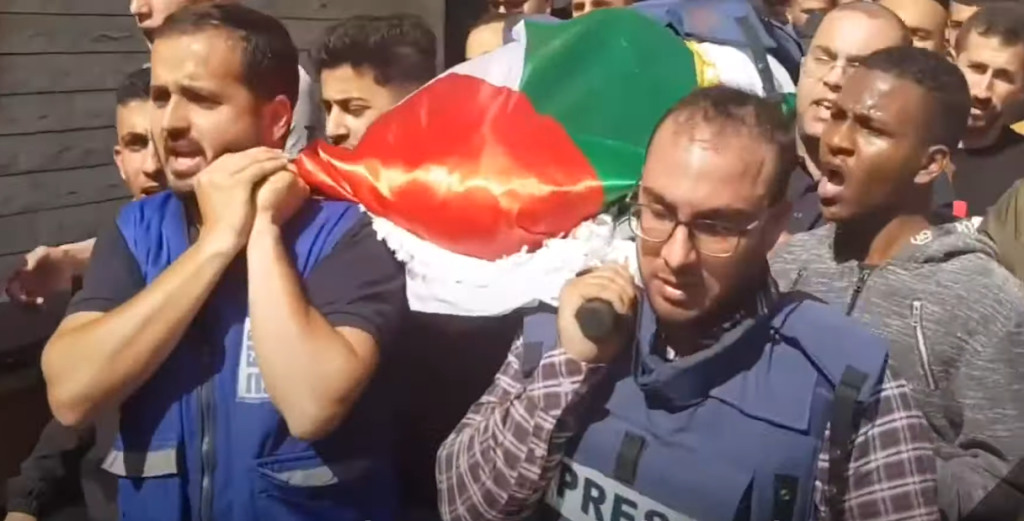

The past year has been the deadliest for journalists on record. The Committee to Protect Journalists reports the Israeli military have killed at least 128 media workers — the majority being Palestinian, and says there remains no justice for journalists targeted by Israel.
The Palestinian Journalists’ Syndicate (PJS) places that number higher: 167, or over 10% of the Palestinian press corps. Oct. 7 marks one year since Palestinian militants from Hamas launched a military operation on southern Israel with over 800 civilians and 300 soldiers killed, and about 240 people taken hostage. Israel’s military responded by escalating bombardment on the Gaza Strip, killing over 42,000 Palestinians, and censoring both Palestinian and foreign media; last month, it expanded its military assault to Lebanon.
Israel has occupied Palestine, operating an apartheid system, for decades — beginning with the displacement of hundreds of thousands of Palestinians in 1948 (also known as the Nakba).
The pattern of media censorship isn’t new: In 2022, Israeli forces killed journalist Shireen Abu Akleh. (Forensic Architecture at the University of London said it was an intentional targeting and the United Nations and US agencies are currently investigating the killing.) And in 2023, the Israeli military censor banned the publication of 613 articles. Earlier this year, equipment from the Associated Press was temporarily confiscated, and last month, Al Jazeera’s offices were raided and shut down.
Related: The ‘Palestine exception’ to press freedom
Inspired by Hanaa’ Tameez’s Twitter thread, I put together an incomplete coverage of journalistic failings this past year when it comes to covering Palestine, reports compiled by Palestinian journalists, and ways to express solidarity with Palestinian journalists.
U.S. journalistic bias slants toward favoring Israel:
- Leaked NYT Gaza memo tells journalists to avoid words “genocide,” “ethnic cleansing,” and “occupied territory”: This Intercept story from last April exposes “how apologetic it is to Israel”, as an anonymous Times source put it — a follow-up to previous reporting about major newspapers favoring Israel in coverage and the shoddy foundation of the Times’ Oct. 7 exposé “Screams Without Words.”
- Failing Gaza: Pro-Israel bias uncovered behind the lens of Western media: “There were times where CNN was happy to push hard. But on balance, it’s very clear where we lie, regrettably. And it’s not entirely with the truth,” a CNN journalist told Al Jazeera.
- How the U.S. media failed to tell the story about the occupation of Palestine: This Q&A in The Nation focuses a documentary analyzing media coverage — or lack thereof — of the occupation of Palestine, and discusses how that’s shaped current approaches to coverage.
The Palestinian Journalists’ Syndicate recaps the last year:
- This week, the journalists’ organization released two reports — ”Silencing Voices: The Plight of Palestinian Journalists Detained by Israeli Occupation during Ongoing Israeli Aggression on Gaza” and “Crimes and Violations against Journalism in Palestine Since the Start of the Genocidal War.” The PJS records 1,639 total violations the syndicate recorded against journalism and media professionals in the past year.
Solidarity actions with Palestinian journalists:
- Writers Against the War on Gaza (WAWOG) has issued a call to journalists at mainstream media outlets to “withhold your labor until your newsroom releases a statement condemning the targeting of Palestinian journalists and pledges to report accurately on the genocide. In your reporting, include the names of the surviving and threatened correspondents to protect them.” They’ve also been running an active campaign to boycott, divest, and unsubscribe from The New York Times, including an alternate paper — The New York War Crimes.
- Submit a piece to Media Against Apartheid and Displacement, a collaboratively curated hub for “reporting on the colonization and occupation of Palestine, the genocide in Gaza, the U.S. and Western backing of Israel, and the movements fighting for Palestinian liberation.” (The Objective is a part of this collaborative.)
- Donate to the International Federation of Journalists’ Safety Fund, which goes toward paying Palestinian journalists, setting up media solidarity centers as Palestinian media outlets continue to be shuttered, and gear and equipment, including tents and sleeping aid.
James Salanga is the co-director of The Objective and the podcast producer for The Sick Times.
This piece was edited by Gabe Schneider.
We depend on your donation. Yes, you...
With your small-dollar donation, we pay our writers, our fact checkers, our insurance broker, our web host, and a ton of other services we need to keep the lights on.
But we need your help. We can’t pay our writers what we believe their stories should be worth and we can’t afford to pay ourselves a full-time salary. Not because we don’t want to, but because we still need a lot more support to turn The Objective into a sustainable newsroom.
We don’t want to rely on advertising to make our stories happen — we want our work to be driven by readers like you validating the stories we publish are worth the effort we spend on them.
Consider supporting our work with a tax-deductable donation.

James Salanga,
Editorial Director
Related Articles
Journalists aren’t the only ones sharing the news, and that’s a good thing
A new framework from Journalism + Design Lab invites newsrooms to build on the abundance, diversity, and momentum already in our communities to strengthen local news.
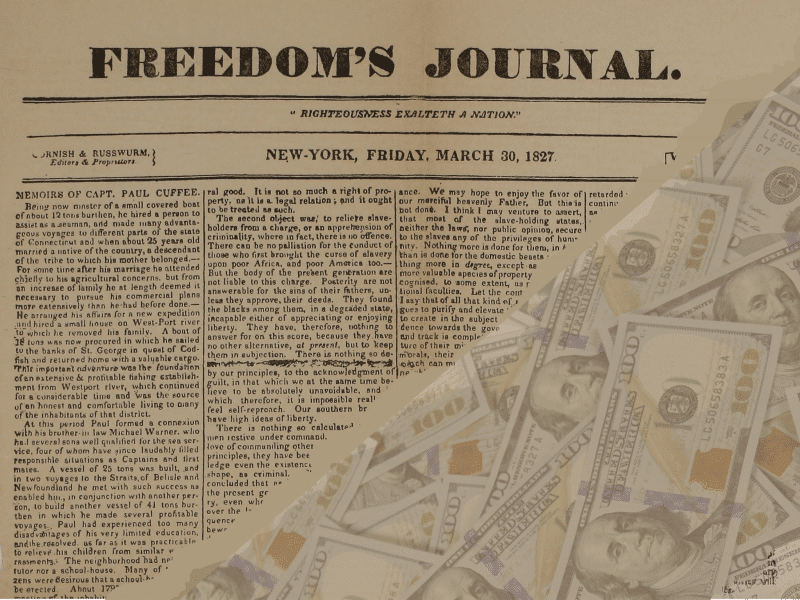
The Black press has always faced an inequitable funding landscape. Its future can’t be the same
Looking to historical models can provide some clarity and inspiration in an environment once again hostile to funding Black journalists and the Black press.
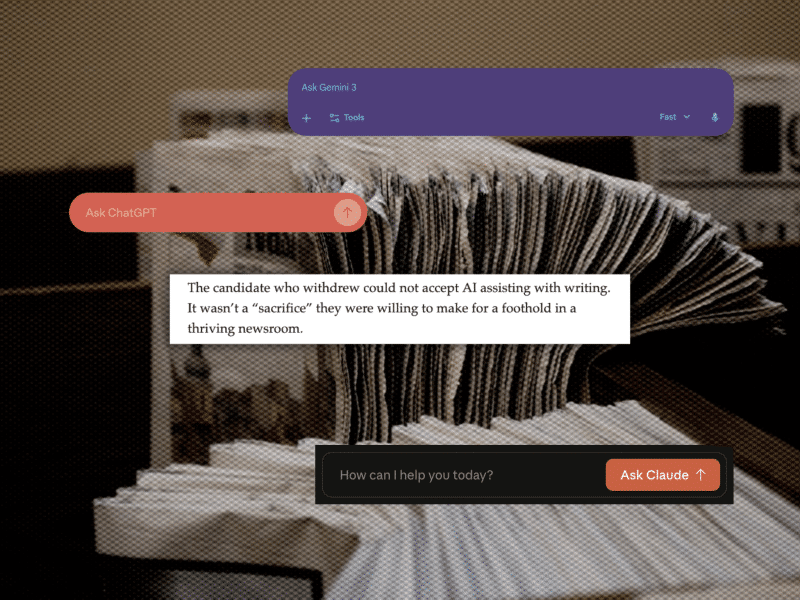
It’s healthy for student journalists to raise concerns about AI
Generative AI isn’t a real solution to the issues facing newsrooms. Students are right to point that out.