
Meeting community information needs can build community power
How movement journalism develops local networks of trust and connection, even before disaster strikes.
This piece is part of the column series ‘The Case for Movement Journalism‘. Read other column installments here.
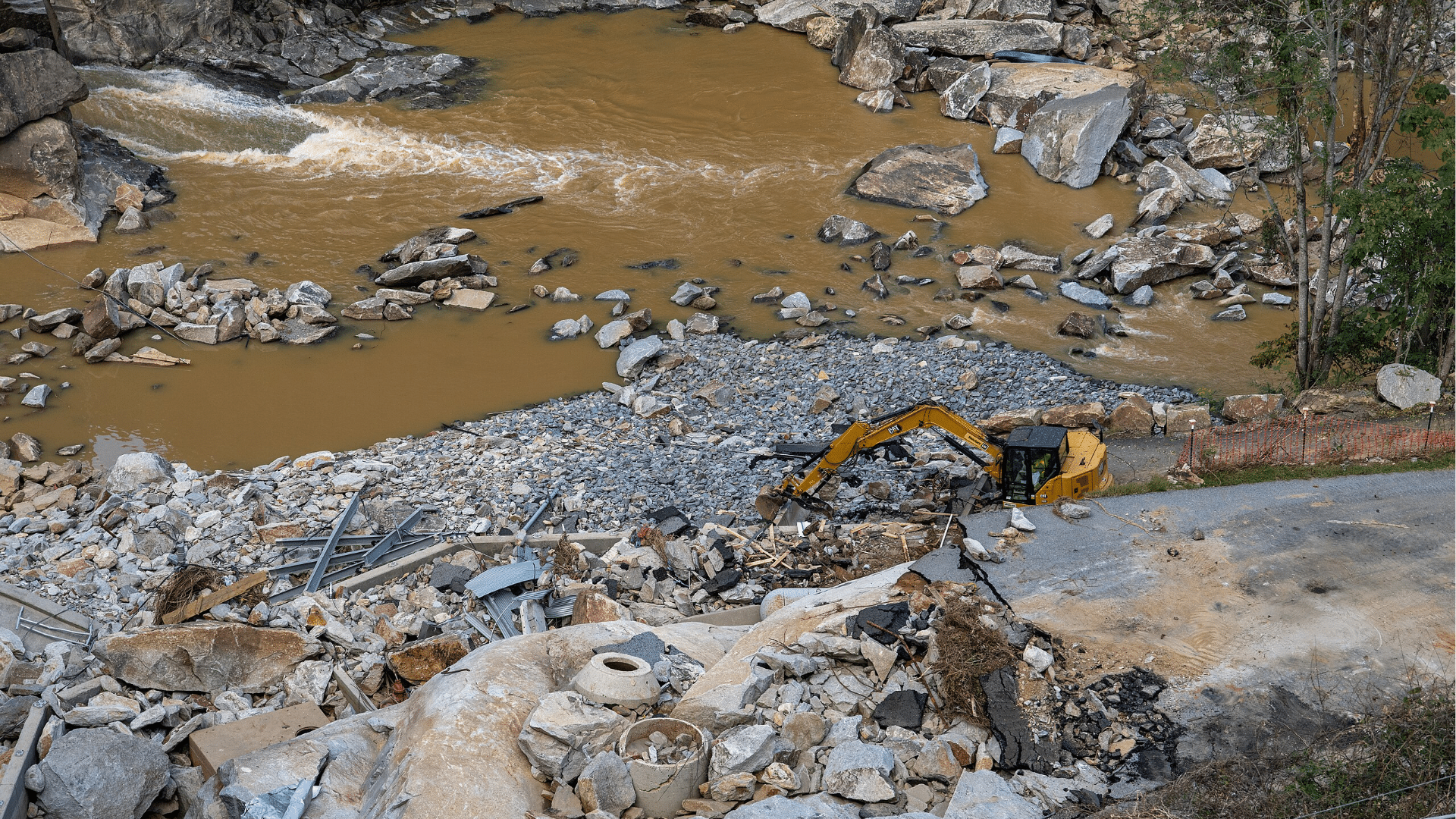
Every hurricane season, southerners and people dwelling on the coasts are haunted with the constant possibility of disaster. Still, the events of 2024 took many in western North Carolina by surprise: that September, Hurricane Helene hit Florida and then continued inland, swerving into the mountains and causing record rainfall, catastrophic floods, and even landslides across parts of Georgia, South Carolina, North Carolina, and Tennessee. Over 250 people died, half of them in North Carolina, and communities were left stunned and isolated in the aftermath.
In North Carolina, networks of people who knew one another were crucial to sharing information across areas that had been cut off from travel by submerged roads. Monolingual Spanish speakers needed their own ways to learn what was happening, which is where JMPRO Community Media came in.
“The good thing is, we have people in the affected area,” co-founder and executive director Julio Tordoya said. “After Helene, we were helping with the distribution, clearing roads — [sharing] simple things like, ‘I-40 and the 89 exit is clear, you can go.’”
These are simple things, but access to information in moments post-disaster can be life-saving. People who had been stranded by the flood were left without water or food for days.
Beginning with these networks of trust, movement media organizations have the potential to build real power — what we at the organization where I work, Interrupting Criminalization, have been calling “informational power.” When local media directly serve people with actionable information, the trust and connection can be off the charts.
JMPRO has built a network of community reporters for over a decade, beginning in 2014 with their first community reporter training after several years of visioning and planning. Now, he says, their work spans most of the counties in western North Carolina — which was especially important during Helene. It builds off of pre-existing networks, made up of people who work to meet community information needs in the absence of formal media serving Latine communities, often by simply sharing information with people they know.
“There are many reporters in the area, people that take their phone and inform the community,” Tordoya said. “What we are doing … it’s just systematization.”
While he doesn’t necessarily describe JMPRO’s work as movement journalism, the organization’s history is grounded in social movements: Tordoya and his co-founder got the idea for JMPRO while at the U.S. Social Forum in Detroit in 2010, after many conversations about the need for media and communications that serve and are created by people directly affected by oppression. They then spent years talking to people before beginning to provide trainings for community reporters, an ever-expanding network of volunteers who create stories in written, podcast, radio, and video form.
Importantly, the first task for JMPRO before creating any broadcasts was to deeply assess what information was actually lacking in western North Carolina’s Latine communities — to understand information needs. They believed meeting those stated needs would build trust and connection from the ground up, and enable communities to develop and pursue their own responses to problems.
“The intention for reporting is to find the solutions for our own community,” Tordoya said, adding that, these days, “we have ten years in the area, people know who we are, people trust us, people know that we don’t twist their words, people know that we are trying to help them every day. And I think time has helped us to build confidence and trust in the community.”
Many outlets make the mistake of trying to “serve” communities by going in with unchecked assumptions about what that service should look like. Rather than asking what people want to know, and filling those gaps, news leaders assume that simply reporting on or from a community is the same as serving its needs. When JMPRO began, their stories focused on cultural events, Zumba classes, and public health resources — because community reporters looked to respond to what people said in listening sessions and at community events, along with the questions people had that weren’t being answered in ways they could access and understand.
“All of the components of [our] first program relied on what the community, through our listening sessions, suggested that we should produce content about,” Tordoya said.
Outlier Media in Detroit approached needs assessment in a novel way when, under the leadership of founder Sarah Alvarez, the organization used publicly available 211 and 911 call data to systematically assess what questions low-income Detroiters were asking, and then set up a free text-message based service to answer those questions. Outlier has since developed into a multifaceted outlet that meets community information needs through texts, a website, partner publications, and direct interactions with reporters. A recent article from Outlier addresses how to get low-cost laptops during back to school season.
There has been a great deal of hand-wringing in recent decades about declining trust in news media — yet that worry has not been accompanied often enough by a genuine interest in what communities, particularly marginalized and underserved groups of people, want journalists and media makers to do and cover. Local media outlets still enjoy more trust than national ones, and are still viewed as important by many people.
At Interrupting Criminalization, we recently published a report called “Shaping Reality: Building Informational Power to Resist Authoritarianism”. Movement media at a local level has a pivotal role to play here, as the report explains: “Informational power establishes sustained, proactive community control over the facts and information that we need in order to struggle and survive, and that inform how we make sense of the world together, and the actions we take to shape our futures.”
We have seen this exact kind of power being built through organizations like JMPRO and the Kansas City Defender, and even organizations like Siembra NC that don’t describe themselves as “media” but work to meet community information needs every day. (Siembra verifies and spreads the word about ICE presence and deportations, along with abusive landlords and employers.) Armed with the information they need, not just what publishers or reporters think they need, people in local communities can take action to stay healthier and safer, and to protect one another from isolation, abuse, and deportation.
This work recalls Ida B. Wells’ most famous quote, the second half of which is often left out but is important to how we define “the press” — because she calls specifically for the expansion and funding of the Black press, because they alone could address the information needs of Black communities in a racially segregated society.
“The people must know before they can act, and there is no educator to compare with the press,” Wells wrote in 1892, in a pamphlet about lynching. “The Afro-American papers are the only ones which will print the truth, and they lack means to employ agents and detectives to get at the facts. The race must rally a mighty host to the support of their journals, and thus enable them to do much in the way of investigation.”
Lewis Raven Wallace is the Abolition Journalism Fellow at Interrupting Criminalization and the author of The View From Somewhere: Undoing the Myth of Journalistic Objectivity and the forthcoming title Radical Unlearning.
They live in North Carolina.This article was edited by James Salanga. Copy edits by Jen Ramos Eisen.
We depend on your donation. Yes, you...
With your small-dollar donation, we pay our writers, our fact checkers, our insurance broker, our web host, and a ton of other services we need to keep the lights on.
But we need your help. We can’t pay our writers what we believe their stories should be worth and we can’t afford to pay ourselves a full-time salary. Not because we don’t want to, but because we still need a lot more support to turn The Objective into a sustainable newsroom.
We don’t want to rely on advertising to make our stories happen — we want our work to be driven by readers like you validating the stories we publish are worth the effort we spend on them.
Consider supporting our work with a tax-deductable donation.

James Salanga,
Editorial Director
Related Articles
Journalists aren’t the only ones sharing the news, and that’s a good thing
A new framework from Journalism + Design Lab invites newsrooms to build on the abundance, diversity, and momentum already in our communities to strengthen local news.
The Black press has always faced an inequitable funding landscape. Its future can’t be the same
Looking to historical models can provide some clarity and inspiration in an environment once again hostile to funding Black journalists and the Black press.
It’s healthy for student journalists to raise concerns about AI
Generative AI isn’t a real solution to the issues facing newsrooms. Students are right to point that out.